
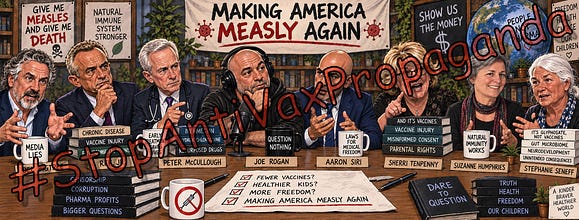

Why are we talking about vitamin K shots for babies?
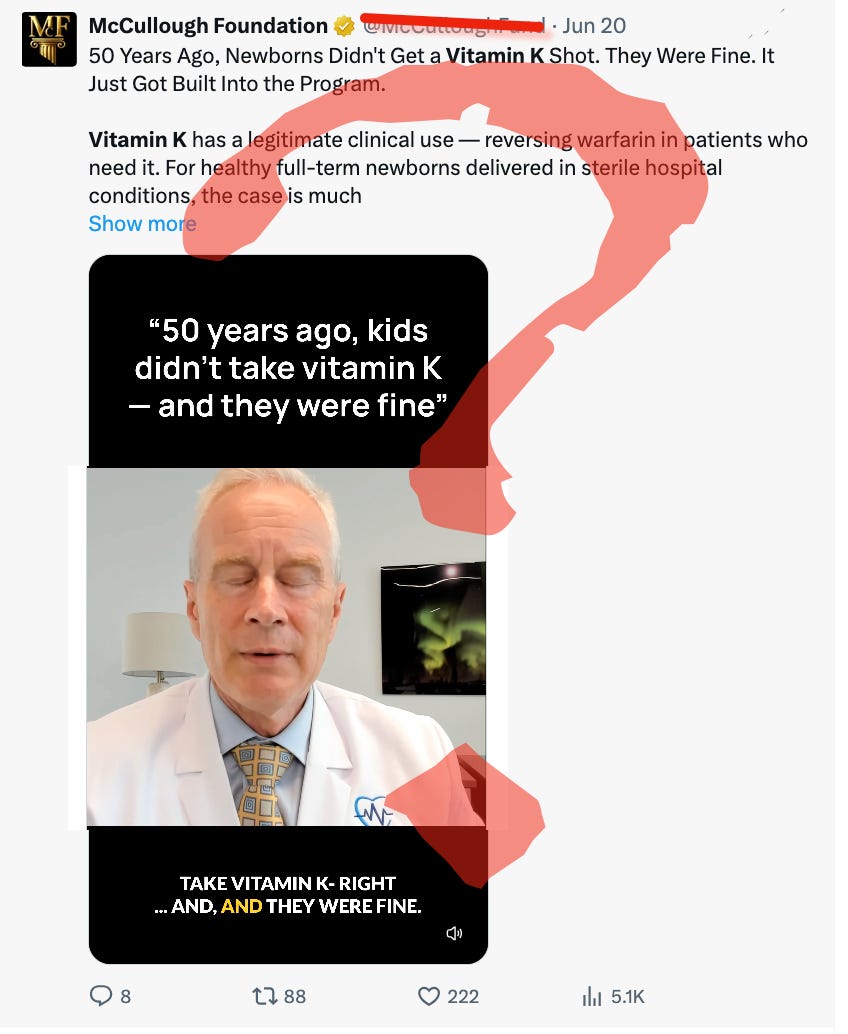
We are talking about vitamin K shots for babies because anti-vaccine influencers continue to push misinformation about vitamin K, scaring parents away from getting their babies protected.
Let’s Talk About Vitamin K Shots for Babies
Remember, a vitamin K shot at birth protects babies from vitamin K deficiency bleeding!
And without it, they are at risk for developing bleeding, either shortly after they are born (early bleeding), in the first week of life (classical bleeding), or before they are six months old (late bleeding).
What kind of bleeding?
These babies with vitamin K deficiency bleeding can have anything from excessive bleeding from their umbilical cord stump and intestinal bleeding to bleeding in or around their brain (intracranial hemorrhaging).
Bleeding that can be prevented with a vitamin K shot when the baby is born.
Or, to be fair, with a weekly dose of oral vitamin K given each week until your baby is three months old.
Still, a single vitamin K shot is thought to be the most effective way to prevent vitamin K deficiency bleeding.
Why?
Mostly because it is safe, effective, and simple. Also, there is the simple fact that a licensed oral vitamin K product isn’t available in many countries.
But then why doesn’t everyone just choose to get their baby a vitamin K shot so that they are protected?
Well, most do! And those who don’t have likely been scared by all the propaganda that they have seen about vitamin K shots.
Propaganda that is easily refuted…
Let’s take this post trying to link vitamin K shots with a higher infant mortality rate, for example.
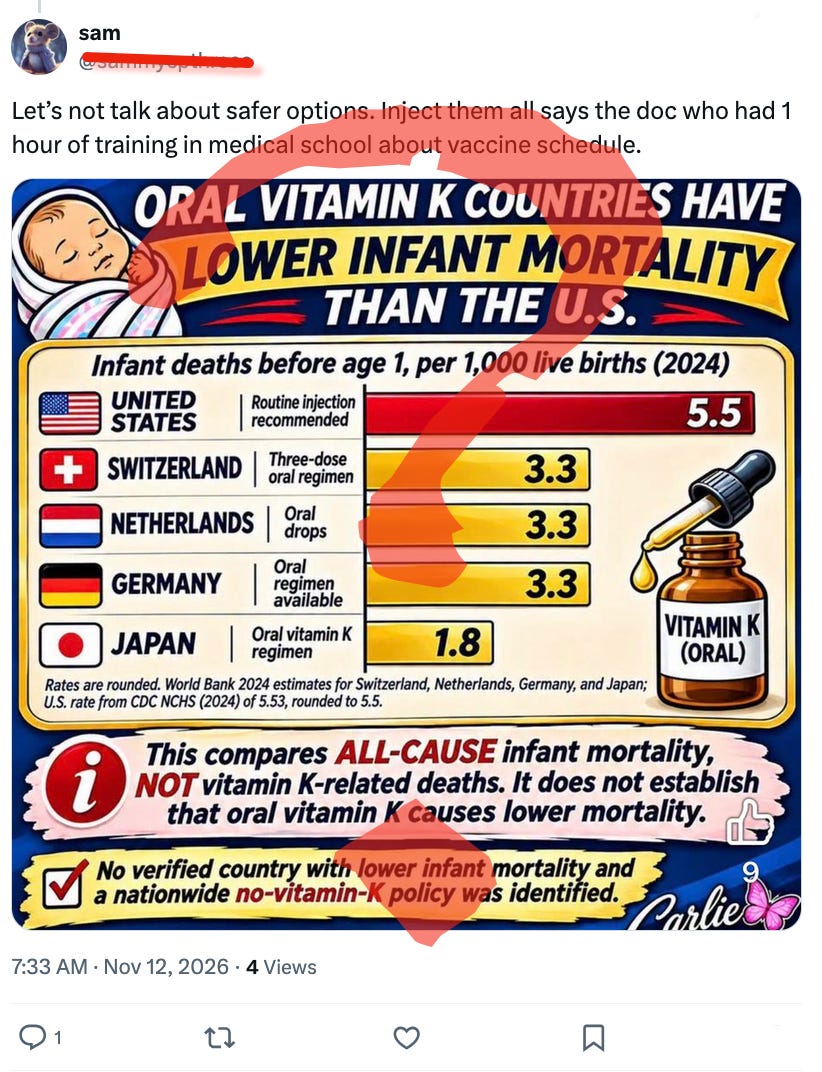
Can you spot the problem?
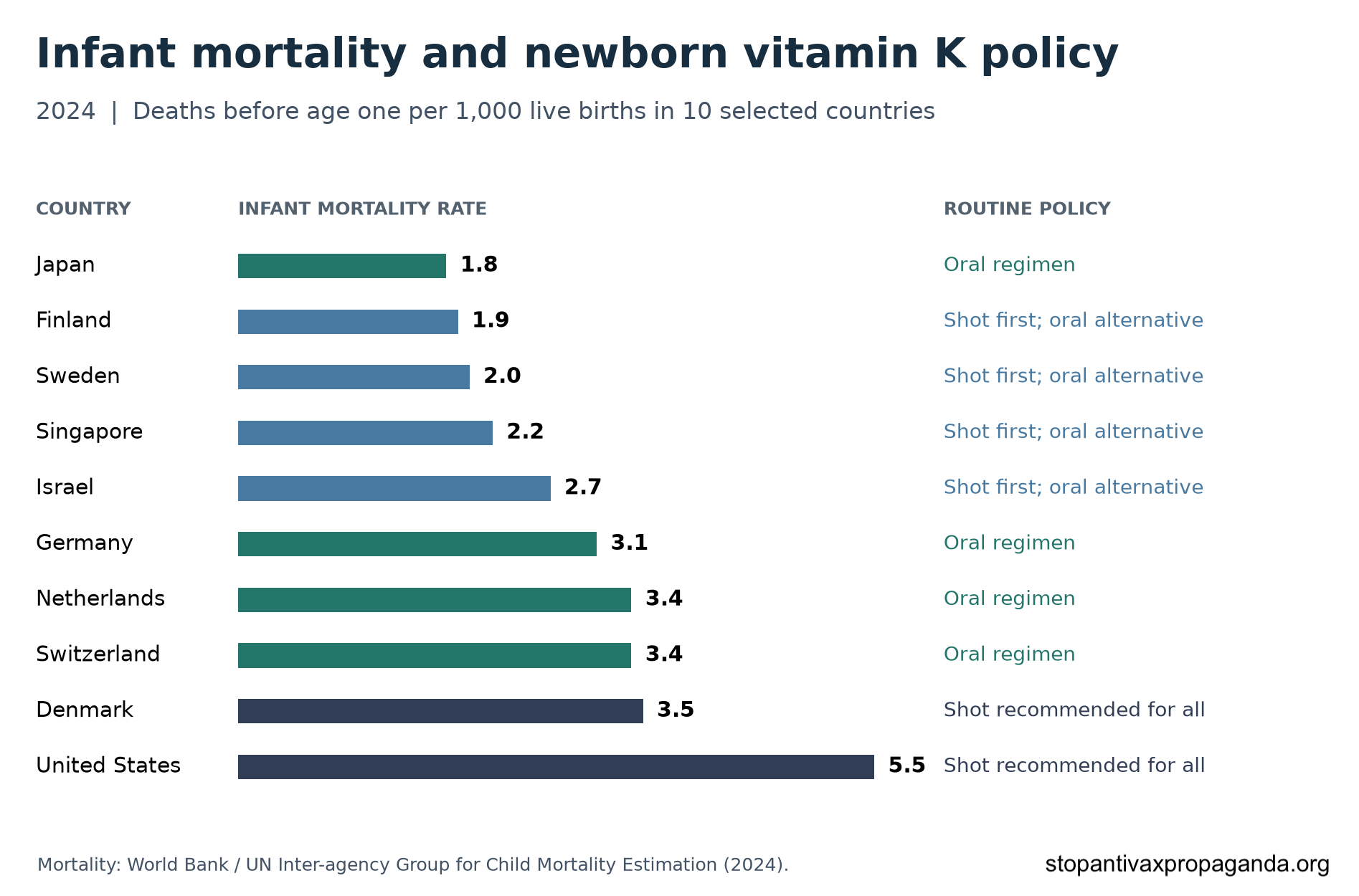
That’s right, they left out many countries that give vitamin K shots and have low infant mortality rates!
But, what about the black box warning they talk about.
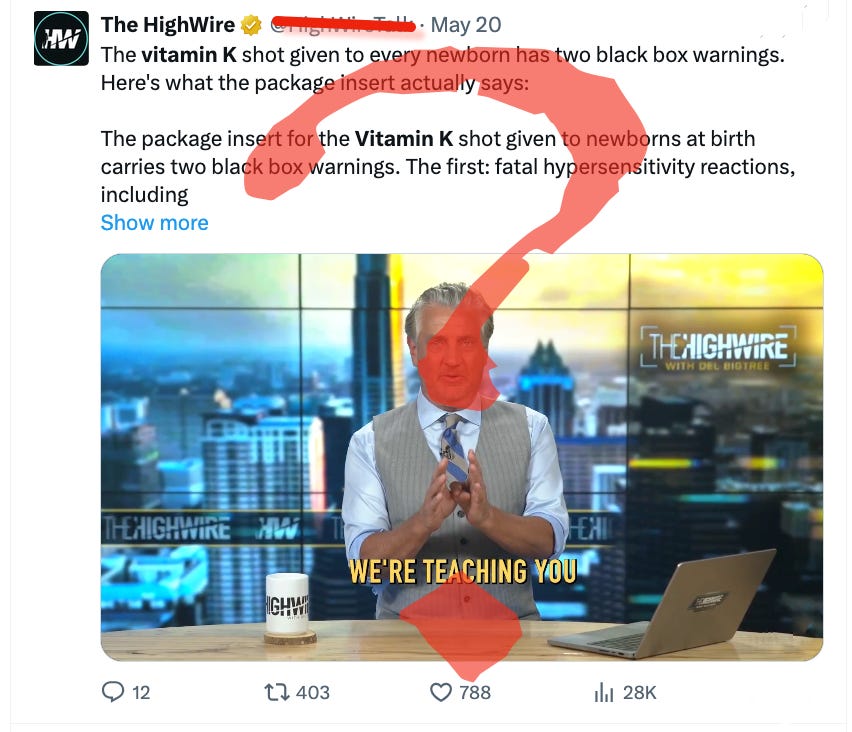
While it is true that the label of vitamin K shots have a black box warning on them, it is very important to understand that the warning was not specifically added because of any reactions that newborns were getting with their vitamin K shots!
It was a general warning, more likely related to adults getting larger doses of vitamin K shots too quickly.
Also, related to this warning, there has only ever been one case report of a severe allergic reaction in a baby getting a vitamin K shot, a non-fatal reaction. This despite millions of babies getting vitamin K shots in the United States each year and many more world wide.
Still worried?
Did you hear something about vitamin K shot ingredients that scared you?
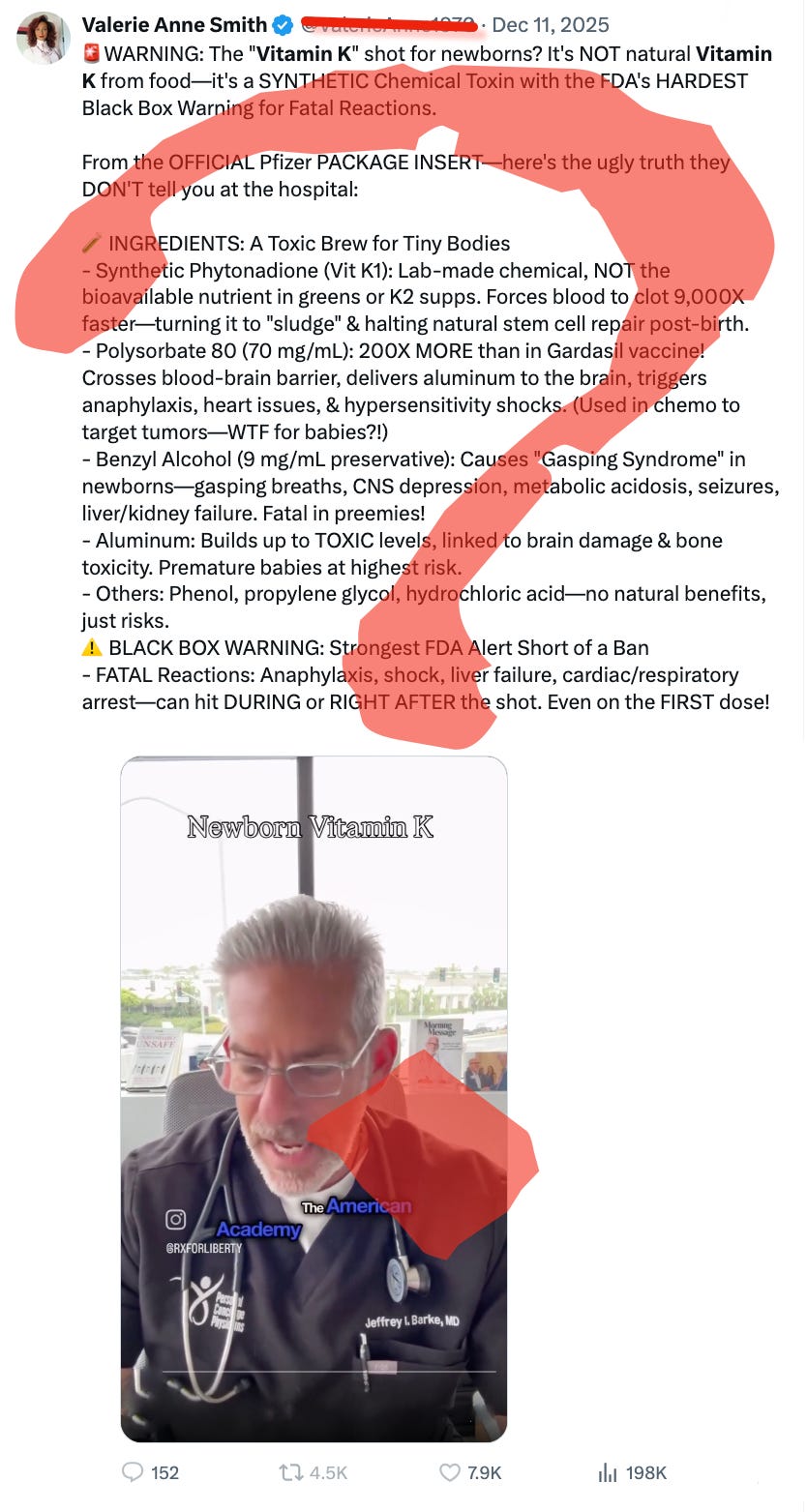
Then, know that:
vitamin K shots only contain a residual amount of aluminum from the manufacturing process. It is not an active ingredient.
while gasping syndrome was a real thing (1980s), it was specific to preterm infants in the NICU who had received multiple injections containing 0.9% benzyl alcohol in bacteriostatic water used to reconstitute medicines and for flushing catheters. The solution was “to discontinue the use of intravenous (IV) infusions of saline solution containing benzyl alcohol, as well as medications containing benzyl alcohol as a preservative, in premature infants.” And that’s likely why vitamin K shots without benzyl alcohol are also available, although gasping syndrome was not about vitamin K shots.
polysorbate 80 is an emulsifier and helps the fat-soluble vitamin K mix in liquid.
And know that anything else you have heard about vitamin K shots is also unlikely to be true.
What else?
“The most effective way to prevent bleeding due to vitamin K deficiency in infants is to give 1 mg of vitamin K by intramuscular injection at birth. Many studies have shown this.”
Danish Health Authority notice of May 23, 2000: Revised guidelines on the use of vitamin K in newborns and infants
Several countries give vitamin K shots to all newborns, without a recommendation to give oral vitamin K as an alternative.
Lastly, even in those countries where oral vitamin K regimens are offered, the preference is still for most newborns to get a vitamin K shot instead.
And in the few countries where it is routine for newborns to get oral vitamin K, even then, vitamin K shots are still available.
Bottom line - your baby needs vitamin K when they are born to prevent vitamin K deficiency bleeding. And this is best done with a vitamin K shot at birth, unless you are in a country with licensed vitamin K oral drops for infants that can prevent vitamin K deficiency bleeding (NOT the United States…), especially as there is no good reason to not give your baby a vitamin K shot.
Skipping vitamin K for your newborn is all risk with no reward.