
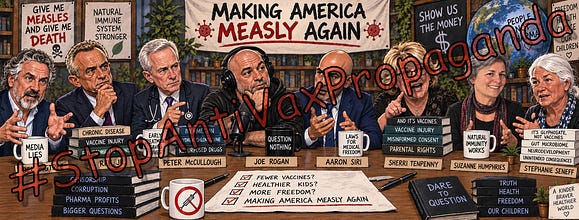

We hear a lot about VAERS and v-safe from anti-vaccine influencers.
Why?
They are self-reporting systems. So, that leads to a lot of material for them to use to scare people, but none of it actually proves that a vaccine caused any of the symptoms or conditions in those reports.
The Vaccine Safety Systems You Never Hear About
Fortunately, we have many other vaccine safety systems that can!
These include all the vaccine safety systems that anti-vaccine influencers never talk about.
Whether it is because they aren’t aware that they exist or they don’t want you to know they exist, anti-vaccine influences typically stick to talking about VAERS and v-safe.
That’s why most of you haven’t heard of:
the Vaccine Safety Datalink - uses electronic health record data from its member sites in the United States to assess vaccine safety and detect adverse events in near-real time.
BEST/Sentinel - an active surveillance program that consists of large-scale administrative claims, Electronic Health Records (EHRs), and linked claims-EHR data sources in the United States and has access to on-demand sophisticated analytic capabilities to interrogate the data sources with simple or complex vaccine studies.
AusVaxSafety - Australia’s active vaccine safety surveillance system since 2014. Reviews surveys after vaccines given in Australia at participating surveillance sites.
Vaccine Safety Health Link - near real-time automated vaccine safety signal detection using routinely collected healthcare data in Australia.
IMPACT - actively monitored 14 Canadian centres, which represented about 90% of all tertiary care pediatric beds in Canada for adverse events following immunization, vaccine failures and selected infectious diseases that are vaccine preventable from 1991 to 2023.
SPRINT-KIDS Vaccine Safety Surveillance Project - Active pediatric hospital surveillance in Canada that collects data for children less than 18 years of age who present to any of Canada's 14 pediatric hospitals with possible symptoms, laboratory abnormalities or diagnoses that may be related to a vaccine they received. Replaced IMPACT in 2023.
CANVAS - The Canadian National Vaccine Safety (CANVAS) Network actively monitors a surveillance group that has been vaccinated and compares them to an unvaccinated control group.
EPI-PHARE / SNDS - created in 2018, EPI-PHARE carries out, pilots and coordinates pharmaco-epidemiological studies using complex and massive data from the French National Health Data System (SNDS) to enlighten public authorities in their decision-making.
VENUS - the Vaccine Effectiveness, Networking, and Universal Safety (VENUS) system is Japan's first healthcare data platform that enables comparative assessments of vaccinated and unvaccinated persons in large samples covering all age groups. It started as a pilot system in 2021 and is growing.
SAFETY-VAC - a federated linked-health-data system with near-real-time surveillance capability using the electronic health records or registries data of people from 10 data sources in 7 countries in Europe (UK, Spain, Denmark, Finland, Norway, Italy and France) since 2017.
the Clinical Practice Research Datalink (CPRD) - collects anonymized electronic health records from participating general practices throughout the UK and looks at longitudinal records on defined populations that can be linked to vaccination, hospital, and mortality data.
What else?
You have also probably not heard about all the vaccine safety studies that these vaccine safety systems have published.
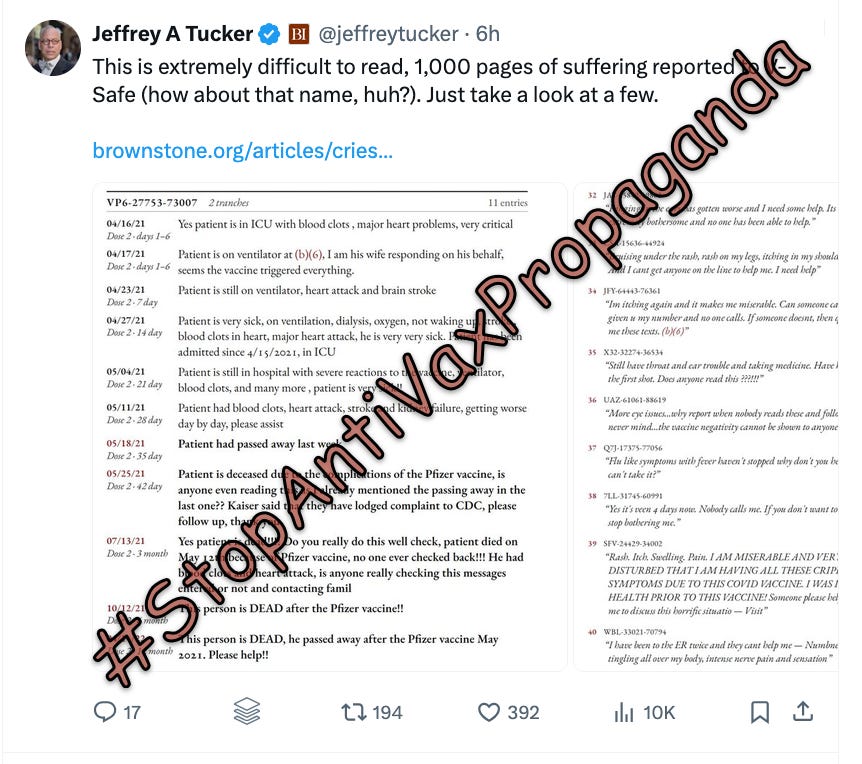
So next time you hear anti-vaccine influencers pushing a narrative that vaccines aren’t safe because of reports to v-safe or VAERS, look for a study from an active vaccine safety system for confirmation.
After all, v-safe and VAERS are simply tools to find safety signals, and then our other vaccine safety systems take over to see if those signals are real.
Fortunately, in nearly all cases, they are not.