


Did you know that baby goats can get rabies?
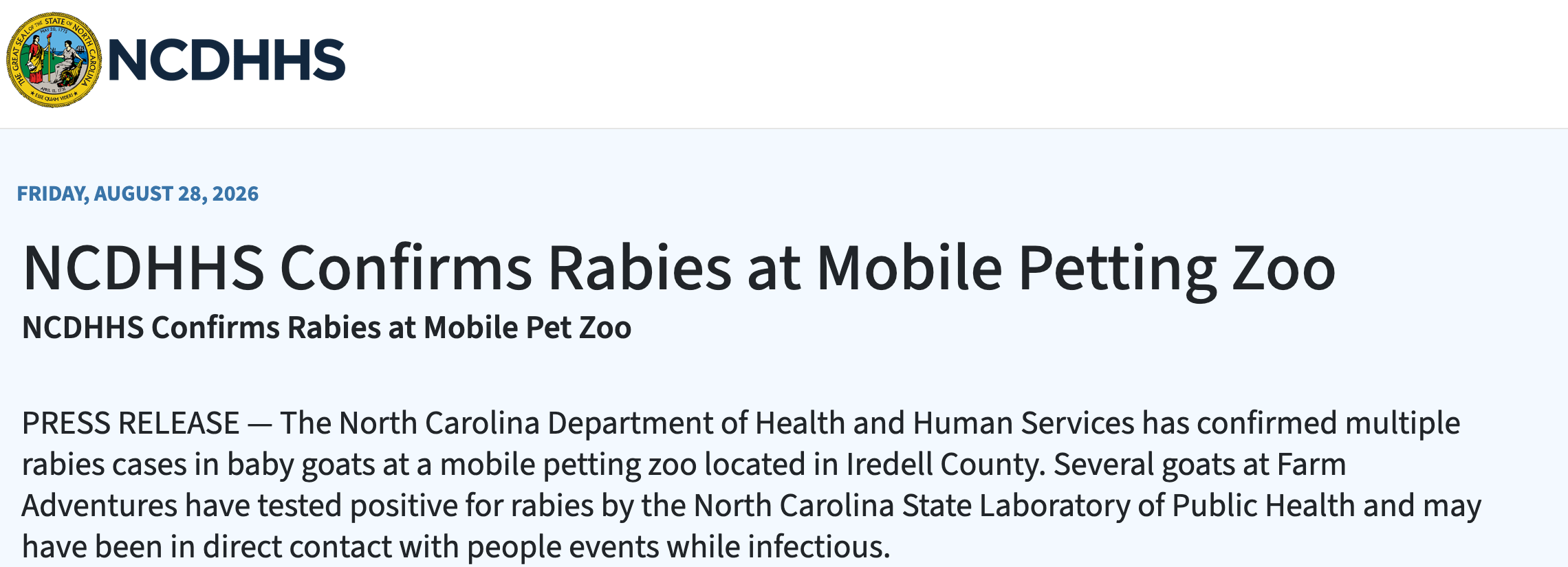
And that you can be exposed to rabies at a petting zoo?
Rabies in Baby Goats Is a Thing...
Well, maybe you shouldn’t be too surprised; after all, any warm-blooded mammal can get rabies.
Even hamsters can get rabies.
Mostly though, it is animals like bats, raccoons, skunks, foxes, coyotes, dogs, and cats that get rabies, though.
Why?
Smaller animals, like mice, rats, squirrels, and hamsters, are unlikely to survive an attack from a rabid animal. So they simply don’t have time to become rabid after an exposure.
But what about larger animals, like goats, sheep, pigs, horses, cattle, and wild cats, etc.?
Why is rabies so rare in these large animals?
Is it because they get vaccinated and protected?
That is part of it, but mostly it is because they aren’t often exposed to the wild animals that do commonly have rabies.
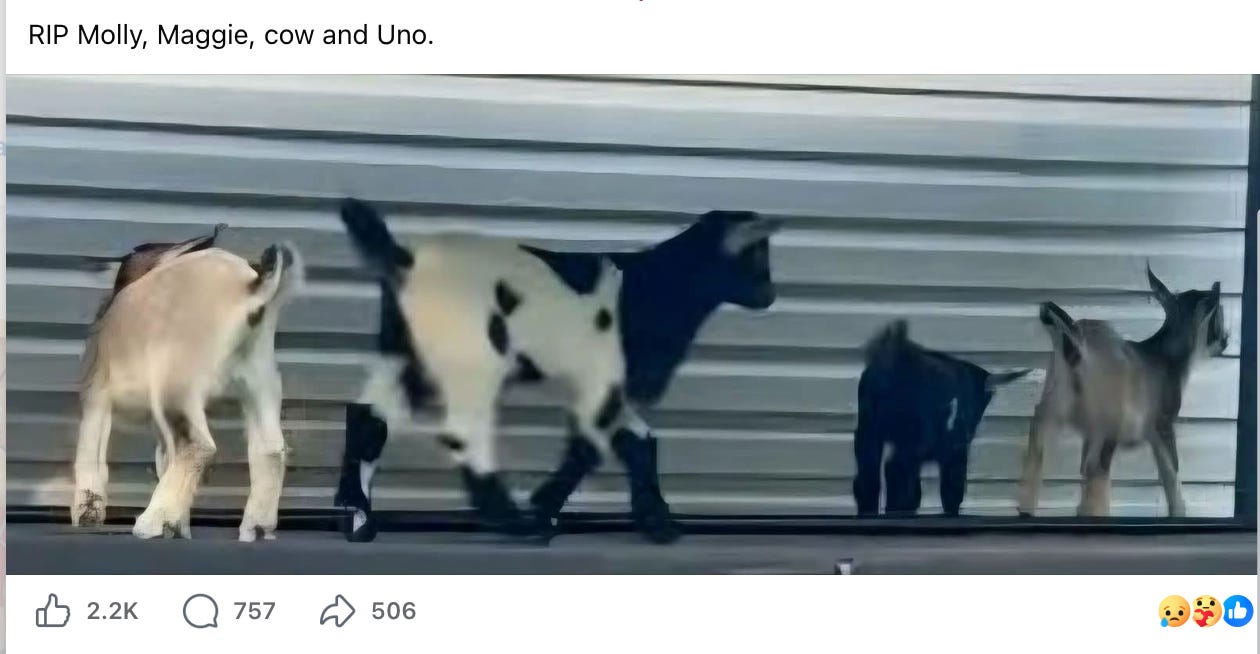
Occasionally they are, though…
“The baby goats were kept in a separate pen, away from the others, and were too young to receive their vaccinations. We unfortunately encountered a skunk in their pen, which we promptly removed and disposed of. However, during this process, the skunk was able to bite the goats. WE HAD NO CLUE THE GOATS HAD GOTTEN BUT [sic]. They showed no sign or symptoms of rabies.”
That’s how those baby goats in North Carolina developed rabies - exposure to a rabid skunk.
“Because baby goats are frequently bottle-fed, handled closely, or cuddled, public health officials are working proactively to ensure anyone who had direct contact with the affected animals is evaluated.”
NCDHHS Shares New Details About Rabies at Mobile Petting Zoo
And why many of the people in contact with these baby goats may now need post-exposure rabies prophylaxis, including human rabies immune globulin (HRIG) and a series of rabies vaccine injections.
Rabies vaccines that they are fortunate are available!