


You may not know this, but one of the reasons that vaccines work so well is because they contain adjuvants.
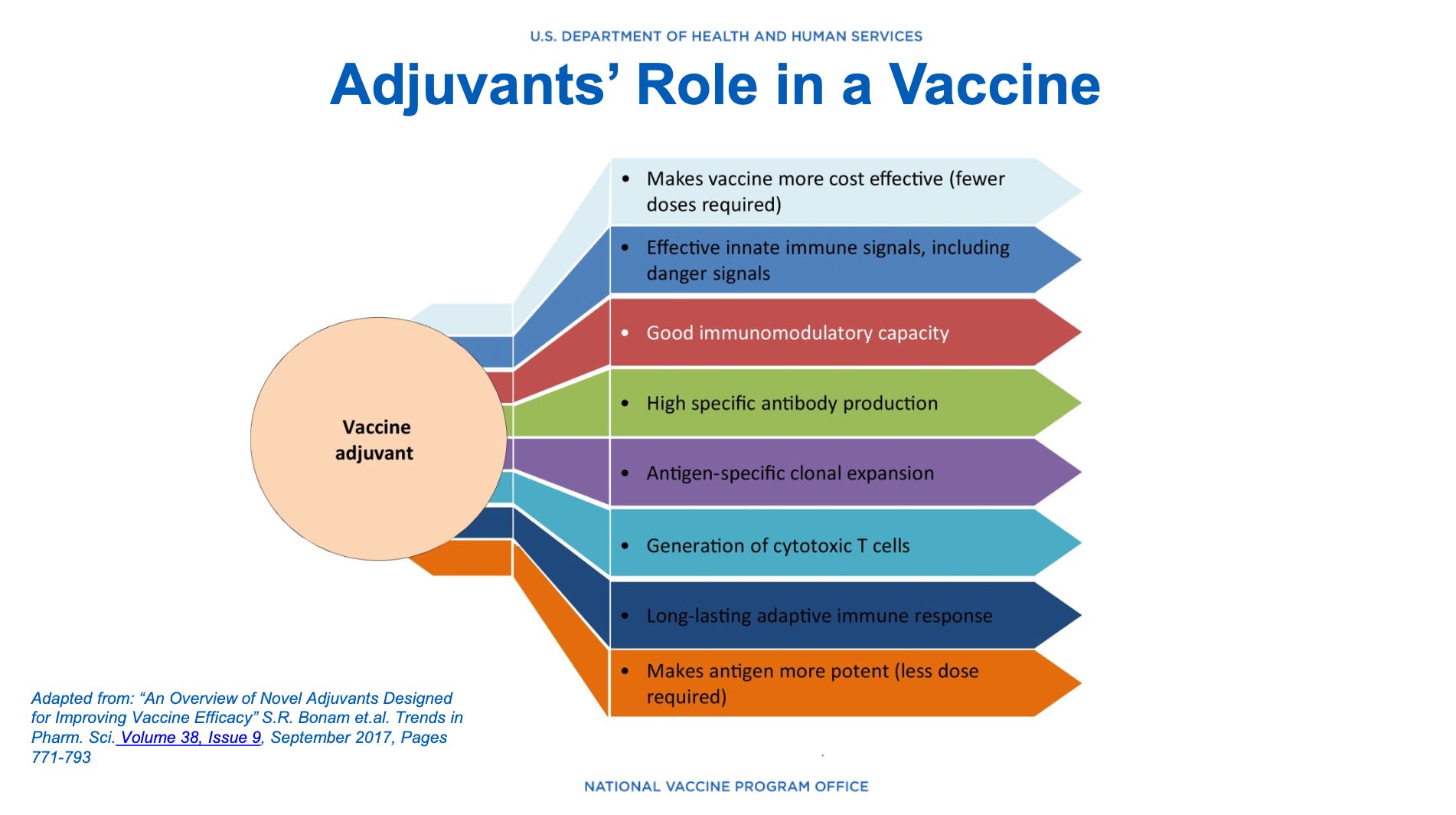
Vaccine adjuvants that were first used nearly one hundred years ago!
Why Do Some Vaccines Have Adjuvants?
Adjuvants that help vaccines produce a strong immune response.
“Adjuvants have been traditionally used to increase the magnitude of an adaptive response to a vaccine, based on antibody titer or ability to prevent infection, but a second role for adjuvants has become increasingly important: guiding the type of adaptive response to produce the most effective forms of immunity for each specific pathogen.”
Vaccine Adjuvants: Putting Innate Immunity to Work
Of course, that’s not to say that most vaccines wouldn’t work without the adjuvants.
They would, but vaccine manufacturers would typically need to add many more antigens to the vaccine to try and get that same immune response.
Can you guess why that might be an issue?
That’s right!
It is the antigens that can typically cause any of the systemic side effects that you might see from a vaccine.
And while vaccine adjuvants, like aluminum, can also cause side effects, they are typically mild, local reactions, such as pain, redness, or swelling at the injection site. Side effects that go away in a few days.
The Benefits of Vaccine Adjuvants You Never Hear About
So basically, vaccine adjuvants help many vaccines work better, with the fewest possible side effects.
“Advantages of adjuvants include the enhancement of the immunogenicity of antigens, modification of the nature of the immune response, the reduction of the antigen amount needed for a successful immunisation, the reduction of the frequency of booster immunisations needed and an improved immune response in elderly and immunocompromised vaccinees. Selectively, adjuvants can be employed to optimise a desired immune response, e.g. with respect to immunoglobulin classes and induction of cytotoxic or helper T lymphocyte responses. In addition, certain adjuvants can be used to promote antibody responses at mucosal surfaces.”
Guideline on Adjuvants in Vaccines for Human Use
Also, vaccine adjuvants can sometimes reduce the number of vaccine doses you might need!
For example, adults only need two doses of the newest adjuvanted Heplisav-B vaccine, versus three doses of the older, Engerix-B and Recombivax HB vaccines.
And again, vaccine adjuvants have been used for over a hundred years, when the first diphtheria and tetanus vaccines were developed!
That kind of makes you wonder why all vaccines don’t contain adjuvants, doesn’t it?
Well, that’s only because vaccines without adjuvants are mainly live vaccines that can create a very strong immune response on their own. They don’t need adjuvants…
Advax is the most promising adjuvant being developed right now. Way better and safer than aluminum salts. I hope advax becomes the most common used adjuvant in vaccines in the near future. It doesn't cause inflammation, fever, cell damage and other side effects like aluminum salts do.