


Do you know why people are talking about the plague?
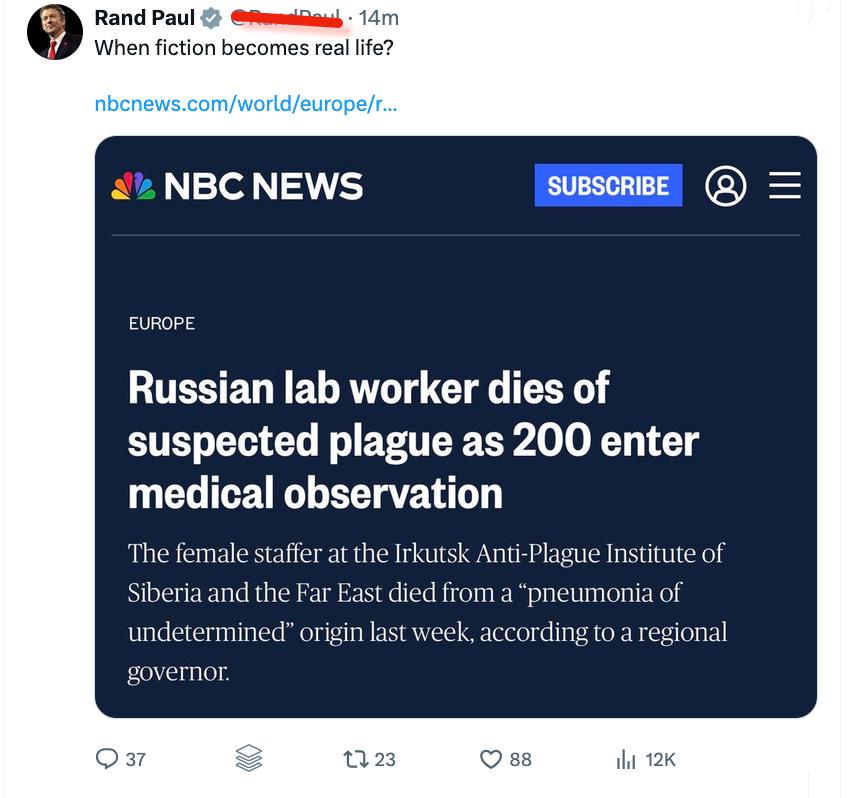
The usual suspects…
Why Are People Talking About the Plague?
And while they didn’t make up the story about the Russian lab worker, they are working hard to turn it into some kind of gain of function conspiracy.

So what’s the real story?
On October 2, a young woman who worked at the Irkutsk Anti-Plague Institute died after developing a severe infection.
Since plague was a concern at the time, the hospital where she was taken was quarantined.
Soon after, the head of the Republic of Buryatia in far eastern Russia, where this was happening, reported that she had “died of plague.” He then changed his statement, now saying that she “possibly died of plague.”
Later testing did not confirm plague and they said she died with “pneumonia of undetermined etiology.” And they found no evidence of a lab leak.
And we know that her contacts are in quarantine.
“After the death of the staff, large-scale anti-epidemic activities began. According to Izvestia, 189 people in contact with her were hospitalized for observation and prevention: 114 are in one hospital, 63 in another, and 12 in the anti-plague institute.”
The plague returned to Russia: 27-year-old employee died, 189 in hospitals
But what about the idea that she had broken a test tube that contained plague and then soon felt bad?
Well, Russian journalists are also reporting that:
she had previously found a “natural focus of infection” - possible, but we would need evidence for exposure to wildlife or that she participated in field expeditions as part of her research
she had been exposed to infected animals at the lab - possible, but has not been confirmed
she was hospitalized after returning from Thailand - unlikely, as plague is not endemic in Thailand
the test tube broke and she “hid this fact” until she became sick - unlikely, as she knows the risks of exposure to the plague
So what’s the truth?
Who knows right now.
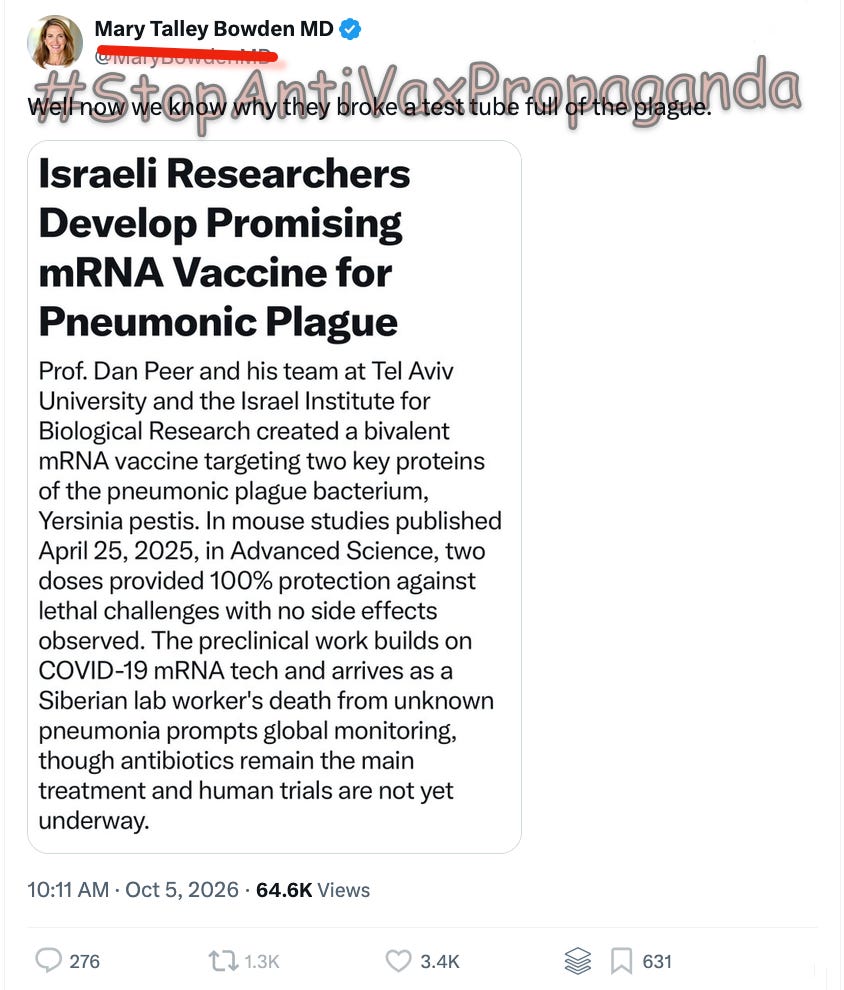
It appears that Russia has the same problem with conspiracy theorists and sensationalist journalists that we do…
More About the Plague
We do know enough about the plague to know that this likely shouldn’t be such a big story - at least not unless more people get sick.
Why not?
Plague is not rare in most parts of the world, at least not in animals.
Sure, human plague has now become rare, but plague isn’t gone.
In fact, plague is still endemic in many parts of the world, including parts of the United States.
And while a lab accident leading to the death of a worker is tragic, there is no evidence that it should lead to a wider outbreak.
Also, if any of her contacts did get sick, they would be treated with antibiotics. In fact, most are likely already receiving an antibiotic of a post-exposure prophylaxis treatment protocol.
“The plague, infamous for causing the Black Death in medieval Europe, killed up to 200 million people in the 14th century alone, wiping out nearly half of Europe’s population.”
Which Infectious Disease Is the Biggest Killer of All Time?
Antibiotics that weren’t available when the plague used to be a big killer.
What Happened to Darya Shipilova?
That still leaves us wondering what really happened to Darya Shipilova, the plague researcher who died, though, doesn’t it?
Of course, it’s safe to say you can ignore all the conspiracy theories.
Furthermore, unless we get more information, consider that the most likely explanation is that she was involved in a very minor lab incident and didn’t realize that she had been exposed. It’s the only good explanation for why she would not seek treatment, as she obviously knew that exposure to the plague could be fatal.
“This report describes the first known fatality from a laboratory-acquired infection with attenuated Y. pestis… Although the route of transmission for the infection remains unclear, deficiencies in biosafety practices, including inconsistent use of gloves, could have resulted in inadvertent transdermal exposure.”
Fatal Laboratory-Acquired Infection with an Attenuated Yersinia pestis Strain --- Chicago, Illinois, 2009
What else?
It would not even be the first time the plague killed a lab worker after an unknown laboratory-acquired infection. A researcher died in 2009 from plague, even though there was no known exposure in his lab.
Still, shouldn’t she have tested positive for the plague?
Probably, but we don’t know what kind of tests they did so far. We may have to wait for her autopsy results, if they are made available, for more information.
There was a plague death here in Arizona earlier in 2026. www.cdc.gov/mmwr/volumes...