

RSV season, of course, has a mind of his own and is not something we have much control of. What we do mostly have control of is when we can give RSV vaccines, and in many states that has been extended until the end of April.
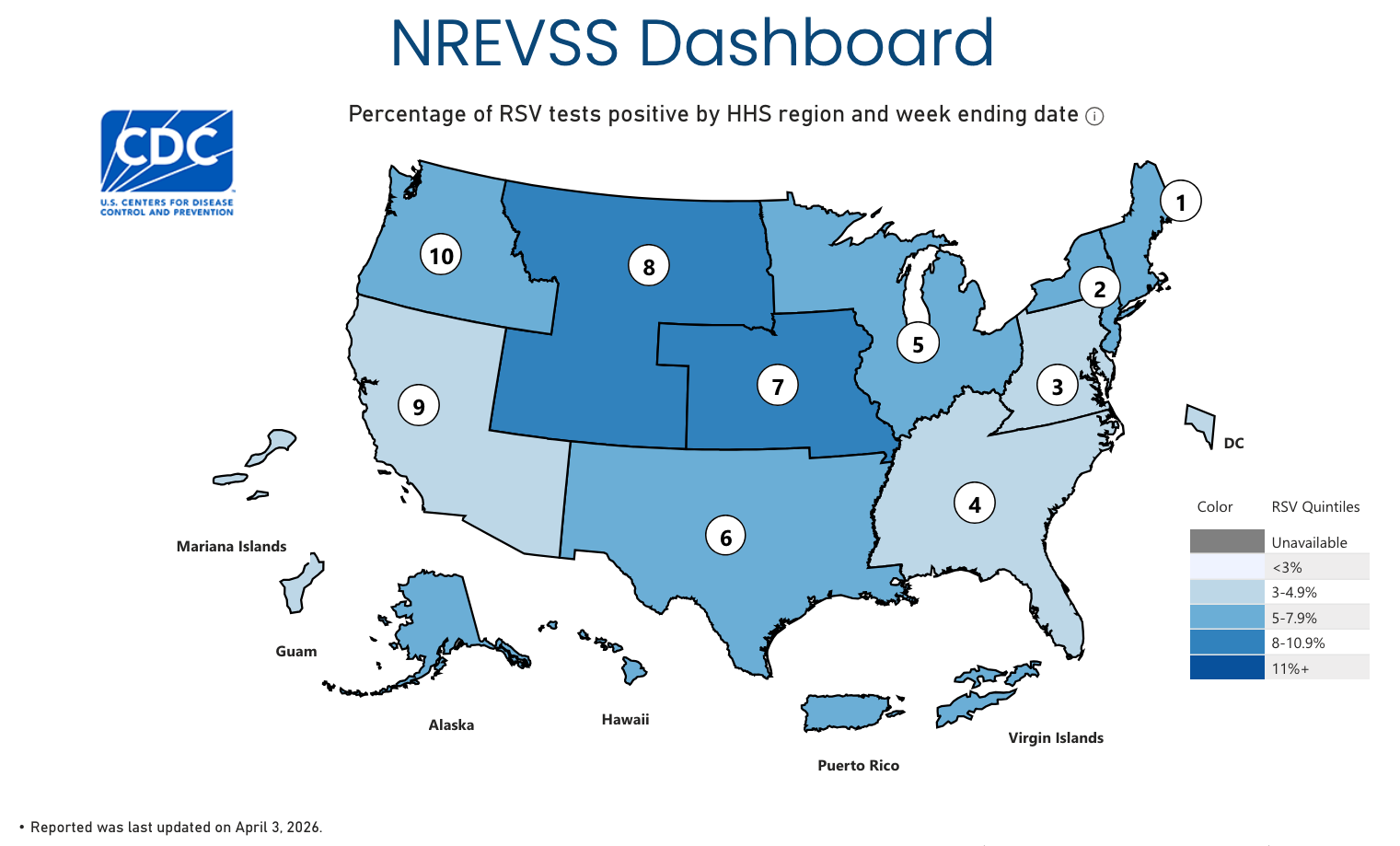
Whether to get your baby an RSV vaccine at the end of this season is something to carefully think about though, because it will mean they can’t get it next year.
Now if there is still a lot of RSV in your area, then sure, get them vaccinated and protected. If there isn’t though, then it might be better to wait and get them vaccinated at the beginning of next season for even more protection.
When Do We Give RSV Vaccines?
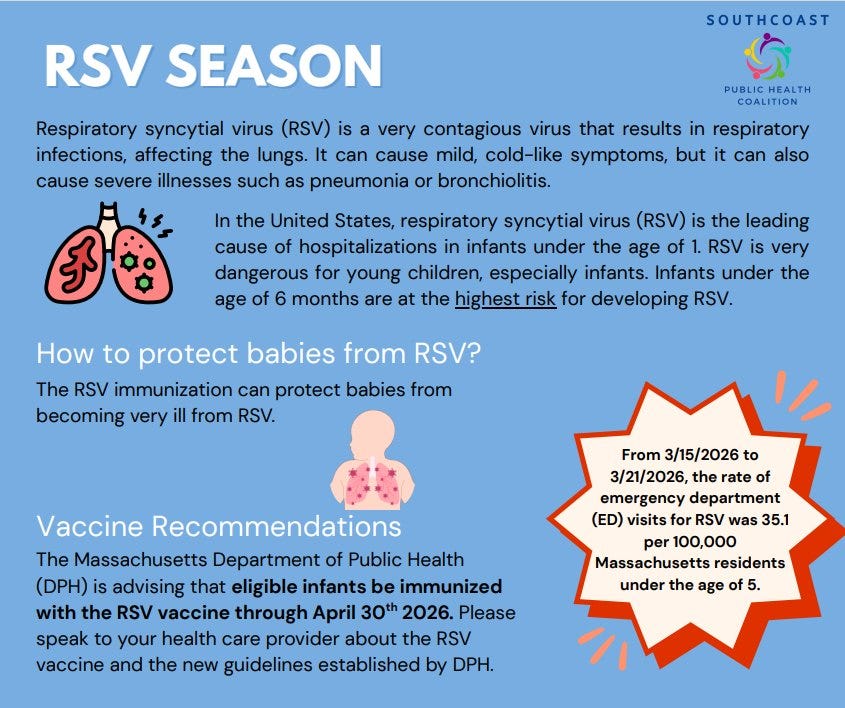
Traditionally, seasonal RSV vaccines are given to protect infants during RSV season (to pregnant women or to their babies), which traditionally runs from October 1 to March 31, but sometimes starts a little earlier and sometimes runs a little longer.
RSV vaccines for adults are not typically given seasonally…
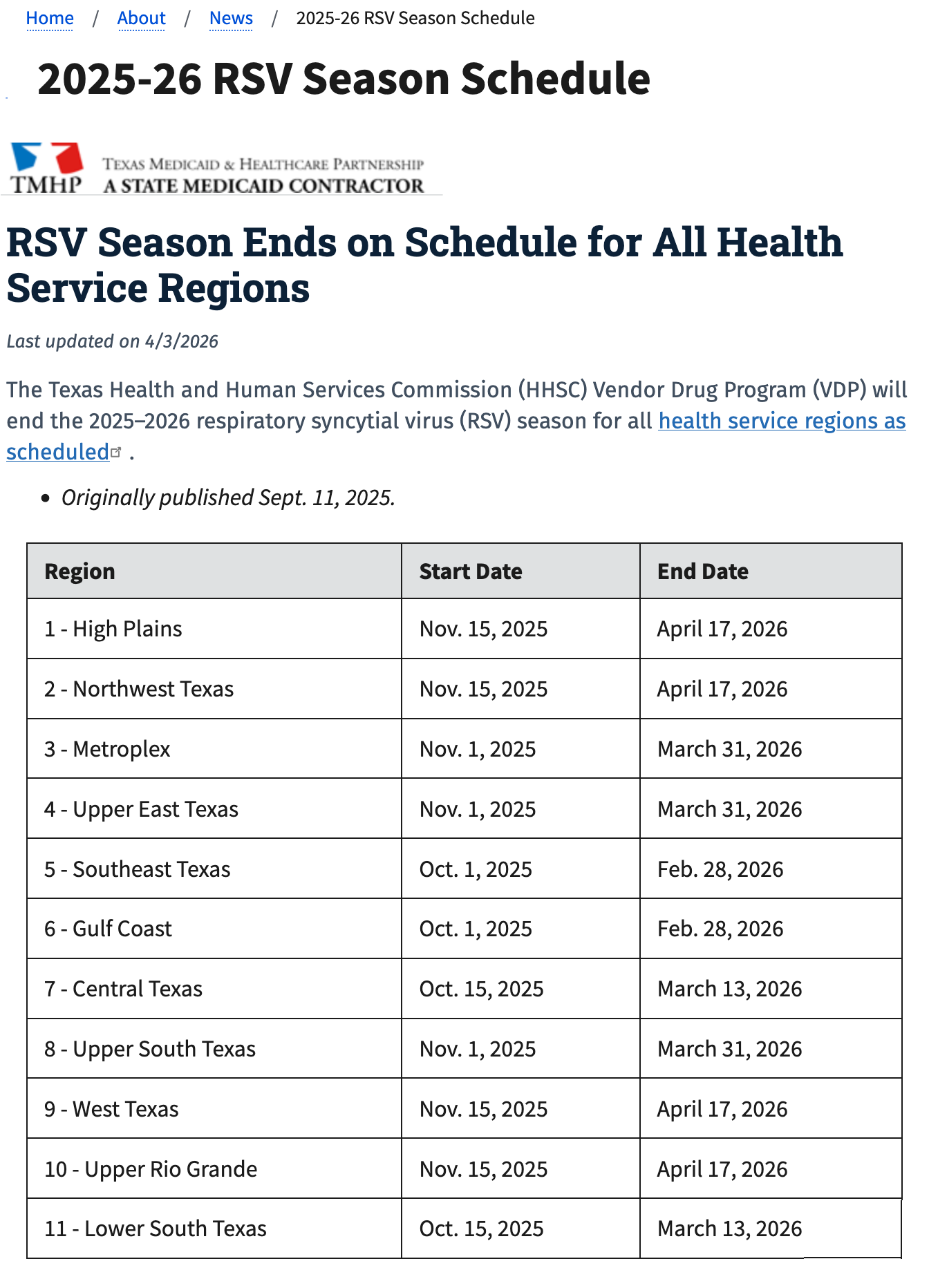
How do we know when RSV season is starting or ending?
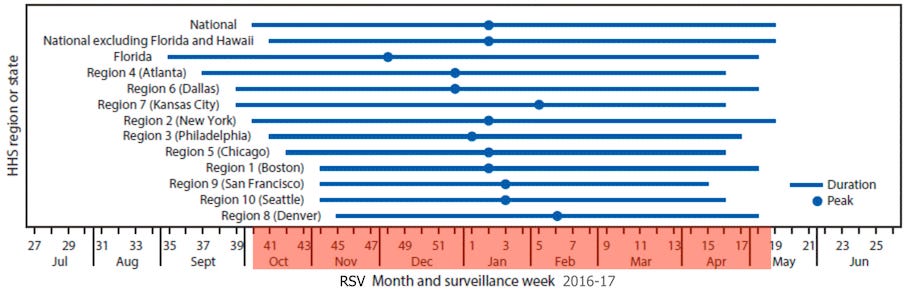
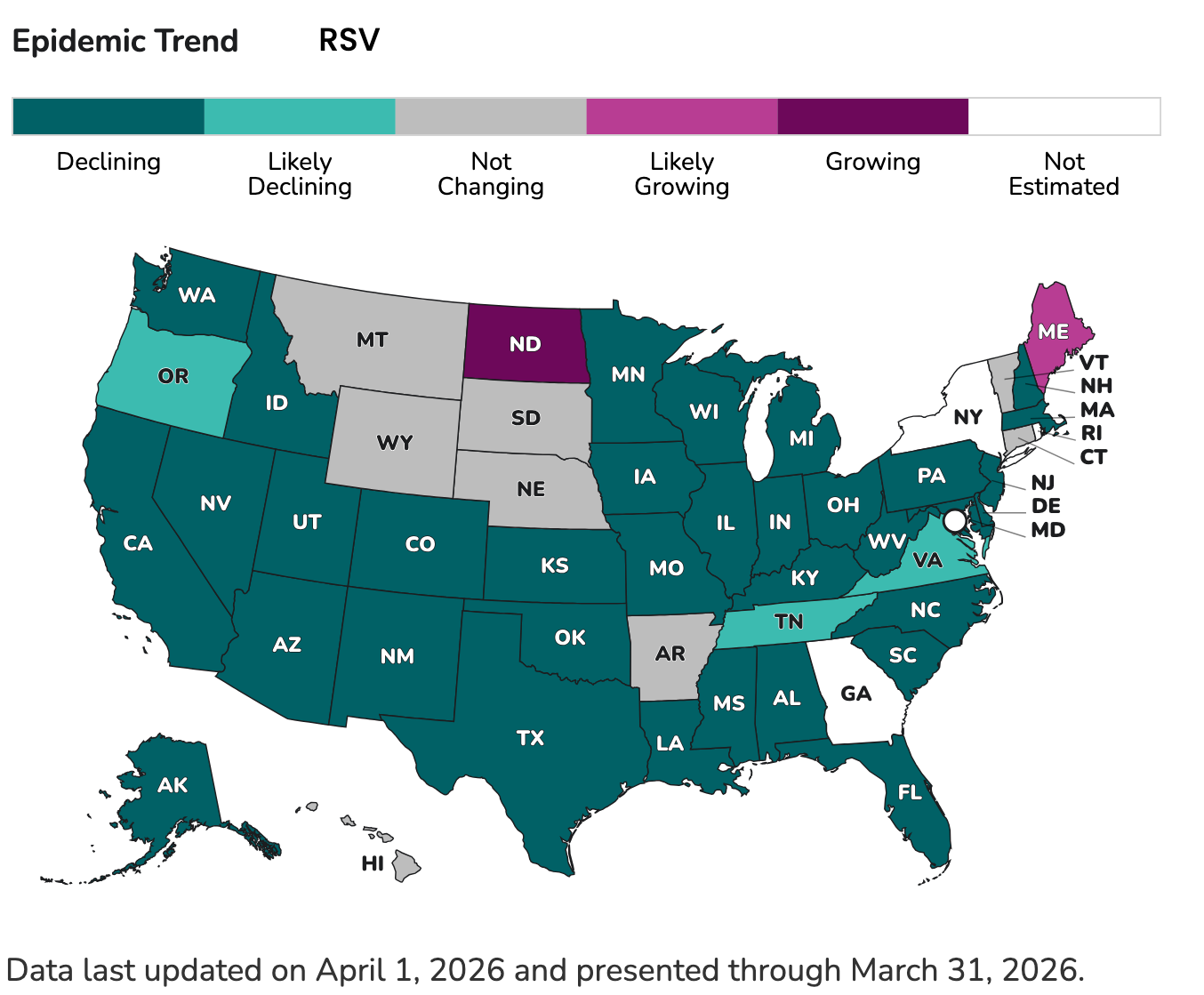
Historical trends, wastewater analysis, and case counts can help guide when RSV season is expected to start, peak, and end in each region of the country.
Where Has RSV Vaccine Giving Season Been Extended?
And that’s why RSV vaccine giving season has been extended in many states.
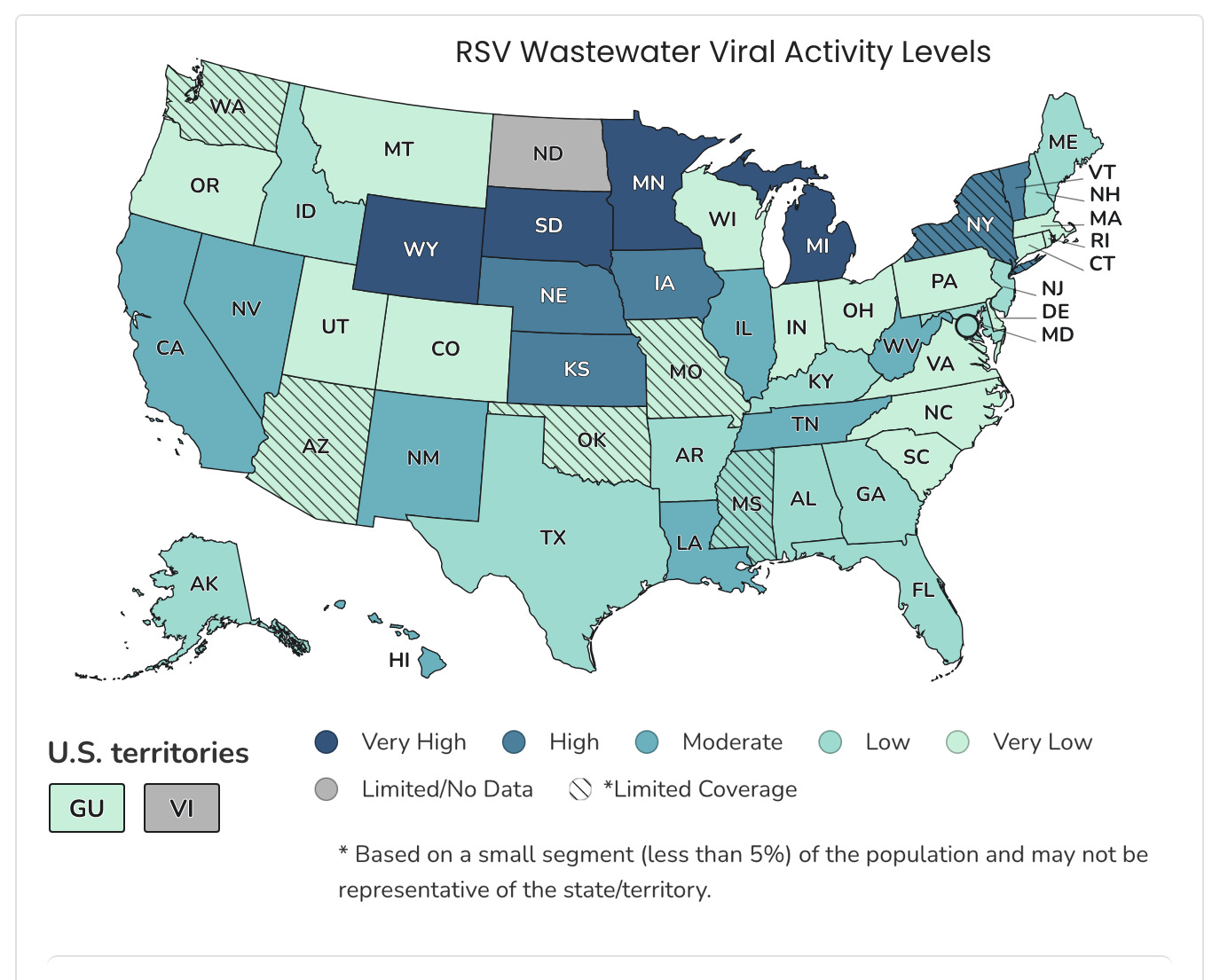
These are mostly the states where RSV activity is lingering and includes (has been confirmed):
Alaska - (through May 31) - now has low RSV wastewater viral activity levels
Arkansas - now has low RSV wastewater viral activity levels
California - still has moderate RSV wastewater viral activity levels
Colorado - now has very low RSV wastewater viral activity levels
Connecticut - now has very low RSV wastewater viral activity levels
Illinois - still has moderate RSV wastewater viral activity levels
Kansas - still has high RSV wastewater viral activity levels
Maryland - now has very low RSV wastewater viral activity levels
Massachusetts - now has very low RSV wastewater viral activity levels
Maine - now has very low RSV wastewater viral activity levels
Minnesota - still has high RSV wastewater viral activity levels
Mississippi - limited coverage, but hnow as very low RSV wastewater viral activity levels
Montana - now has very low RSV wastewater viral activity levels
Nebraska - still has high RSV wastewater viral activity levels
Nevada - still has moderate RSV wastewater viral activity levels
New Hampshire - now has very low RSV wastewater viral activity levels
New Mexico - still has moderate RSV wastewater viral activity levels
New York City, New York - still has high RSV wastewater viral activity levels
North Carolina - now has very low RSV wastewater viral activity levels
Ohio - now has very low RSV wastewater viral activity levels
Philadelphia, Pennsylvania - through April 15 - now has very low RSV wastewater viral activity levels
Rhode Island - through April 15 - now has very low RSV wastewater viral activity levels
Tennessee - still has moderate RSV wastewater viral activity levels
Vermont - still has high RSV wastewater viral activity levels
Washington - limited coverage, but now has very low RSV wastewater viral activity levels
Wisconsin - now has very low RSV wastewater viral activity levels
Many other states have likely extended their deadline too, but just haven’t made a public announcement.
Ask your pediatrician if you aren’t sure.
After all, only a few states haven’t extended, notably Louisiana, Missouri, Oklahoma, Pennsylvania (except Philadelphia), Texas (except Houston and San Antonio), and Virginia.
Getting a Late Season RSV Vaccine
Bottom line - if the RSV vaccine is still available to you, then things to consider that might affect your decision to vaccinate your baby include:
will your new baby be exposed to anyone with RSV in the next few months? Again, consider the level of RSV activity in your area, but also how likely your baby will be to getting exposed. Do you have other kids in daycare or school that will increase the risk of an exposure, for example? If not, then it might be better to get a dose next season.
will your baby be starting daycare later in the summer or next fall? If so, especially if they are not at big risk for RSV exposure now, then you might wait to get a dose of an RSV vaccine at the very beginning of next season.
if you have an older infant (nearing 8 months) and had been waiting to get them vaccinated, then this is probably your last chance, as they likely won’t be eligible next year unless they have certain medical problems. And if they do, then get them vaccinated before it is too late!
Especially remember that healthy infants are only vaccinated during one season, so if you get an RSV vaccine at the end of this season, then you won’t be able to get one next season.
Will the dose you get this season protect them next season?
Officially, the dose is supposed to provide protection for about five months, but some studies have shown protection through a second season.
Lastly, if there is still a lot of RSV activity in your area and there has been no announcement that RSV vaccines can still be given, then call and ask your public health officials why they aren’t doing more to protect your babies from RSV!
More on RSV Surveillance Trends
The National Respiratory and Enteric Virus Surveillance System (NREVSS)
Respiratory Syncytial Virus Hospitalization Surveillance Network (RSV-NET)
Respiratory Virus Surveillance in Native American Children and Adults (SuNA)
2025-2026 Respiratory Syncytial Virus (RSV) Monoclonal Antibody (mAb) Season Extension Map