


With all the new pneumococcal vaccines that have been approved lately, you may be confused about what’s different about them and which one you should get.
And why they keep getting updated!
History of Pneumococcal Vaccines
But first, let’s review the history of our pneumococcal vaccines.
Pneumococcal vaccines protect against the Streptococcus pneumoniae bacteria, which can cause pneumonia, meningitis, blood stream infections, and ear infections, etc.
If you remember, it was back in 1977 that Pneumovax 14, a pneumococcal polysaccharide vaccine (PPSV14), was first approved for adults and high risk children. It was soon replaced by PPSV23 in 1983.
Next came Prevnar, an improved pneumococcal conjugate vaccine which originally protected against seven types of pneumococcal bacteria (PCV7). It was approved in 2000 for infants and toddlers, and has since been updated to 20 serotypes of protection (PCV20), with an indication for adults.
In 2021, Vaxneuvance (PCV15), another pneumococcal conjugate vaccine was approved. It provided protection against 15 serotypes of the pneumococcal bacteria.
Lastly, Capvaxive (PCV21), a 21-valent pneumococcal conjugate vaccine was licensed for adults in 2024.
And if you are wondering why these vaccines contain so many different serotypes, it is simply because ‘we’ have been unable to make a universal vaccine that protects against all 100 strains of the Streptococcus pneumoniae bacteria.
Pneumococcal Vaccine Schedules
So, do you need a pneumococcal vaccine?
And if you do, which one should you get?
Well, although there are now four different pneumococcal vaccines, just know that:
infants and toddlers routinely receive a PCV vaccine (Prevnar 20 or Vaxneuvance) at 2, 4, 6, and 12-15 months
high risk children (2-18 years) who previously received a complete series with PCV7, PCV13, or PCV15 should receive a dose of Prevnar 20 or Pneumovax 23
high risk children (6-18 years) who have never been vaccinated should receive a single dose of PCV20 or PCV15, followed eight weeks later by a dose of Pneumovax 23
high risk adults (19-49, >50 years) who have never been vaccinated should receive a single dose of PCV20 or PCV21
high risk adults (19-49, >50 years) who have previously only received a dose of PCV15 should receive, eight weeks later, a single dose of Pneumovax 23
high risk adults (19-49, >50 years) who have previously only received a dose of Pneumovax 23 should receive a single dose of PCV20 or PCV21 one year after their last dose
high risk adults (19-49, >50 years) who have previously only received a dose of PCV13 should receive a single dose of PCV20 or PCV21 one year after their last dose
high risk adults (19-49, >50 years) who have previously received a dose of PCV13 and a dose of PPSV23 should receive a single dose of PCV20 or PCV21 five years after their last dose
high risk adults (19-49, >50 years) who have previously received both PCV15 and PPSV23 or PCV20 or PCV21 are usually considered vaccinated
adults 65 years and older who have previously received both PCV13 and PPSV23, might consider getting a single dose of PCV20 or PCV21 five years after their last dose
Is that clear?
What’s the Difference Between Vaxneuvance, Prevnar 20, Capvaxive, and Pneumovax 23?
Still have questions?
“PCV20 contains all of the serotypes in PCV15 plus five additional serotypes. PCV21 does not include antigens for 10 serotypes contained in PCV20 but adds antigens for 11 other serotypes not contained in PCV15 or PCV20. However, PCV21 does not contain serotype 4, which has implications for certain populations that recently have had high rates (30% or greater) of invasive pneumococcal disease due to serotype 4, particularly in Alaska, Colorado, the Navajo Nation, New Mexico, and Oregon. Those at risk of serotype 4 pneumococcal disease are typically adults younger than 65 years with a risk condition and a history of substance abuse or homelessness.”
Practice Alert: Pneumococcal Conjugate Vaccines Approved for Adults
First know that one big difference is that the older PPSV23 vaccine is a polysaccharide vaccine and the newer PCV vaccines are conjugate vaccines. And that in general, conjugate vaccines use newer technology and work well for infants and toddlers. Also, they elicit a better immune response.
So essentially, as the newer conjugate vaccines include enough sertoypes to match the coverage of Pneumovax 23, they will replace it, and it will no longer be used.
“Routine use of the conjugated vaccine as part of an immunisation programme has been shown to significantly reduce the incidence of disease caused by vaccine‐type serotypes (VTs), not only in the children who were vaccinated but also in groups that were not vaccinated (due to reduced carriage rates among vaccinated children), an effect known as 'herd immunity'.”
Conjugated pneumococcal vaccine versus polysaccharide pneumococcal vaccine for prevention of pneumonia and invasive pneumococcal disease in immunocompetent and immunocompromised adults and children
The other difference between these vaccines is basically about how many serotypes of the Streptococcus pneumoniae bacteria that the vaccine protects you against.
And while more is in general better, know that all of these vaccines protect you against the most common strains of pneumococcal bacteria.
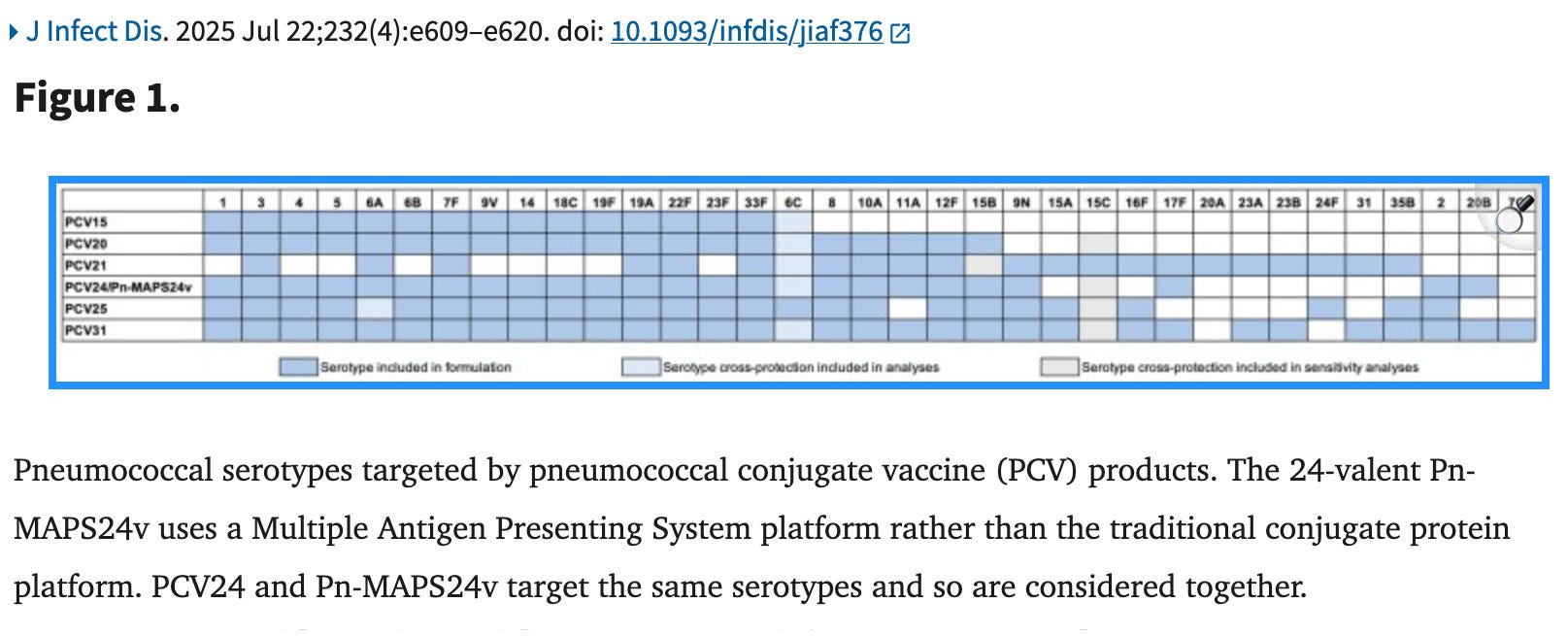
That’s why there is no preference for you to get one over the other, although when only PCV15 is used, except for healthy children, you often need an extra dose later.
Still wondering why we have so many different pneumococcal vaccines?
Basically it is because we have two vaccine manufacturers that have developed them, including:
Merck - Vaxneuvance, Capvaxive, and the older Pneumovax 23 vaccine
Pfizer - Prevnar 20
So which vaccine you have access to, likely depends on from which manufacturer your provider orders their vaccines.
And what’s next?
“Company advances adult program to fifth generation 35-valent vaccine candidate.”
Pfizer Advances Pivotal Pediatric Pneumococcal Vaccine Program Following Strong Positive Phase 2 Results
Newer pneumococcal vaccines that cover even more sertotypes are in development, including whole cell vaccines, protein based vaccines, multiple antigen presenting system vaccines, like the 24-valent pneumococcal vaccine from GSK, and new conjugate vaccines that include more serotypes, like Vax-24 (infants) and Vax-31 (infants and adults) from Vaxcyte, nd 25vPnC (essentially Prevnar 25).
Bottom line - Don’t skip or delay getting your recommended pneumococcal vaccines. They are safe, effective, and necessary to prevent invasive pneumococcal disease, including meningitis, pneumonia, and sepsis.
More on the Key Differences Between PCV and PPSV Vaccines
Pneumococcal Catch-Up Guidance for Healthy Children 4 Months through 4 Years of Age
Practice Alert: Pneumococcal Conjugate Vaccines Approved for Adults
The remarkable history of pneumococcal vaccination: an ongoing challenge
Pneumococcal Serotype Distribution and Coverage of Existing and Pipeline Pneumococcal Vaccines
I am glad they keep improving these pneumococcal vaccines (funny how that matters as you get old enough to qualify for them!) and thank you for this concise, excellent article on them.