

One of the key arguments of anti-vaccine influencers is that the immunization schedule has exploded in recent years.
Kids never used to get so many vaccines they say.
How true is that?
What Were the Recommended Immunization Procedures in 1950?
Can you guess how many immunizations were recommended in 1950, for example?
“For 13 diseases immunization is recommended with certain limitations or restrictions, and for only 4 diseases, smallpox, diphtheria, whooping cough, and tetanus, is routine immunization recommended.”
Recommended immunization procedures July 1951
Believe it or not, as long ago as 1950, we had vaccines for 13 different diseases!
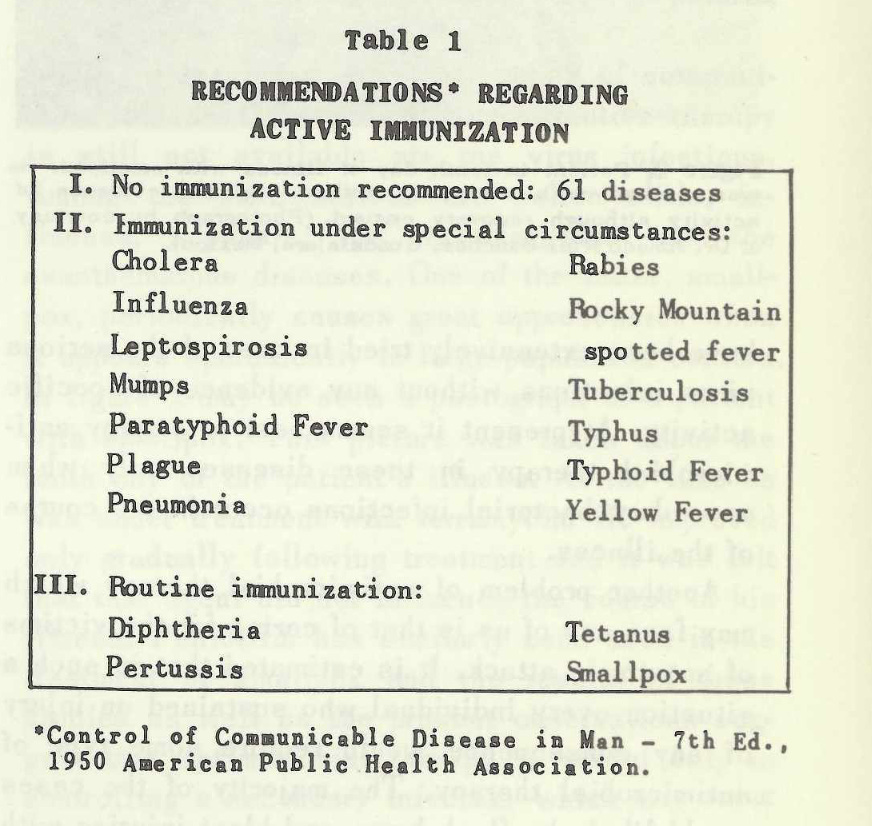
Sure, not all of those 13 immunizations were given routinely, but they were available and were given when needed…
And when kids got their vaccines, they got more than just one or two shots, as some folks suggest.
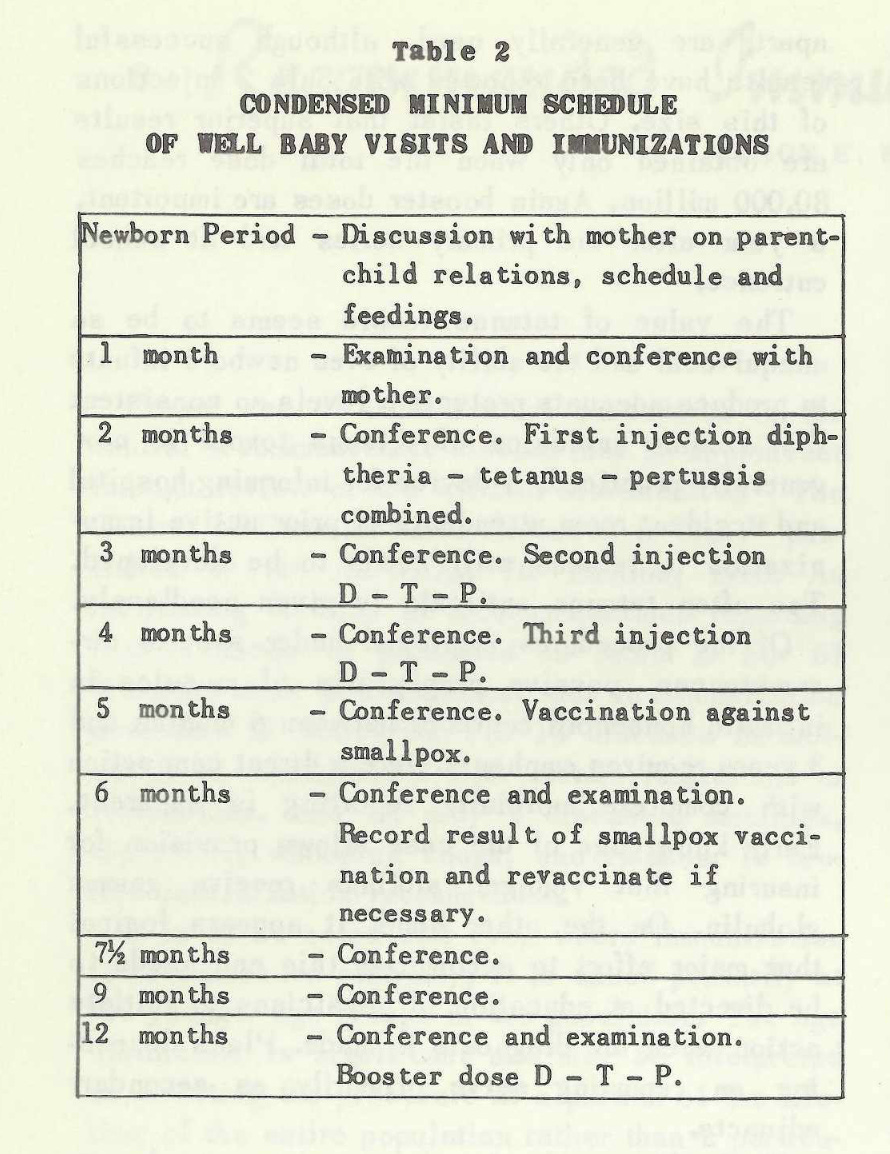
In fact, they got multiple doses of the original, whole cell DTP vaccine and the smallpox vaccine and they got them on an earlier schedule than we give today!
“Three injections containing at least 10,000 million bacteria per injection, 4-6 weeks apart, are generally used, although successful results have been reported with only 2 injections of this size. Others insist that superior results are obtained only when the total dose reaches 80,000 million”
Recommended immunization procedures July 1951
Unlike the very pure vaccines kids get today, with very few antigens, the vaccines they used to get contained millions of bacteria per injection. Sure, they were dead bacteria, but it just goes to show what a baby’s immune system can handle.
These vaccines also contained alum, which has always been a common ingredient in vaccines.
What else did these kids get?
A second booster dose for diphtheria, pertussis, and tetanus at about 3 years of age.
A booster for diphtheria and tetanus at school entrance.
passive prophylaxis of measles with gamma globulin in intimate household contacts between 6 months and 3 years
And of course, they got a lot of polio, measles, mumps, Hib (epiglottitis and meningitis), and pneumococcal disease (meningitis and sepsis), as they weren’t yet vaccine preventable.
References
Wegman, Myron E. Recommended immunization procedures July 1951. Conference of State Epidemiologists on National Morbidity Reporting (1951 : Atlanta, GA). CDC bulletin ; v. X, no. 7, p. 10-12.