
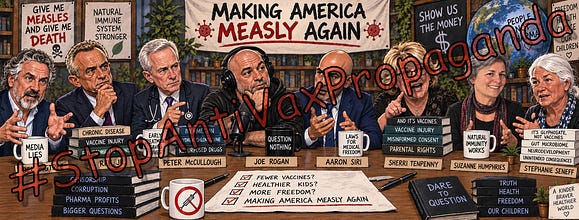

It is no surprise that people often get scared when they see a VAERS report or hear a vaccine injury story.
After all, how can you ignore the apparent connection between a vaccine and a severe reaction when the reaction occurs so soon after vaccination?
Understanding Why Severe Reactions Seem to Happen After You Get a Vaccine
But that’s what anti-vaccine influencers are counting on…
It’s important to remember that any kind of apparent connection often isn’t a real connection though.
So how does that work?
Well, just remember that although you might hear about a few severe reactions, they are only after many millions of people have been vaccinated.
In fact, you should understand that, in the United States:
each day, around 30,000 to 40,000 infants under 12 months of age are estimated to be receiving a vaccine
each day, around 60,000 to 80,000 children under age 6 years of age are estimated to be receiving a vaccine
each day, around 130,000 to 180,000 children under age 18 years of age are estimated to be receiving a vaccine
each day, around 350,000 to 450,000 adults are estimated to be receiving a vaccine
each day, around 3.3 million people (children and adults) were getting a vaccine at the peak of the COVID pandemic, including COVID vaccines, flu vaccines, and other routine vaccines
But why is all of that important?
It’s because so many people are getting vaccines each day that it should be no surprise that many will report having some kind of a new symptom or condition soon after they are vaccinated.
When millions of people are vaccinated, the surprising thing isn’t that some will develop serious medical conditions shortly afterward. The surprising thing would be if none of them did!
And while some of these reactions may genuinely be caused by vaccines, many will occur simply by coincidence. When millions of people are getting vaccinated, some will inevitably develop new symptoms or medical conditions shortly afterward, even if the vaccines had nothing to do with them.
Think about conditions like SIDS, autism, asthma, or eczema.
Every year, children die unexpectedly, develop new medical conditions, or receive diagnoses for conditions that may have been present for months or years.
And because so many children receive vaccines, some of these events and diagnoses will inevitably occur shortly after vaccination.
That doesn’t mean vaccines caused them. It means we need to determine whether these events are happening more often than we would normally expect.
Why?
Because so many kids are receiving vaccines each day.
That doesn’t mean that we ignore these possible associations, though!
Instead, we look to see if these are real signals that might indicate a problem.
Still not convinced?
Suppose someone tells you that 75,000 people developed knee pain within a week of buying a new kind of high-priced athletic shoe that is supposed to increase performance…
That might sound suspicious and lead you to think that the shoes should be recalled; at least it might until you learn that over 10 million people bought those new shoes!
All of a sudden, it isn’t that suspicious, especially if you understand that knee pain isn’t that uncommon in athletes.
And so those athletes likely would have developed knee pain no matter which shoes they were wearing. It is only if many more of them developed knee pain than is usual that there would likely be a concern.
How Can a Serious Medical Event After Vaccination Be a Coincidence?
And this isn't just a hypothetical argument. Researchers have actually calculated how many serious medical events we should expect to see after vaccination, even when vaccines aren't responsible.
Consider the study, Expected Rates of Select Adverse Events following Immunization for COVID-19 Vaccine Safety Monitoring.
“We estimated rates of select medical conditions considered potential AESI expected to occur among vaccinated persons in the general US population within 1 day, 7 days, and 42 days after COVID-19 vaccination. Observed rates of these medical conditions after vaccination can be compared to the rates that would be expected to occur coincidentally among vaccinated persons in the general population regardless of COVID-19 vaccination.”
Expected Rates of Select Adverse Events After Immunization for Coronavirus Disease 2019 Vaccine Safety Monitoring
Basically, the study calculated how many serious medical events would be expected coincidentally after vaccinating 10 million people.
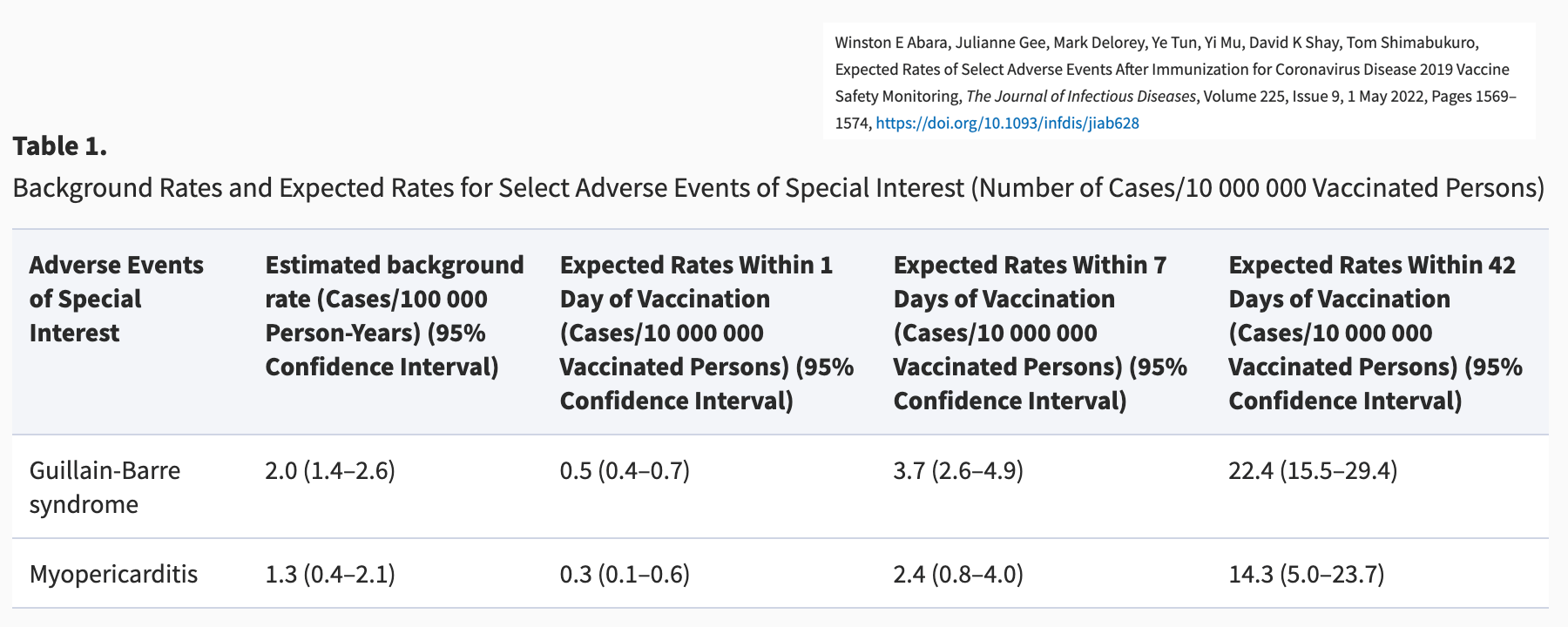
And it published numbers based on background incidence rates, not observed vaccine injuries.
What does that mean?
It shows how a serious medical event can occur almost immediately after vaccination without being caused by vaccination!
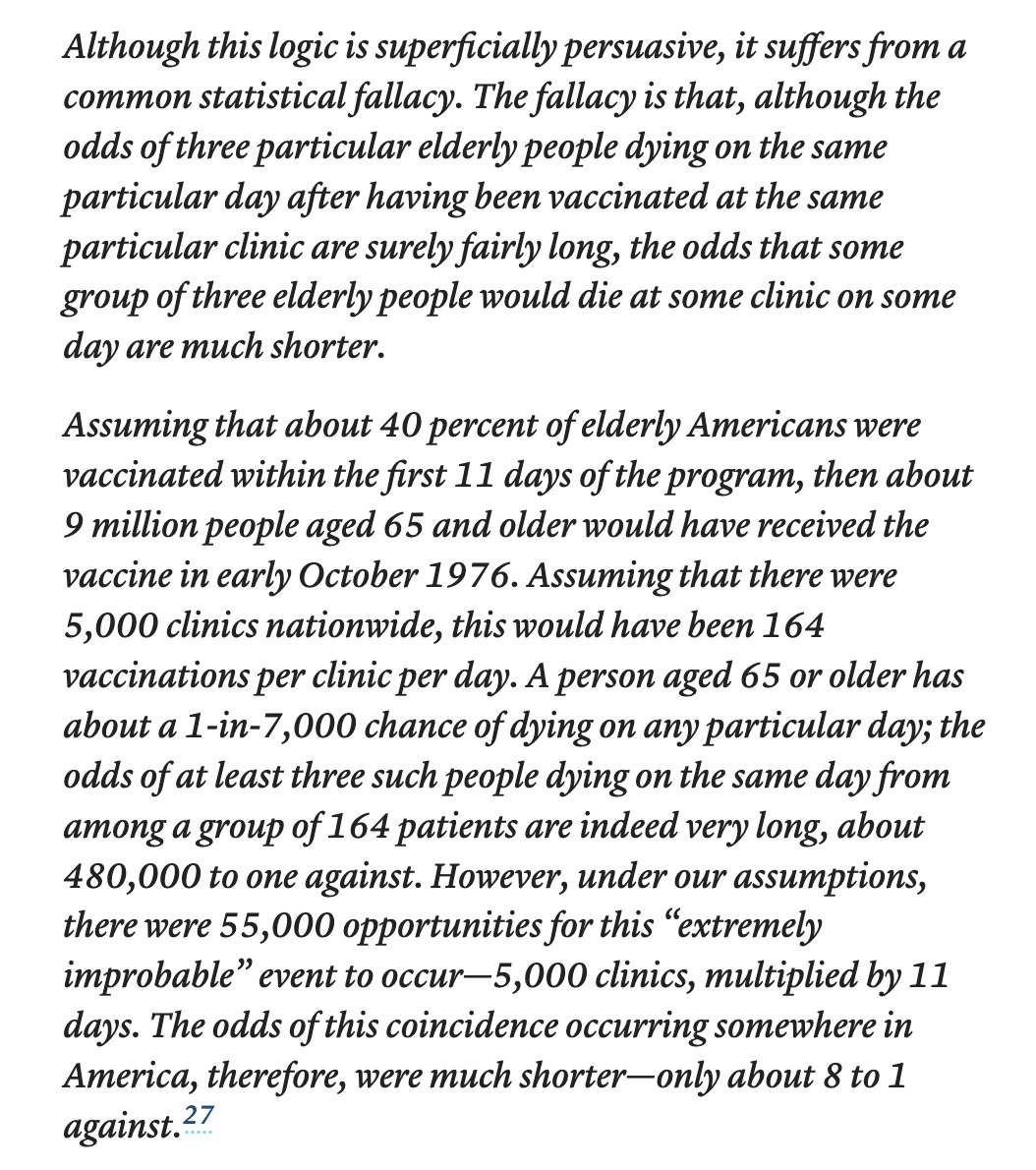
What else?
Many other studies have also shown this.
So the next time you hear about someone who developed a serious medical condition shortly after vaccination, remember that the timing alone doesn’t tell us whether the vaccine was responsible.
Their illness may be real. Their symptoms may be severe. And the timing may seem extraordinarily suspicious.
But when millions of people receive vaccines, some will inevitably become seriously ill shortly afterward, even if the vaccines had nothing to do with their illnesses.
That’s why scientists don’t simply count medical events after vaccination. They investigate whether those events are occurring more frequently than would normally be expected.
Because the only way to distinguish a genuine vaccine injury from an unfortunate coincidence is to look beyond the timing and examine the evidence.
Many of the reactions reported to VAERS as serious adverse events are neither serious nor adverse.
Transiemt mild soreness at the site of the injection, swelling, redness, low grade fever, malaise and fatigue are normal after vaccination and should be expected.
It was a mistake to categorize these as serious adverse reactions in the first place. That reinforces the mistaken idea that one shouldn't feel anything aftet a vaccination.
Such reactions are to be expected. They represent an immune response and should be viewed as a welcomed indication that the vaccine is working.
I had a heart attack three days after getting a haircut.
Therefore, according to the anti-vaxers, the haircut caused the heart attack.