


Anti-vaccine can’t keep from pushing the idea that vaccines are associated with autism in their competing anti-vaccine autism theories.
First it was thimerosal.
Next it was the MMR vaccine.
And then?
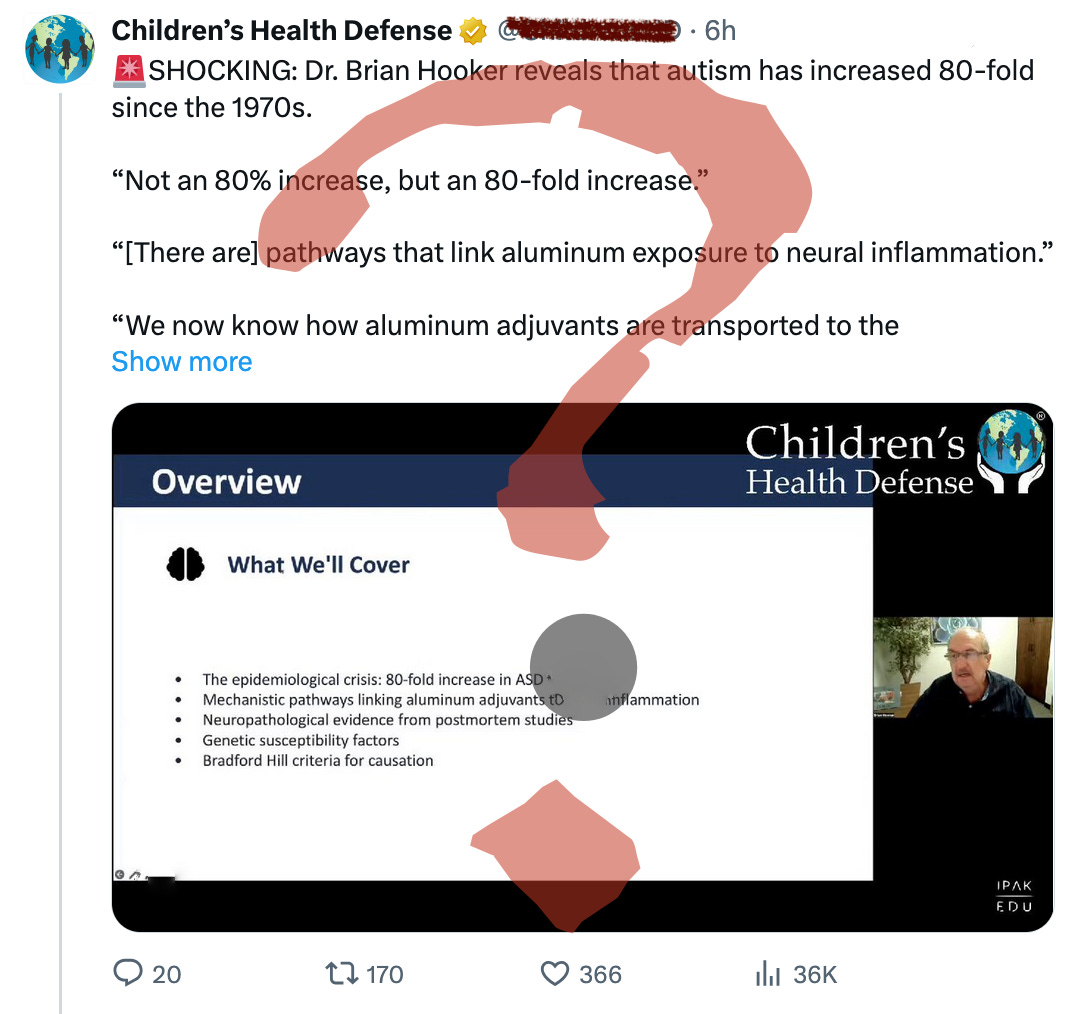

It has been never ending propaganda to make you think that the only explanation for the increase in kids getting diagnosed with autism must be vaccines.
The Very Simple Reasons That Autism Has Increased
What do they leave out?
They leave out all of the things that are much more likely to be causing the increase in kids, and adults, being diagnosed with autism over the years.
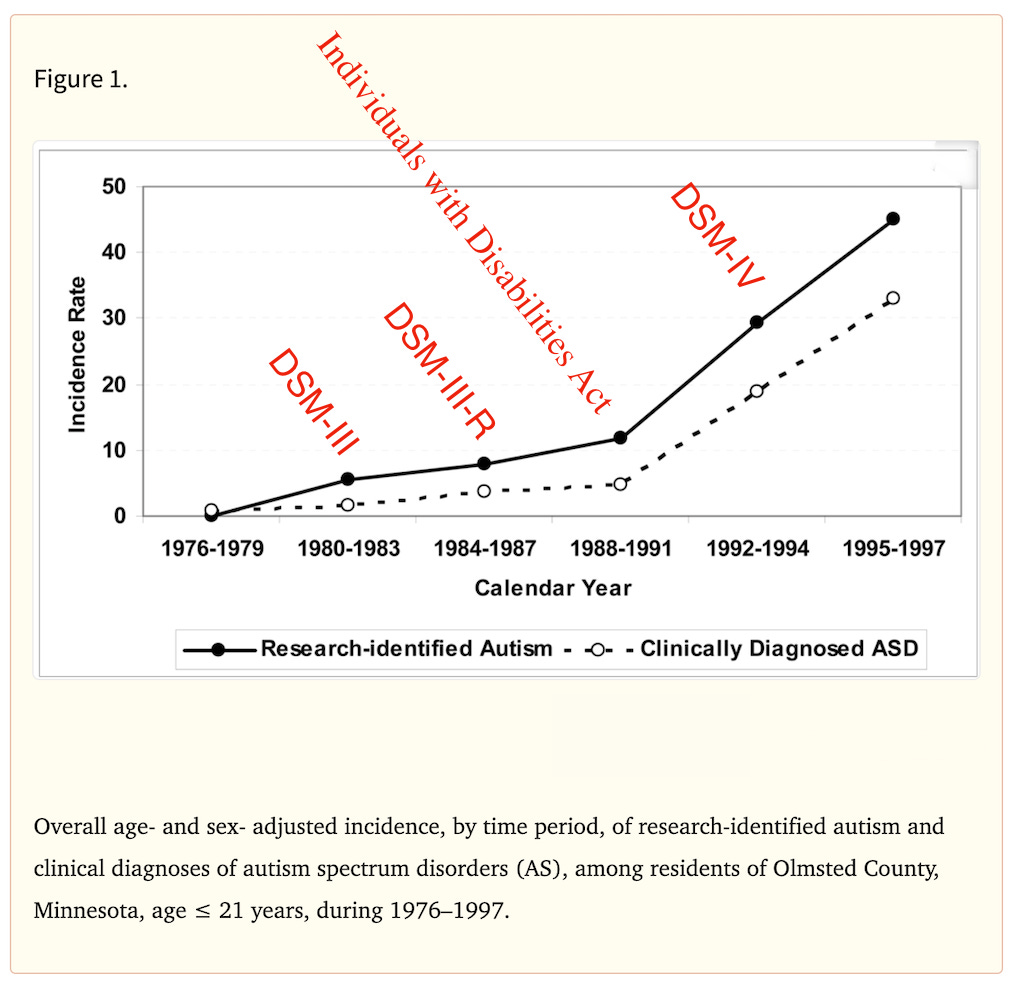
Reasons that include:
laws in the 1950s and 1960s improved educational access for disabled students, which was important as they started to move them out of institutions
the Education for All Handicapped Children Act in 1975 stated that children with disabilities could no longer be excluded from school - that’s why you didn’t see autistic kids in school before this time!
changes in DSM criteria, which went from labeling children with autism as having childhood schizophrenia (1952) and including just three essential features of infantile autism (DSM-III 1980) to adding PDD-NOS (1987) and more subtypes and symptoms to the autism diagnosis category in DSM-IV (1994) and V (2013). This is important! Most of the autistic children today would not have been diagnosed in 1980 because they would not have met DSM-III criteria!!!
the IDEA, in 1990, included autism as a separate disability, making it a little easier to get services - and as it became easier to get services, it increased the reason for people to get a diagnosis for their kids!
the amending of the IDEA in 1997, with an emphasis on access to the general curriculum and giving states the authority to expand the “developmental delay” definition to also include students up to age nine
more screening for autism, with an emphasis on early recognition, formalized in a 2007 AAP policy statement that all toddlers be screened for autism at 18 and 24 months
All together, this led to better recognition of autistic children among both parents and health care providers.
“In urban areas of South Korea, some families of children with developmental delays will go to great lengths to avoid a diagnosis of chapae, or autism. They think of it as a genetic mark of shame on the entire family, and a major obstacle to all of their children’s chances of finding suitable spouses.”
Researchers track down autism rates across the globe
Importantly, it moved autistic children into classrooms, instead of their being hidden away at home or in institutions.
We have more autism because we are looking to diagnose all of the autistic children!

More and more autistic children now get a formal diagnosis, something that generations of autistic people missed out on. And that’s why we now have a “lost generation” of adults with autism that weren’t diagnosed when they were children.
It’s still not vaccines.
It never was.
And allowing anti-vaccine influencers to continue to push this idea isn’t helping anyone one.
https://exposed.substack.com/p/there-is-no-autism-epidemic?r=zrmcb&utm_campaign=post&utm_medium=web
https://exposed.substack.com/p/the-epidemic-of-autism-is-a-mirage?r=zrmcb&utm_campaign=post&utm_medium=web