

Since everyone now knows that the United States has lost our measles elimination status, let’s talk about what that means.
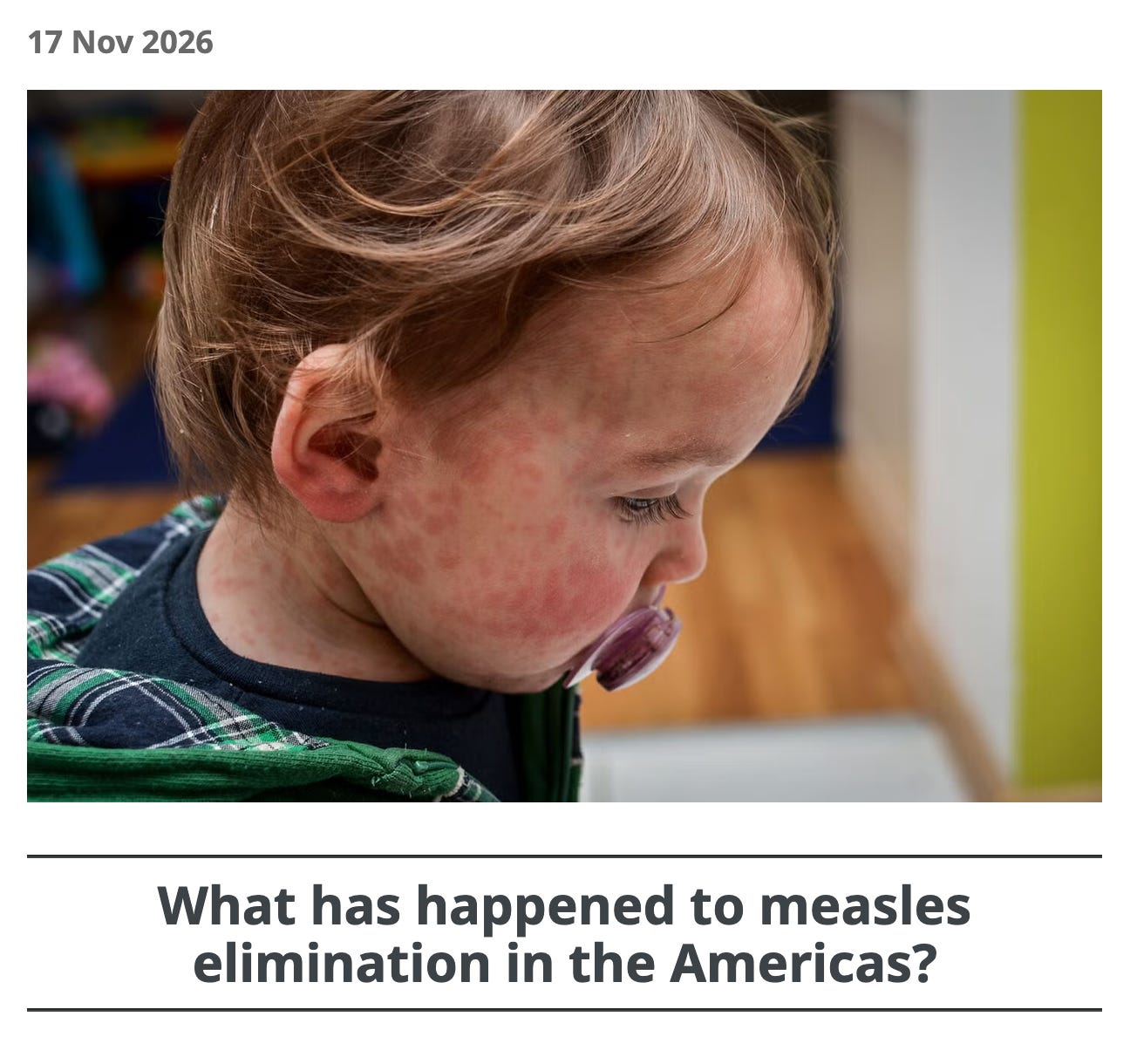
Especially as it isn’t really news to most people who have seen it coming since last year…
The United States Has Lost Their Verification Status as Free From Endemic Measles Transmission
We will start with when we first gained status as having eliminated measles in the United States in 2000.
“The findings in this report document a continuing trend of record low numbers of measles cases and a high percentage of imported cases, suggesting that measles is not endemic in the United States. In 1999, as in the previous 2 years, few measles cases of unknown source were reported and these cases did not cluster temporally or geographically in patterns that would suggest a chain of endemic transmission. Virologic data indicated that only imported virus strains were transmitted in the United States in 1999.
During March 2000, CDC convened a consultation of measles experts§ to evaluate data on the elimination of endemic measles from the United States. The data indicated that, during 1997--1999, measles incidence has remained low (<0.5 cases per 1,000,000 population) and that most states and 99% of counties reported no measles cases. In addition, measles surveillance was sensitive enough to consistently detect imported cases, isolated cases, and small outbreaks. Evidence of high population immunity included coverage of >90% with the first dose of measles vaccine in children aged 19--35 months since 1996 (2) and 98% coverage among children entering school (3). In 48 states and the District of Columbia, a second dose of measles vaccine is required for school entry (4). A national serosurvey indicated that 93% of persons aged >6 years have antibody to measles (5).
On the basis of these findings, the experts concluded that measles is no longer endemic in the United States. However, because endemic measles could be reestablished if vaccination coverage declines, efforts should continue to ensure that coverage remains high and that surveillance is strong. In addition, because of the continued threat of imported measles, the experts encouraged strengthened support for global measles control and eradication of measles.”
Measles --- United States, 1999
That was after several years of relatively low measles case counts, with a high percentage of imported cases.
“The Dahlem definition of elimination was put forth as the existing standard (reduction to 0 of the incidence of a specified disease in a defined geographic area as a result of deliberate effort). The current US target was that by year 2000, all cases could be linked within 2 generations to an imported case.”
Summary and Conclusions: Measles Elimination Meeting, 16–17 March 2000
In fact, in 1999, there were ‘only’ 100 measles cases in the United States and most were either imported or import-linked.
But even then, experts knew that it might be hard to hold on to our measles elimination status!
“Each of the 12 consultants (and each of the 7 resource specialists present on 17 March) concluded that measles is not endemic in the United States at present. Several mentioned that no single line of evidence was conclusive but that every line of evidence (reported cases, virological evidence, immunization coverage, serosusceptibility) supports the notion of nonendemicity. However, participants were concerned about the stability of the situation and noted that the continued international importation of measles indicates the potential for reestablishment of endemic transmission if immunization coverage is not sustained at the current high level.”
Summary and Conclusions: Measles Elimination Meeting, 16–17 March 2000
And unfortunately, we did not maintain the high enough level of immunization coverage to prevent the reestablishment of endemic transmission of measles.
“Notwithstanding the tremendous progress that has been made, it is critical to un- derstand that this is an inherently unstable situation and that we must maintain (and improve) our efforts to ensure that immunization levels remain very high and that surveillance is of high quality.”
Summary and Conclusions: Measles Elimination Meeting, 16–17 March 2000
Instead, we let anti-vaccine influencers scare people away from getting vaccinated, and we let them erode herd immunity levels of protection that had been helping maintain our measles elimination status.
What else?
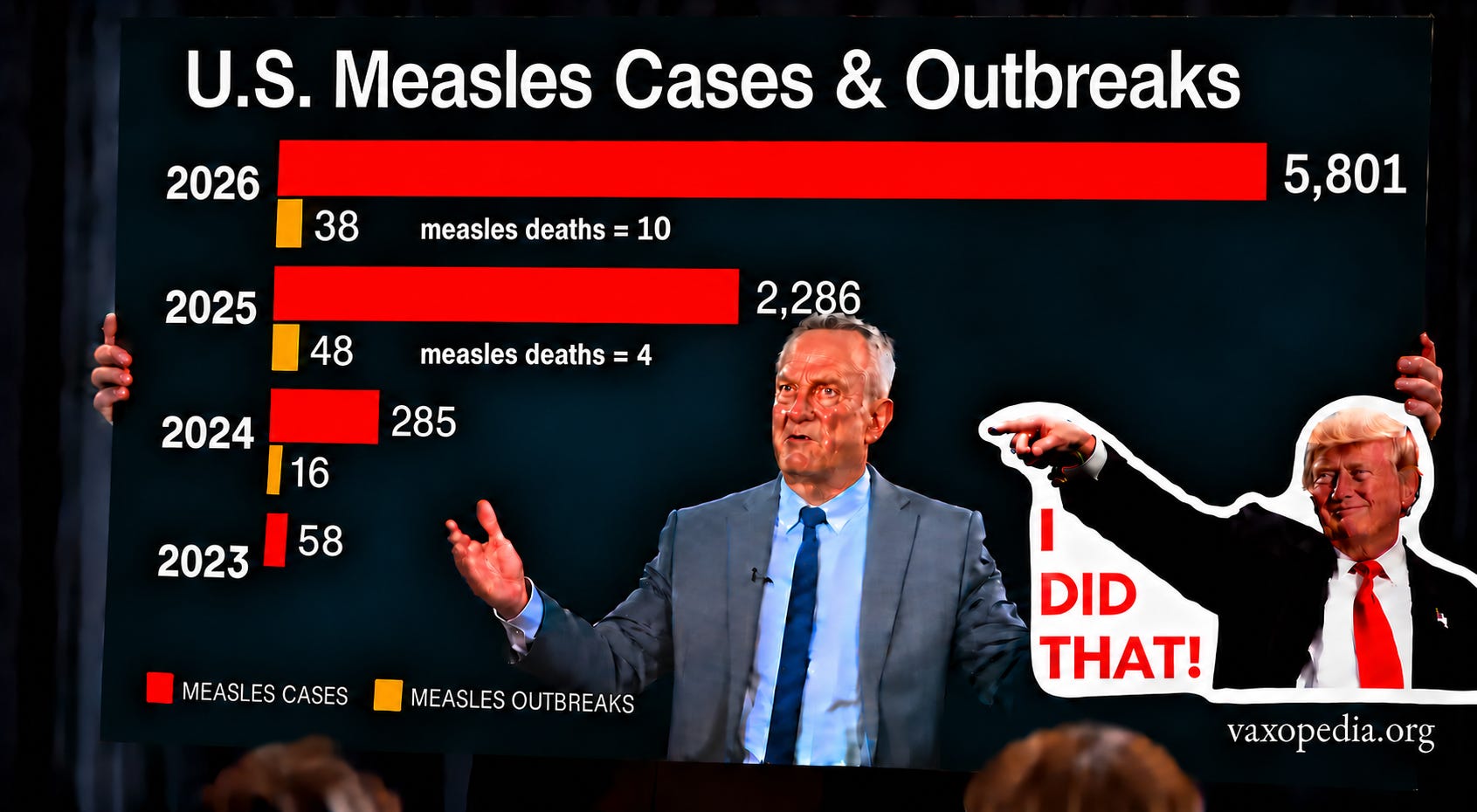
Even though we have taken a great leap backward in controlling measles, Secretary RFK, Jr has no plans to change any of his strategies now that we are officially losing our measles elimination status.
And that will mean one thing.
It will mean that if you are unvaccinated, including those who can’t be vaccinated, and unprotected, then you will have an increased risk of catching measles in more places, from daycares and schools to grocery stores, airports, and doctors’ offices.
Eventually, though, the outbreaks will get so out of control that few will want to risk going without an MMR vaccine, and we will get the outbreaks under control again, and we will regain our measles elimination status.
Tragically, many will die and many more will suffer through a week or more with measles until we once again get this vaccine-preventable disease back under control.
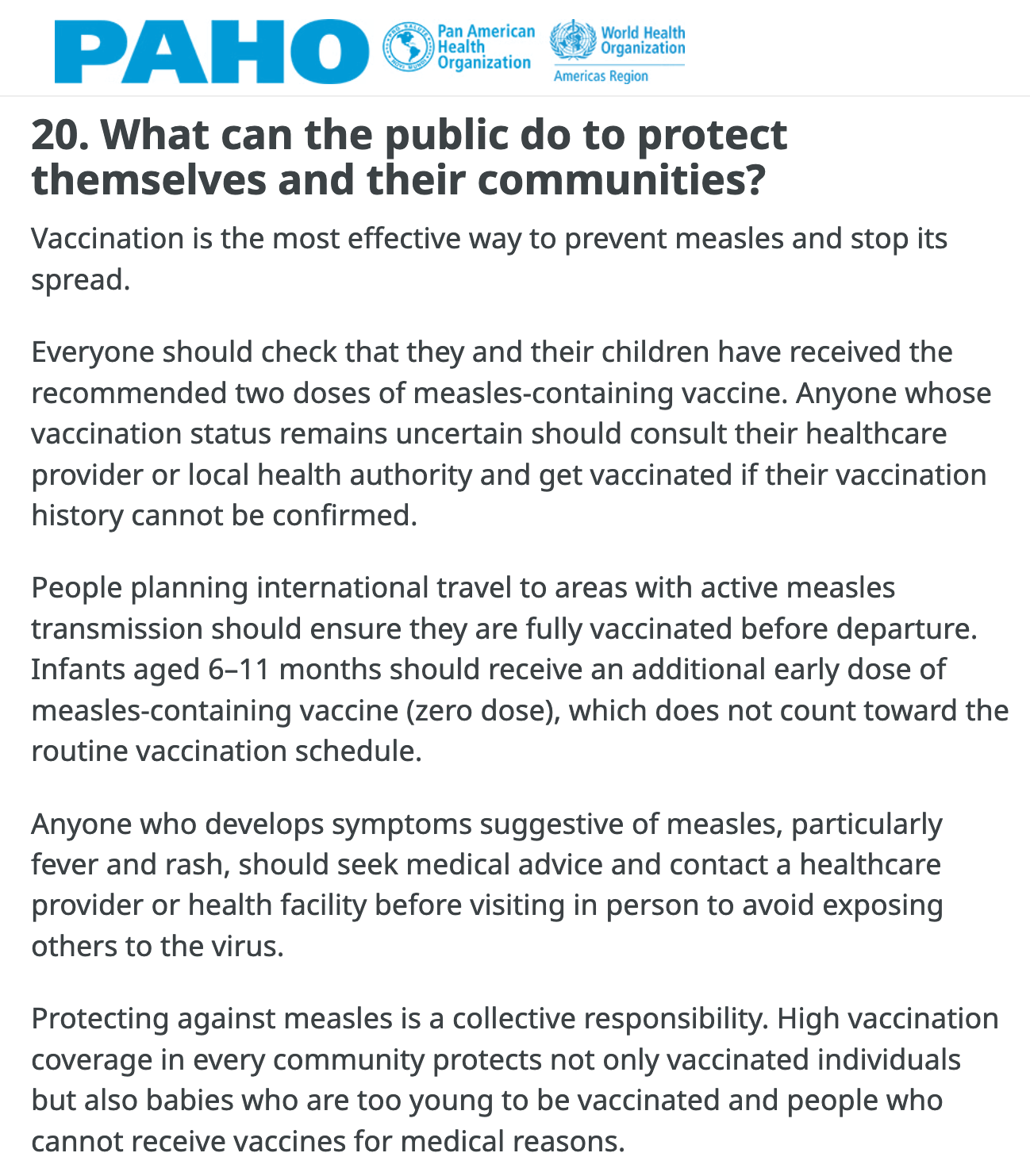
Of course, you could get vaccinated and protected now and you could work to build back herd immunity levels of protection around those who are most at risk, including those too young to be vaccinated and those with true medical exemptions to getting vaccinated.
More on Measles Elimination Status
PAHO - Measles in the Americas: Questions and Answers – Technical Reference for Journalists and the Public
Remarks by Dr. Jarbas Barbosa - Media Briefing on Measles in the Americas
PAHO - Region of the Americas is declared free of measles - 2016
Summary and Conclusions: Measles Elimination Meeting, 16–17 March 2000