

As we continue to see more and more measles cases, you may be wondering what the recommended measles vaccines are for children and adults.
Not surprisingly, the MMR vaccine schedule and recommended ages for when you and your kids should get vaccinated depends.
Recommended Measles Vaccine Ages - Normal Risk
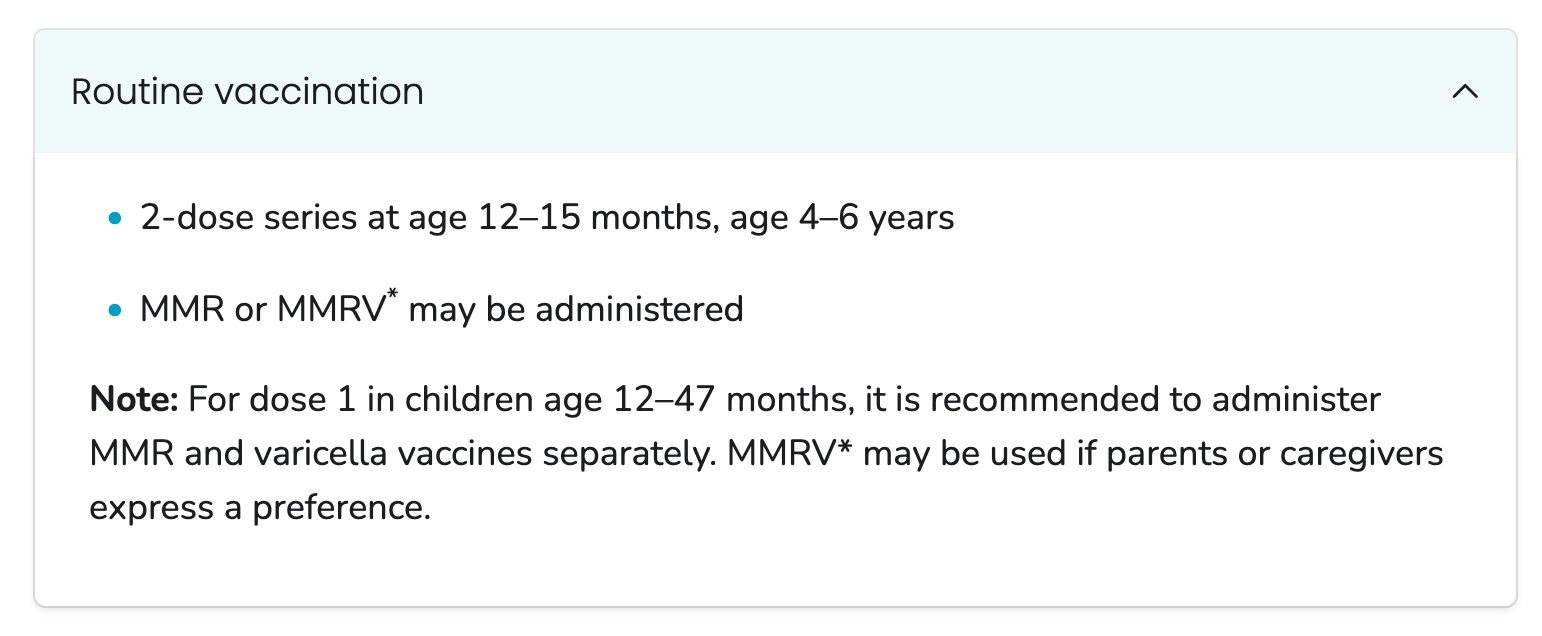
In usual situations, it is recommended that children routinely get:
their first dose of MMR when they are 12 to 15 months old, and
a second dose of MMR when they are 4 to 6 years old
And older children who aren’t vaccinated, should receive two doses of MMR at least 4 weeks apart.
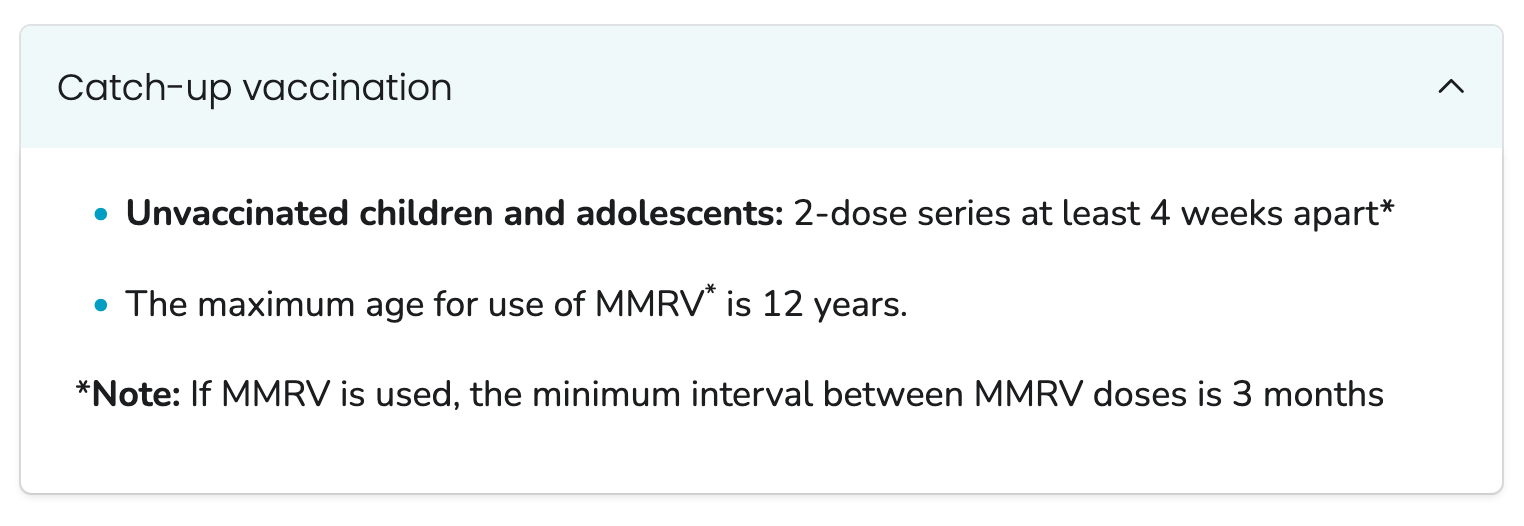
Unvaccinated adults should receive one or two (mostly students at post-high school educational institutions) doses.
Recommended Measles Vaccine Ages - High Risk
And then there are the special situations, which change those routine ages for getting a measles vaccine.
What special situations?
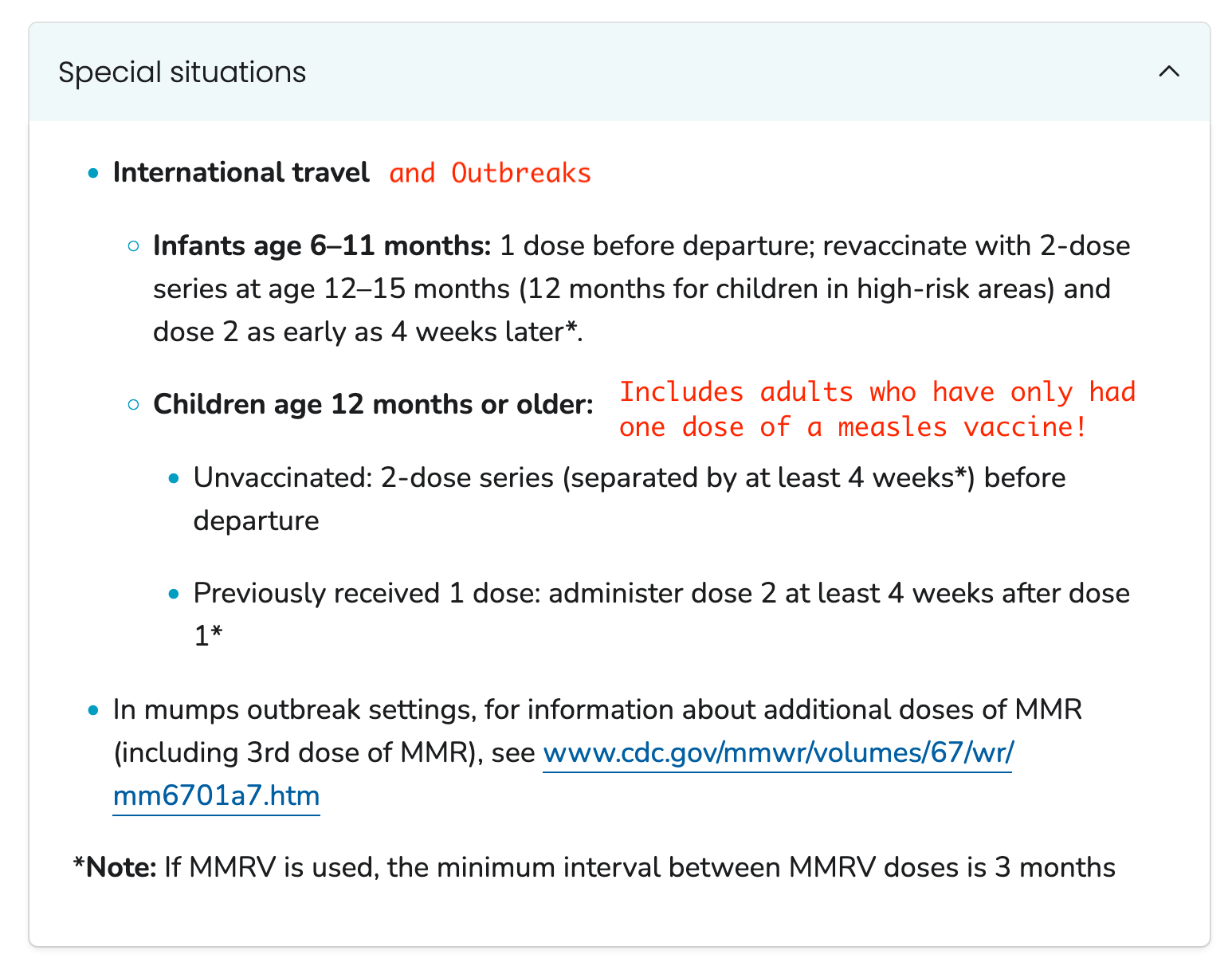
Mostly, special situations include living in or traveling to an area that has an ongoing measles outbreak. In general, traveling out of the United States is also considered a special situation when it comes to measles vaccination.
And in these special situations, you should consider:
getting infants an early MMR, beginning at six months of age (this dose is repeated at 12 months)
getting infants their first MMR at 12 months (at least 4 weeks after any previous dose)
getting toddlers an early second MMR, at least 4 weeks after their first MMR at 12 months (this dose does not have to be repeated and counts at the dose that is traditionally given at age 4 to 6 years)
getting adults a second MMR if they have only had one dose or if you aren’t sure if you are immune to measles
And no, there is no downside to getting an early MMR, despite what some folks might say.
An exposure to measles might also count as a special situation if you aren’t up-to-date, as long as you get your MMR within three days of being exposed to someone with measles.
What about a third dose of MMR?
You don’t routinely get a third dose of MMR for measles protection.