

JB Handley wants you to believe that hepatitis B vaccine safety studies don’t exist.

He also wants you to think that hepatitis B vaccines are the “single biggest contributor to the autism epidemic.”
Propaganda About Hepatitis B Vaccine Safety Studies from JB Handley
Of course, that is all pure propaganda.
“Most people don’t believe me when I explain this to them, which is why I’m going to share the package inserts with the two vaccines with you right now.”
Hep B vaccine safety studies don't exist
His “evidence” that the hepatitis B vaccine safety studies weren’t well done is a well-known anti-vaccine talking point.

It is simply the fact that study participants were monitored for short term side effects for 4 to 5 days after getting each dose of their hepatitis B vaccine. However, since they received three doses, it obviously doesn’t mean that the study only lasted for four days!
And there are other hepatitis B vaccine studies that monitored recipients for even longer!
“Eight subjects were hospitalized during the two phases of the study, three in the SmithKline Beecham group and five in the Merck group. Four were admitted with respiratory illnesses, two with gastroenteritis, one with a viral syndrome and one with an inguinal hernia. These hospitalizations occurred 15 to 243 days after vaccination.”
Comparative safety and immunogenicity of two recombinant hepatitis B vaccines given to infants at two, four and six months of age
The hepatitis B vaccines have an excellent safety profile.
“Numerous long-term studies have found no evidence of serious adverse events causally linked to hepatitis B vaccination. Data do not indicate a causal association between hepatitis B vaccine and neurological disease (including Guillain-Barré syndrome and multiple sclerosis), diabetes mellitus, demyelinating disorders, chronic fatigue syndrome, arthritis, autoimmune disorders, asthma, hair loss, or sudden infant death syndrome.”
Hepatitis B vaccines: WHO position paper – July 2017
JB Handley ignores all the studies that have been done confirming the safety of the hepatitis B vaccine.
“It’s my personal opinion that the addition of the Hepatitis B vaccine in 1991 to the CDC’s immunization schedule is the single biggest contributor to the autism epidemic given the vaccine’s high aluminum content, toxicity, and the fact that it’s often given on Day 1 of life.”
Hep B vaccine safety studies don't exist
Hepatitis B vaccines are also effective and necessary.
Propaganda About Hepatitis B Vaccines and Autism from JB Handley
And if the hepatitis B vaccine really is the “single biggest contributor to the autism epidemic,” then why are there so many autistic kids in countries that don’t routinely give kids this vaccine?
Japan, for example, didn’t add the hepatitis B vaccine to their childhood immunization schedule until 2016. They still have similar rates of autism as other countries that have seen a rise in recent years.
And many other countries still don’t give all of their babies the hepatitis B vaccine, including Denmark, Finland, Hungry, Iceland, and Sweden.
“A total of 13 studies were included in the analyses. It was not possible to identify ASD prevalence studies for Greenland. However, for the remaining countries descriptive increases in ASD prevalence figures were observed. Increases were evident both in relation to age and birth cohort. Studies varied regarding which age group and cohort prevalence figures were reported. The most reported age group was the 7– 12-year-olds. In this group, recent prevalence figures for Denmark ranged from 0.26% to 1.47%, in Norway 0.6%, in Sweden 0.23– 0.68%, in Finland 0.22– 0.86%, and in Iceland 2.40– 3.13%. Iceland stood out in terms of higher prevalence figures compared to the other Scandinavian and Nordic countries.”
Prevalence of Autism in Scandinavian Countries (Denmark, Norway, Sweden), and Nordic Countries (Finland, Iceland, the Faroe Islands, and Greenland)
Now, if Handley was right, why would Iceland (which doesn’t give the hepatitis B vaccine to infants) have a much higher rate of autism in kids than Norway, which does?
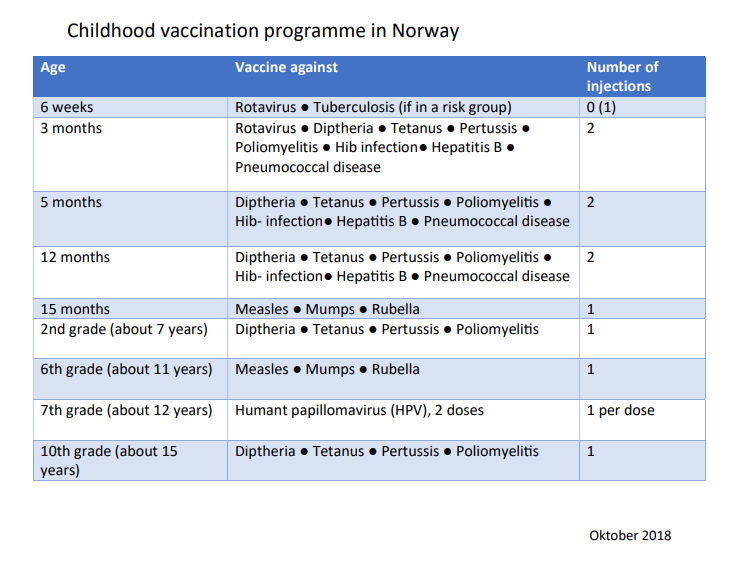
Of course, it is because the hepatitis B vaccine is not associated with autism.
Vaccines are not associated with autism.
Anti-vaccine influencers are simply trying to scare you away from getting vaccinated and protected by trying to make you think that vaccines are dangerous and aren’t necessary.
Stop listening to them!
References
Greenberg DP, Vadheim CM, Wong VK, Marcy SM, Partridge S, Greene T, Chiu CY, Margolis HS, Ward JI. Comparative safety and immunogenicity of two recombinant hepatitis B vaccines given to infants at two, four and six months of age. Pediatr Infect Dis J. 1996 Jul;15(7):590-6. doi: 10.1097/00006454-199607000-00006. PMID: 8823852.
Hepatitis B vaccines: WHO position paper – July 2017 https://www.who.int/teams/immunization-vaccines-and-biologicals/policies/position-papers/hepatitis-b
Khetsuriani N, Mosina L, Van Damme P, Mozalevskis A, Datta S, Tohme RA. Progress Toward Hepatitis B Control - World Health Organization European Region, 2016-2019. MMWR Morb Mortal Wkly Rep. 2021 Jul 30;70(30):1029-1035. doi: 10.15585/mmwr.mm7030a1. Erratum in: MMWR Morb Mortal Wkly Rep. 2021 Aug 20;70(33):1126. doi: 10.15585/mmwr.mm7033a6. PMID: 34324482; PMCID: PMC8323554.
Jensen de López KM, Thirup Møller H. Prevalence of Autism in Scandinavian Countries (Denmark, Norway, Sweden), and Nordic Countries (Finland, Iceland, the Faroe Islands, and Greenland). Neuropsychiatr Dis Treat. 2024 Aug 19;20:1597-1612. doi: 10.2147/NDT.S466081. PMID: 39184310; PMCID: PMC11342953.
IIRC, the protocols for the HepB vax study included active monitoring for 4-5 days (a daily visit to or from a researcher) after every shot to proactively identify short term post injection events, as well as continuous passive monitoring, and final follow-up 3 months after the last vaccine dose which again IIRC was after the 4 month dose, ie at 7 months.
As you point out, a study of 3 doses of a vaccine over several months cannot possibly have only 5 days follow-up.
I think this article confuses two very different questions: **Do safety studies exist? And were they sufficiently rigorous to establish safety, particularly in healthy newborns?**
Let's start with something important: Recombivax HB's pivotal trials did not use an inert placebo control. That matters. Without an appropriate inert-placebo comparison, how confidently can we distinguish adverse effects associated with vaccination from events that would have occurred anyway?
The prescribing information describes 434 doses administered to 147 healthy infants and children, with specified post-injection safety monitoring of five days after each dose.
The neonatal efficacy evidence is also important. The study involving 130 infants born to HepB-positive mothers used both hepatitis B immune globulin (HBIG) and vaccine, with historical controls. This does not provide the same evidentiary strength as a concurrent inert-placebo-controlled trial.
And dismissing autism concerns does not establish comprehensive vaccine safety. Nor does an antibody response establish the absolute clinical benefit for every newborn.
I'm not arguing that HepB vaccines have no benefits. Protecting babies born to mothers with hepatitis B is critically important.
But why should evidence supporting vaccination in that high-risk situation automatically settle the risk/benefit question for every healthy newborn, including those born to mothers who test negative?
**Where is the sufficiently rigorous evidence establishing the safety and individual risk/benefit of routine birth-dose vaccination in that low-risk population?**
Calling these questions propaganda doesn't answer them. Parents deserve the evidence, the limitations and the uncertainties before they consent.