

Now that RSV season will soon be coming to an end, let’s take a look at how well our new RSV vaccines are working.
Who Needs an RSV Vaccine?
As a recap, remember that we now have:
Beyfortus (nirsevimab) or Enflonsia (clesrovimab), monoclonal antibodies, for newborns and infants less than 8 months old during their first RSV season, typically from October 1 to March 31 (or April 30, 2026 in states that have extended the season because RSV disease has been lingering, including California, Connecticut, Kansas, Massachusetts, Minnesota, Nevada, Washington, and Wisconsin).
Beyfortus for older infants and toddlers, 8 to 19 months old, during their second RSV season.
Abrysvo, an RSV vaccine, as a one time shot for pregnant women who are 32 to 36 weeks pregnant from September to January to protect their newborn baby during RSV season
RSV vaccines, Arexvy, mResvia, or Abrysvo, as a one time shot for seniors who are 75 and older (if not yet vaccinated) at any time - but it might be best to get your shot in late summer or early fall.
RSV vaccines, Arexvy, mResvia, or Abrysvo, as a one time shot for everyone who is
6050 to 74 years at high risk for severe RSV disease (if not yet vaccinated) at any time - but it might be best to get your shot in late summer or early fall.
And that most of these have now been available for a few years now.
More Proof That RSV Vaccines Are Working
So how well have they been working?
It does seem like RSV seasons have been milder in the last few years since the first RSV vaccines were introduced!
Ask just about any pediatrician…
In fact, there has been:
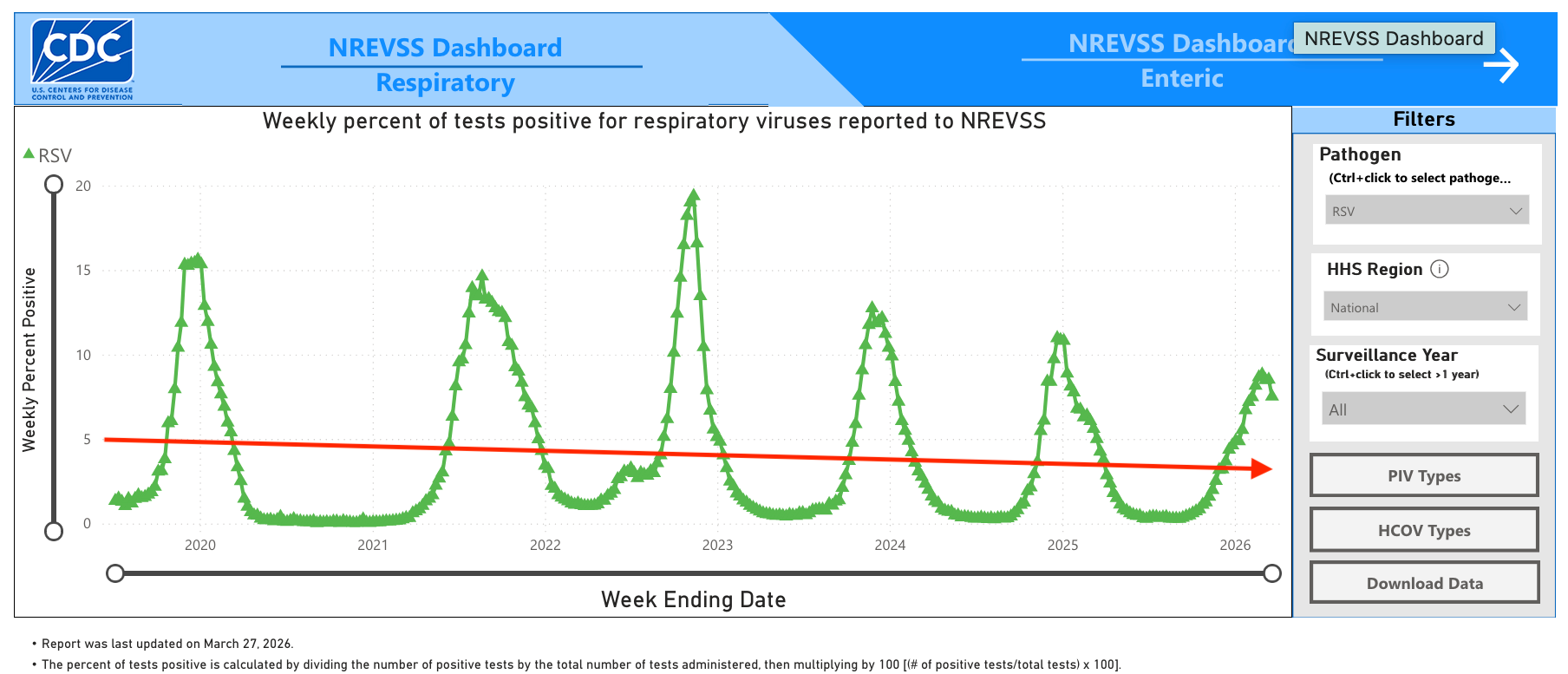
a decrease in the number of sick children and adults who test positive for RSV
a decrease in the number of infants and who have been hospitalized and/or end up in the ICU with RSV
a decrease in the number of older adults who have been hospitalized with RSV
a decrease in the number of kids and adults who have died with RSV
How much of a decrease?
“During the 2024-2025 season, RSV-associated hospitalization rates among infants aged <8 months in two surveillance networks were lower by 28% and 43% compared with RSV seasons before the COVID-19 pandemic.”
2025-2026 Respiratory Disease Season Outlook
It was a pretty big decrease!
A decrease that has now been confirmed by more than a few studies.
A decrease that lasted more than one season for many infants, even though they were only vaccinated once!
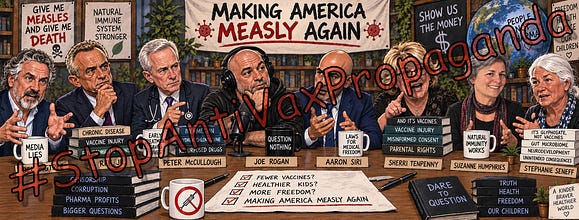
Enough of a decrease that you should feel confident dismissing the misinformation from any anti-vaccine influencers that might still be trying to scare you away from getting vaccinated and protected.
“NREVSS aggregate, weekly tests are reported specifically for each pathogen. NREVSS participating laboratories’ testing capabilities vary annually, and testing intentions vary for each pathogen. A range of 50–178 laboratories met the pathogen-specific criteria for inclusion criteria during a given surveillance year."
https://www.cdc.gov/mmwr/volumes/70/wr/mm7029a1.htm
"According to healthdata.gov, there are other issues with this data as well. While reiterating that testing practices and the number of participating laboratories can change from year to year, it is pointed out that the results can be changed at any point for two years after the data has been reported. It is noted that the NREVSS does not collect patient-data or demographic information and that multiple samples may be collected from a single patient. This means that NREVSS results do not reflect the number of patients tested nor does it reflect hospitalizations or deaths related to any particular “virus.” Also, it is said that without direct knowledge of the population base, NREVSS cannot be used to determine the prevalence or incidence of “infection.”""
https://viroliegynewsletter.substack.com/p/the-sick-cycle-carousel?utm_source=publication-search