
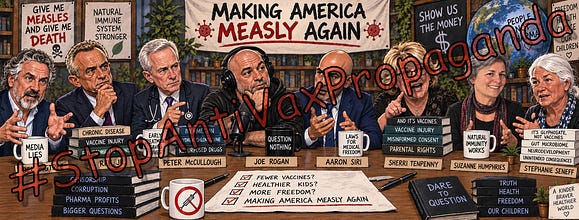

It doesn’t take long to spot the first bit of misinformation in Mama Bear: You Call the Shots by a Health Freedom organization in Kansas.
“This resource guide is designed to provide factual information about vaccines that you likely won’t be told in a doctor’s office. As a new parent, it is crucial that you thoroughly examine both sides of this issue.”
Mama Bear: You Call the Shots
It is right there in the introduction, where they say they will be providing parents with “factual information about vaccines.”
Mama Bear: You Call the Shots Review
Once you get to the next page, it is easy to see that’s not the plan…
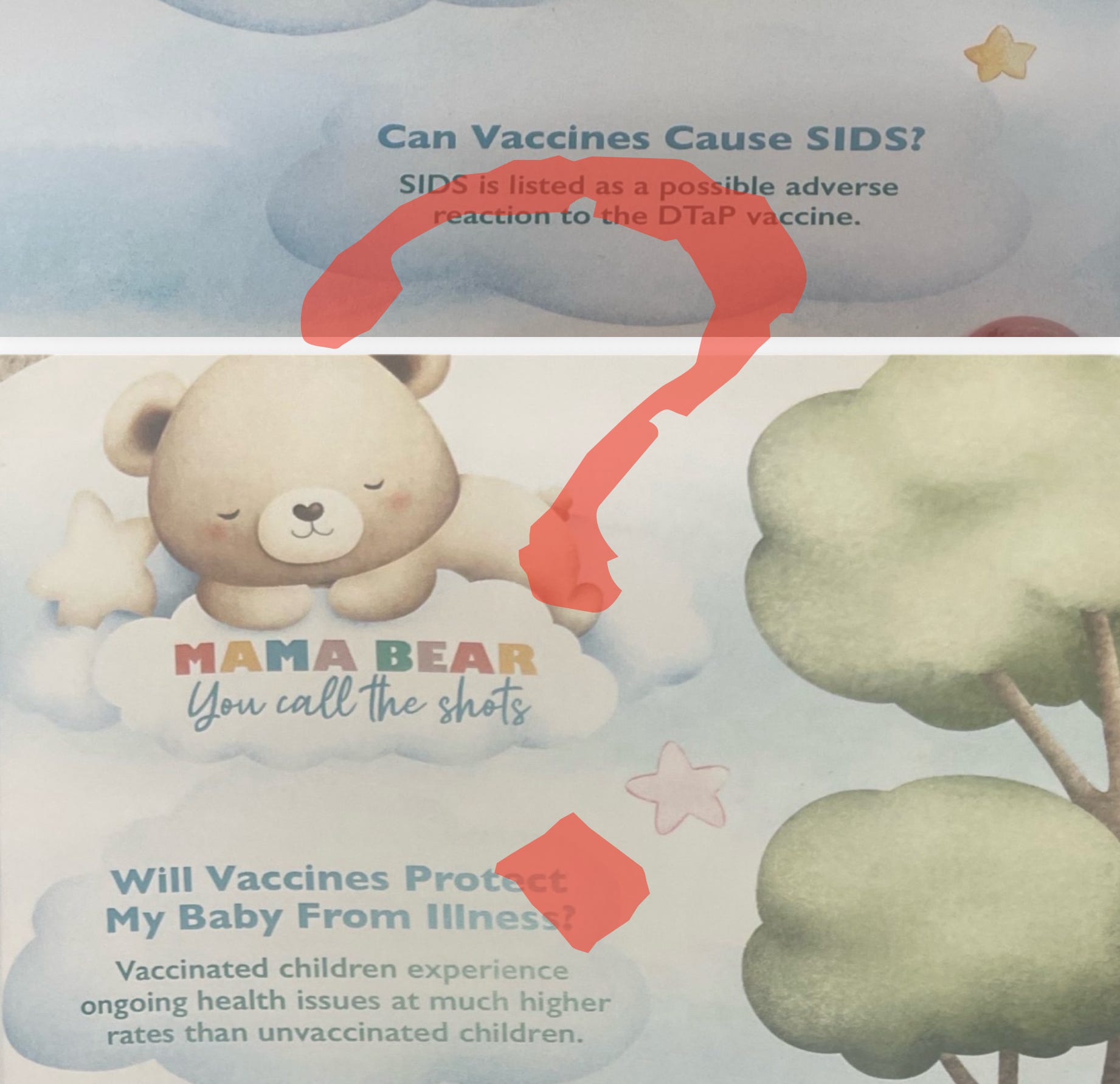
Instead, it is filled with anti-vaccine points that have been refuted a thousand times already, including that:
Vaccines do not undergo long-term safety testing by independent scientists. - Not true. Vaccines are well tested and are safe, with few risks. They are tested for more than 4 or 5 days, together, in double-blind, placebo controlled trials, with saline placebos, in long-term studies, and they are evaluated for mutagenicity, carcinogenicity or impairment of fertility.
Vaccines are not effective because they are not 100% effective. - While vaccines may not be 100% effective, vaccines work very well and help control life-threatening vaccine preventable diseases. And even when they don’t work perfectly, those who get sick often have milder symptoms than someone who is unvaccinated.
Vaccine injuries are common because the federal government has paid approximately $5.5 billion to vaccine injury victims. - The billions paid out by Vaccine Court have been since 1989 and comes to about 1 compensated claim per million doses of vaccines distributed. Vaccine injuries are not common! Anti-vaccine influencers only believe vaccine injuries are common because they think anything and everything that happens after you get a vaccine is a vaccine injury, whether it is minutes, hours, days, weeks, months, or years later.
Vaccines commonly contain aborted fetal cells, animal products, polysorbate 80, formaldehyde, aluminum, and thimerosal. - Vaccine ingredients are safe.
SIDS is listed as a possible adverse reaction to the DTAP vaccine. - SIDS is listed in package insert for Tripedia, a DTaP vaccine that was discontinued in 2011 - at the end of the section of Adverse Reactions where they were very clear that “events are reported voluntarily from a population of uncertain size, it is not always possible to reliably estimate their frequencies or to establish a causal relationship to components of Tripedia vaccine.” This does not mean that the DTaP vaccine causes SIDS! And newer DTaP vaccines do not even list SIDS as a possible adverse reaction.
Unvaccinated children are healthier than vaccinated children. - Not true. Studies of vaccinated vs. unvaccinated children have shown that unvaccinated children simply get more vaccine-preventable diseases.
Vaccines are not safe during pregnancy. - Not true. Many studies have been done to confirm that recommended vaccines are safe during pregnancy.
The vitamin K shot is dangerous. - Not true. The vitamin K shot, which is not a vaccine, is safe and necessary for all newborn babies.
Vaccine studies have been inadequate to determine effects on fertility, if they can cause cancer, or if they can alter your baby’s DNA. - Not true. Vaccines are appropriately evaluated for mutagenicity, carcinogenicity, and impairment of fertility, when necessary, as a part of pre-clinical or nonclinical studies that occur even before the first phase one studies on people.
Vaccines are not required to meet the same safety standards as other medications. - This is kind of true. Vaccines are more actually more strictly regulated than drugs and other products!
None of the vaccines recommended on the CDC’s childhood schedule were licensed by the FDA based on long-term placebo-controlled trials. - Not true. The Saline Placebo Pyramid helps show that many vaccines use a saline placebo, something that might be a concern if you listen to anti-vaccine propaganda.
That you have low, minimal, or virtually zero risk of dying from a vaccine preventable disease, including that your child’s risk of dying from measles is less than 1 in 106,506,429! - Not true. Anti-vaccine influencers like to scare you away from vaccinating your kids and then talk about the risk of death in a well vaccinated population, where measles in under good control, not the risk of an unvaccinated child getting and dying because they have measles during an outbreak.
Many of the possible adverse reactions the manufacturer lists for the MMR vaccine are virtually identical to typical measles symptoms. - Not true. While you might get a fever or rash after your MMR for a few days, it is nothing like the fever, rash, and other symptoms you get with a natural measles infection that can last for a week or more!
Less than 1% of vaccine injuries are reported to VAERS. - Not true. Mild side effects are likely underreported, but know that more serious symptoms are much more commonly reported!
Studies comparing vaccinated and unvaccinated children found that the vaccinated children were more likely to have ADHD, allergies, asthma, autism, ear infections, and developmental delays. - Not true. Studies comparing vaccinated and unvaccinated children simply found that they are much more likely to get sick with vaccine preventable diseases.
When your baby fights off an illness naturally, they often gain lifelong protection and a stronger immune system. Vaccines can’t guarantee immunity - and whatever protection they offer fades over time. - Even if you want to believe that natural immunity is stronger than vaccine induced immunity, just know that you have to earn than natural immunity, which means enduring a cough for months when you have pertussis (100 day cough), a week of a high fever with measles, the strangulating breathing of diphtheria, paralysis from polio, the drooling and trouble swallowing, and difficulty breathing from epiglottitis, and the severe headache and fever from Hib or pneumococcal meningitis, etc.
Historical records show that nearly 90% of the decline in infectious disease mortality in U.S. children occurred before the introduction of the U.S. vaccine program. - This is kind of true, but doesn’t diminish how important vaccines have been to help further control vaccine preventable disease since the 1940s and 50s, when the effects of better hygiene, sanitation, and nutrition had stalled and thousands of kids were still dying because they had measles, pertussis, diphtheria, and polio, etc.
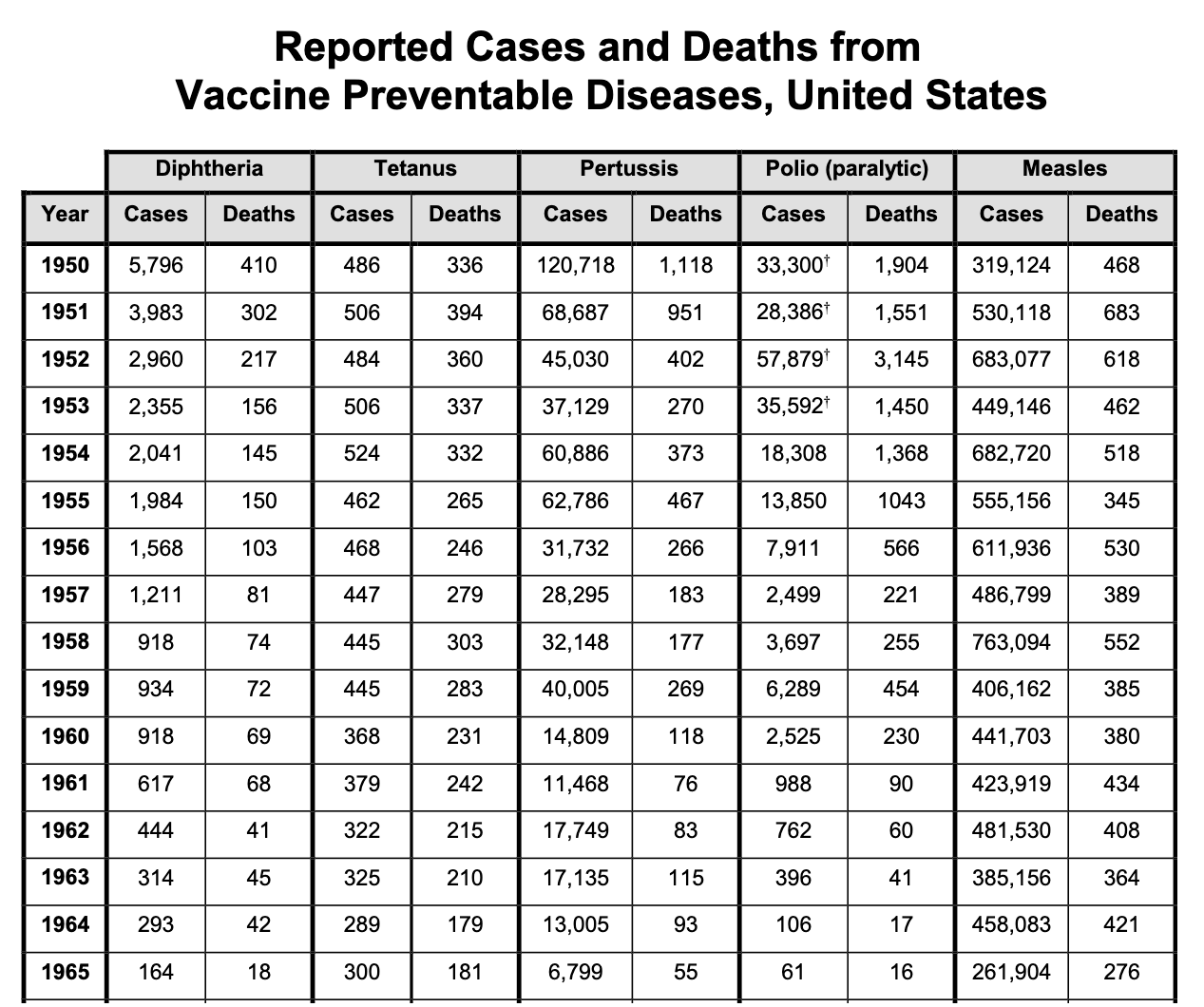
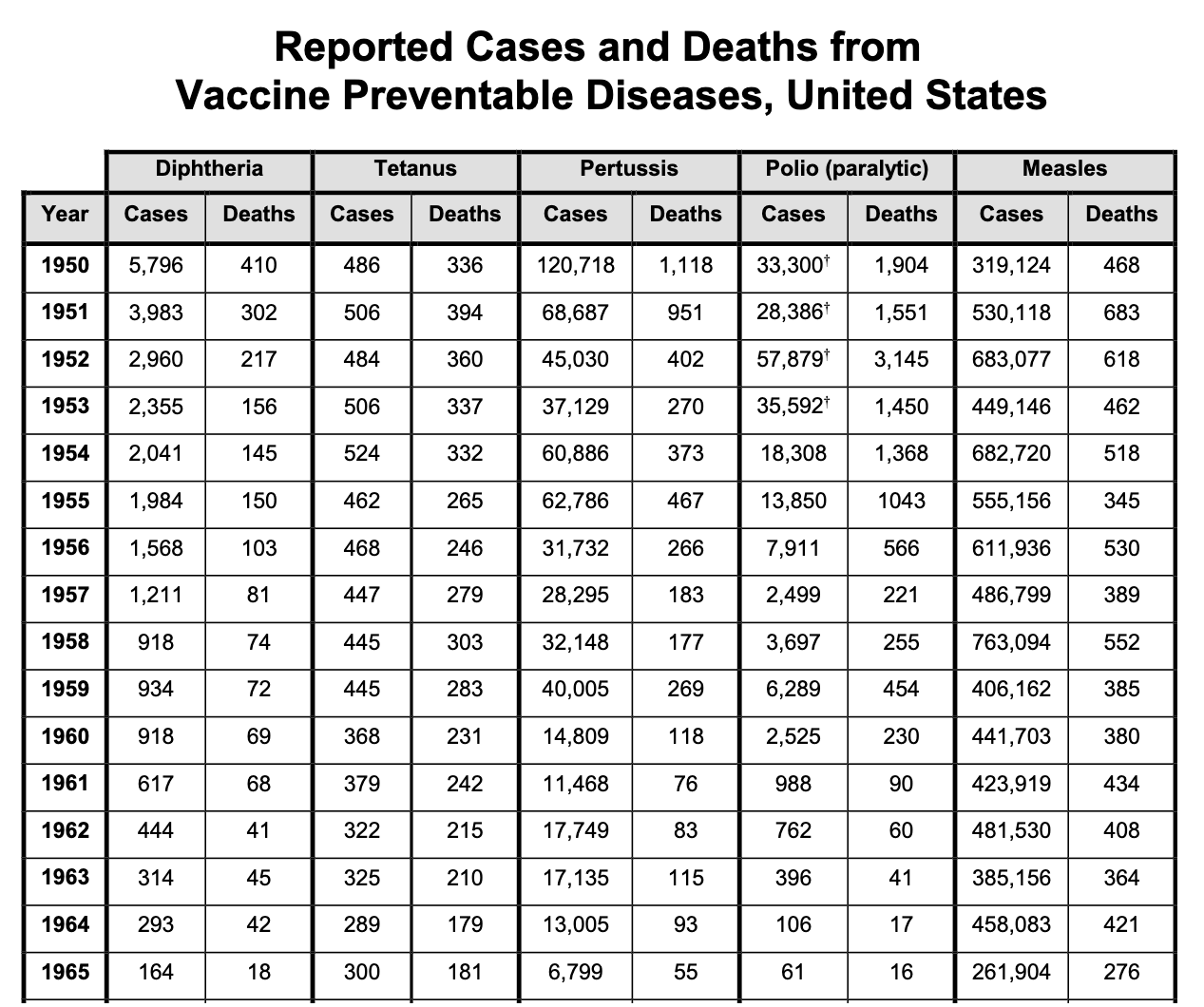
If anti-vaccine influencers had their way, we would get back to a level of cases and deaths of measles, mumps, diphtheria, tetanus, pertussis, polio, Hib, and other vaccine-preventable disease that we had in the 1950s. Thanks to improved living conditions, your child’s chance of dying in the United States from a once-feared childhood illness is very low. - Not true. During the measles outbreaks of the 1990s, there were 55,622 cases of measles and 123 deaths in the United States between 1989 and 1991, a time when we had good nutrition, hygiene, sanitation, and health care…
Some research suggests a possible connection between vaccines and Sudden Infant Death Syndrome (SIDS). - Not true. There is no good evidence connecting vaccines to SIDS. In fact, know that the incidence of SIDS increased after Sweden stopped using the DPT vaccine in 1979, dropped when they advised against prone sleeping in 1992, and continued to drop when they started using the newer DTaP vaccine in 1996!
The vitamin K shot is an injection that comes with a boxed warning, the highest warning level issued by the FDA. - This is true. Still, while the vitamin K shot does have a black box warning, it is a warning about giving a large dose intravenously or as an intramuscular shot, neither of which applies to giving babies their vitamin K shot. Babies get a small dose vitamin K subcutaneously - under their skin.
Oral vitamin K is commonly used in many European countries. - This is not really true. Most recommend vitamin K shots to all babies, only offering oral vitamin K as an alternative for those who refuse the vitamin K shot. And they do also have more cases of late vitamin K deficiency bleeding than they would have only they gave a vitamin K shot.
So, as you can clearly see, the Mama Bear book is full of misinformation and propaganda about vaccines that is meant to scare you away from vaccinating and protecting your kids.
“Many people telling you what’s best for your baby’s health may be influenced by outside interests. While they may be well-intentioned and their advice can be helpful, you are the one who knows and loves your baby more than anyone else in the world… Your decision whether or not to vaccinate your child is important, and you should feel confident in making it. You have the right to ask questions, receive clear and honest answers through informed consent, and choose what’s best for your family.”
Mama Bear: You Call the Shots
And this helps the 51-page Mama Bear book take away your ability to give informed consent about vaccines.
After all, you can’t give informed consent or make an informed choice if you are being misinformed about vaccines and the vaccine-preventable diseases they prevent.

The good news though, is that you can easily learn to spot this type of propaganda, learn to ignore it, and look for better information about vaccines so that you can make a truly informed decision.
Superb and useful article!
Excellent. Yep, quacks gonna quack. They’re making zillions off of their “natural” cures and have the gall to accuse pharmaceutical companies of making money…
Oh, and “natural immunity” is another way of saying “let people die.”