

Why are we talking about tracking cancer data vs. measles cases?
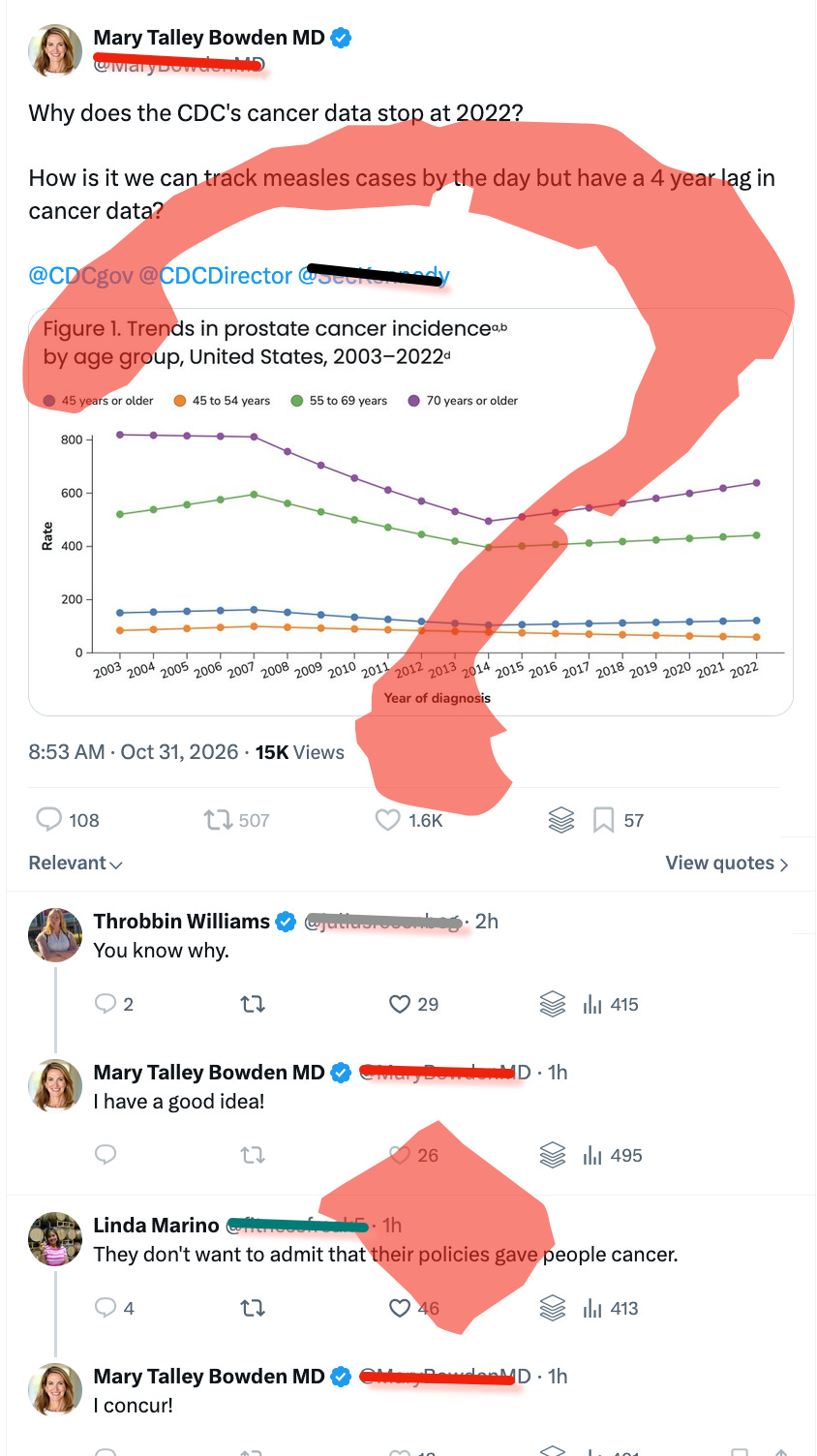
Because anti-vaccine influencers have found a way to spin the way they are presented into some kind of big conspiracy…
Let’s Talk About Tracking Cancer Data vs. Measles Cases
What big conspiracy?
A big conspiracy about COVID vaccine-induced turbo cancer…
A big conspiracy that falls apart if you do like two or three minutes of research!
How?
Well, for one thing, cancer data doesn’t stop at 2022.
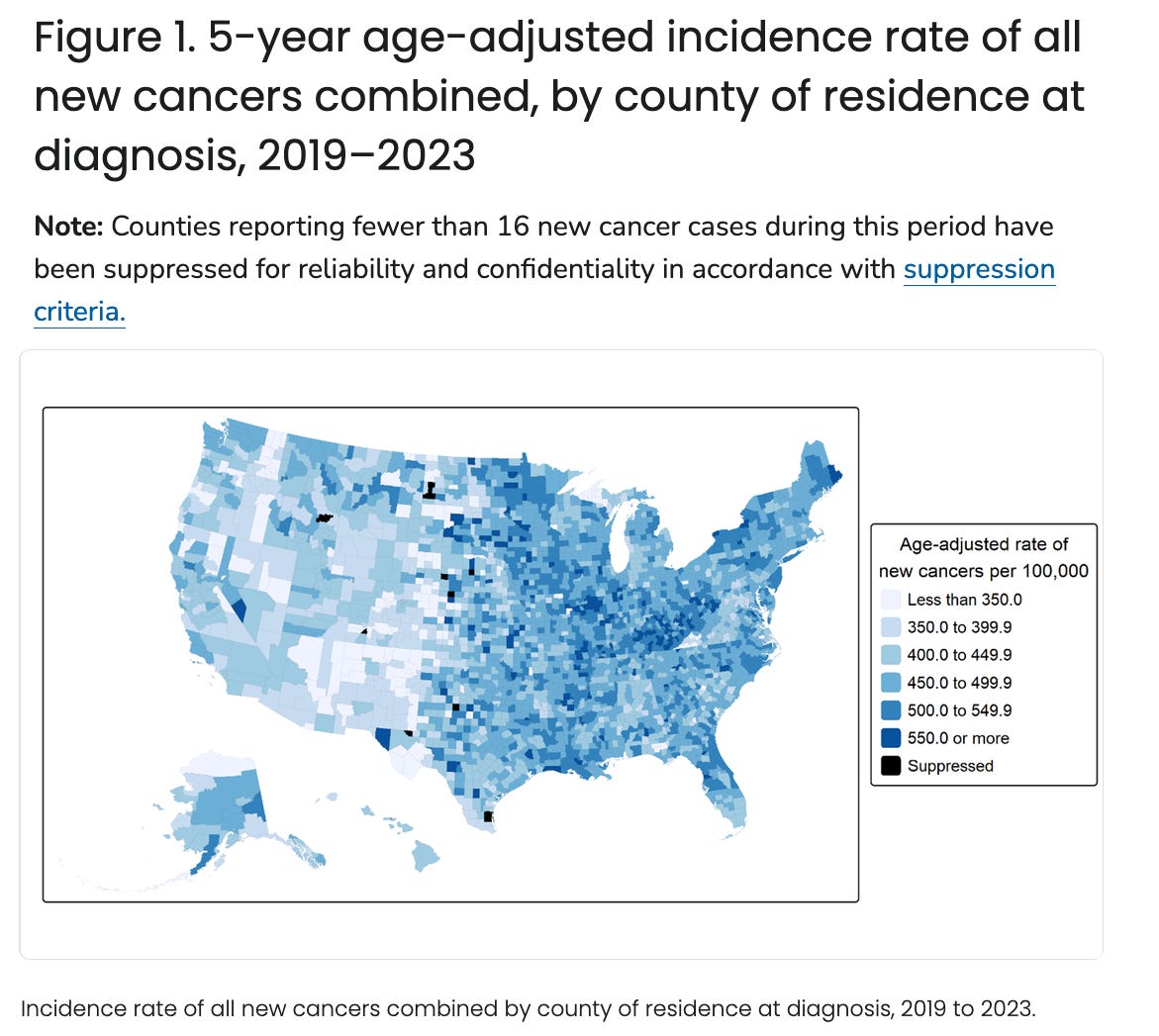
After all, the CDC has already published cancer statistics through 2023.
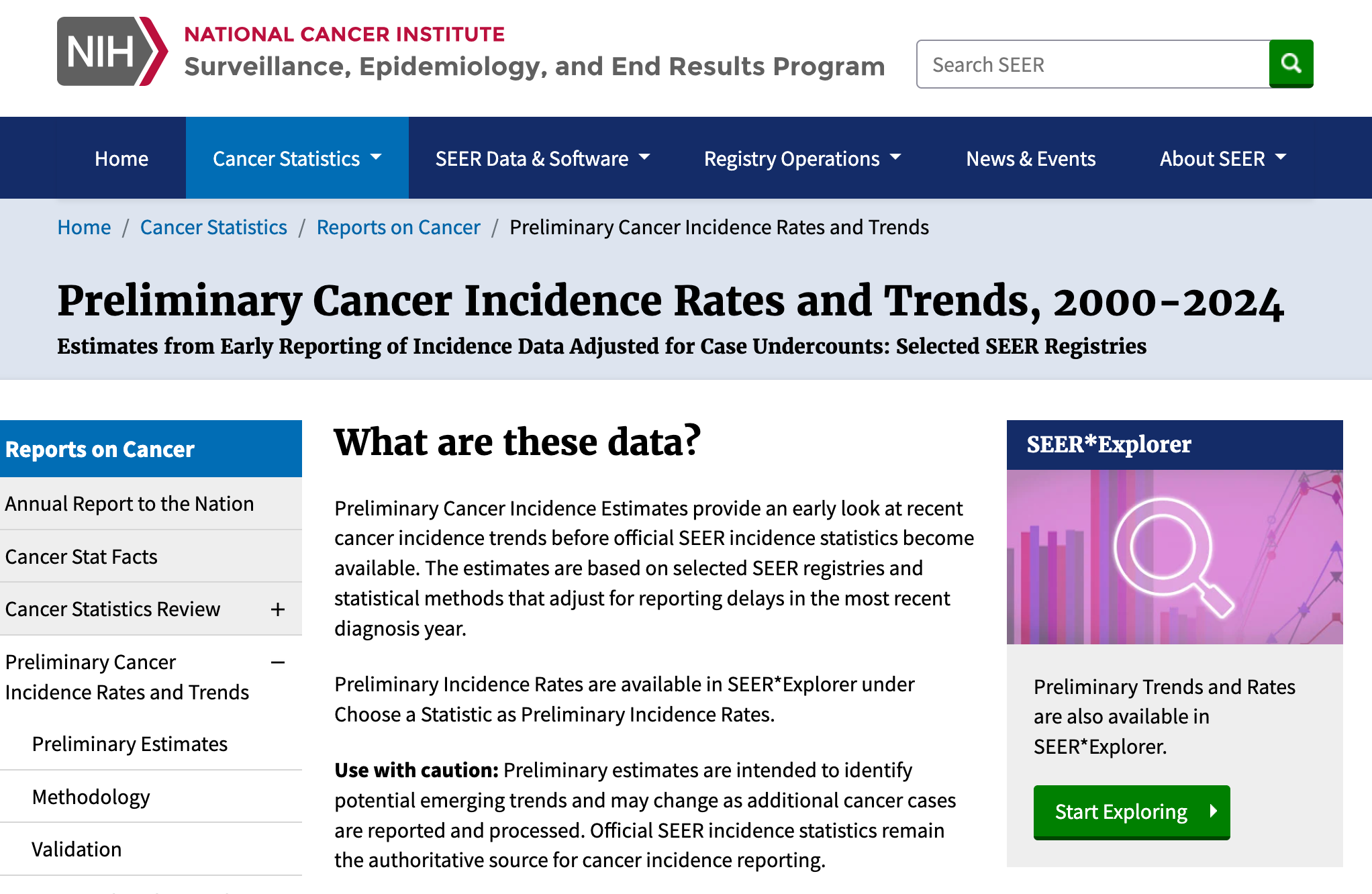
And preliminary cancer data through 2024!
So, no, the CDC’s cancer data does not stop at 2022, and there isn’t a 4-year lag.
Still though, why can’t we see cancer data for 2026, which hasn’t even ended yet?
“The primary source of data on cancer incidence is medical records. Staff at health care facilities abstract data from patients' medical records, enter it into the facility's own cancer registry (if it has one), and then send the data to the regional or state registry. Other data sources include physicians' offices, radiation facilities, freestanding surgical centers, and pathology laboratories.”
United States Cancer Statistics
It’s because cancer surveillance is complicated.
Why?
Well, think about all the things they have to do!
A cancer registry has to assemble information from pathology laboratories, hospitals, physicians' offices and other sources, determine whether records represent the same patient or separate tumors, establish the primary cancer site, histology, diagnosis date, demographic information and other variables, and perform quality and duplicate checks.
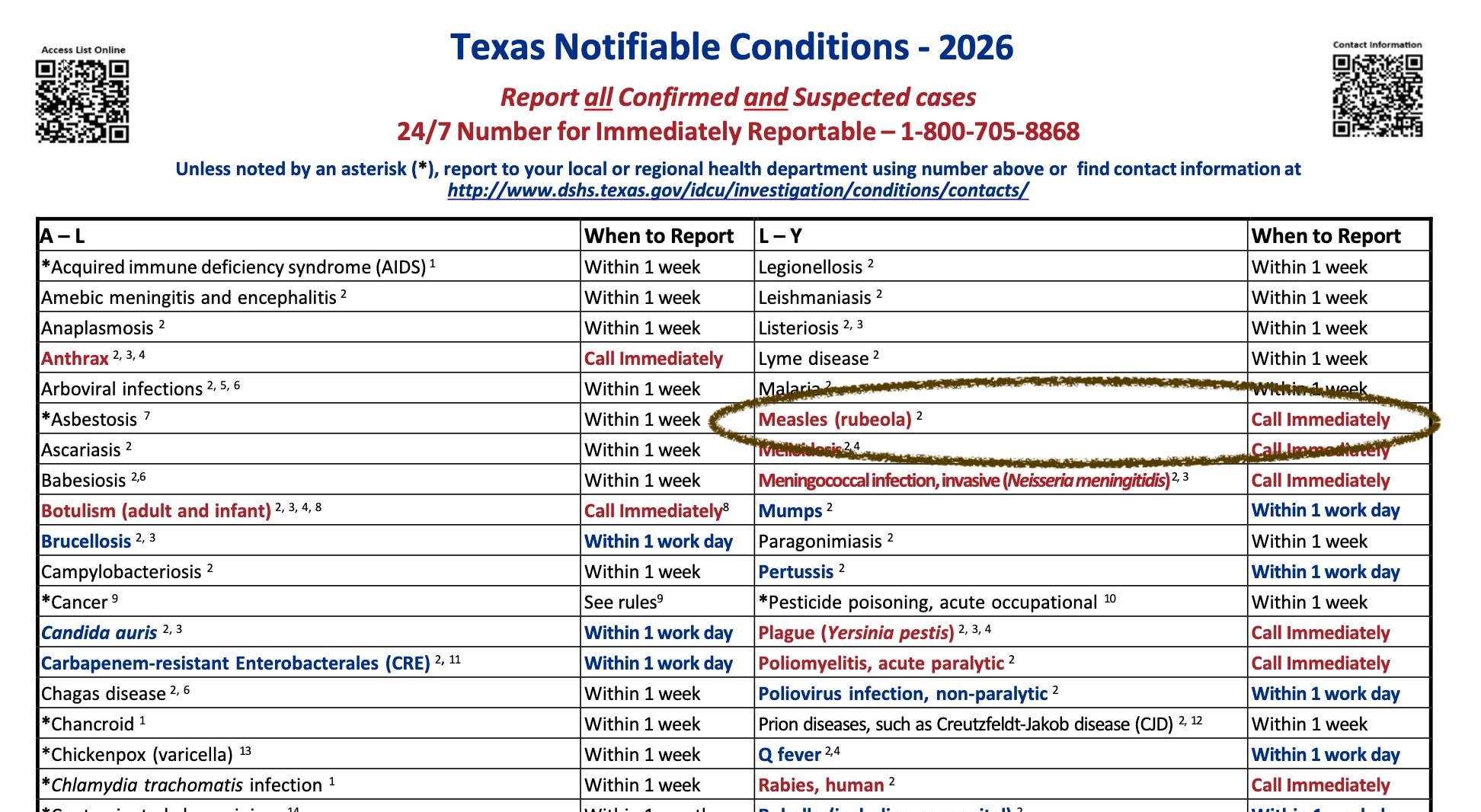
For measles, all of this has to happen much faster, as health departments need the information immediately to identify contacts and stop transmission.
In fact, in most states, a suspected case of measles has to be reported to the local/state health department immediately, and the state health department has to report it to the CDC within 24 hours.
What else?
We’ve been collecting national cancer statistics through this system for decades. CDC’s cancer registry program was established in 1992, and annual reporting began in 2001. The roughly two-year reporting delay has nothing to do with COVID. It’s how cancer surveillance has operated for years.
More on Mary Talley Bowden
Does the FDA have to say Ivermectin works for COVID because they lost a lawsuit?
Were Vaccinated Outnumbering the Unvaccinated During the Summer of 2021 COVID Surge?
Bad Measles Math: Cherry-Picked CDC Charts Used to Minimize U.S. Outbreak
Texas Medical Board reprimands Houston doctor over treatment of COVID-19 patient