

If you think you understand what shared clinical decision-making is at it relates to vaccines, I invite you to post your definition in the comments below (no cheating!).
We are seeing the term come up a lot lately with the recent changes to the CDC immunization schedule…
Let’s Talk About Shared Clinical Decision-Making and Vaccines
Did everyone get it right?
Many in a recent Annenberg Public Policy Center (APPC) poll didn’t, providing answers like:
Taking the vaccine may not be a good idea for everyone but would
benefit some.
It is up to parents whether they consult with their health care provider before getting their child vaccinated but talking with their health care provider about it
would be a good idea.
Because getting any vaccine is an important decision, parents should discuss the
decision with their family.
Taking the vaccine may not be a good idea for everyone but would benefit some.
None of which fit the real definition…
“Shared clinical decision-making, also known as individual-based decision-making, is a conversation between a patient and a healthcare professional to help inform treatment plans.”
Communicating About Shared Clinical Decision-Making
What else confuses people?
Thinking that shared clinical decision-making is the same as informed-consent.
“Healthcare professionals are legally and ethically obligated to ensure informed consent is part of their patients’ care. This means all individuals must receive information about the benefits, risks, and alternatives of any health intervention, including vaccination, and voluntarily agree to move forward with the intervention.”
Understanding Shared Clinical Decision-Making vs. Informed Consent
It isn’t.
Shared clinical decision-making is typically a part of informed consent, but it is not the same.
So what’s the problem with moving vaccines to the new shared clinical decision-making model?
Mostly it is that in the past, the shared clinical decision-making model was only used for vaccines that didn’t have a clear benefit for everyone. These vaccines were still considered to be safe though and could benefit some people, so instead of having a general recommendation, they were given a shared clinical decision-making recommendation.
“Shared clinical decision-making is usually reserved for procedures or medications where the risk and benefit are unclear.”
Shared clinical decision making for vaccines could limit access
And that’s not the case with all the vaccines that RFK Jr.’s ACIP committee moved to the shared clinical decision-making category.
“The bottom line is that shared clinical decision making is a term of art that contrasts with routine vaccination — it means that not everyone in a certain population (age, gender, or other groups) should receive a vaccine, only individuals for whom the doctor recommends it. It does not mean “this is the only way to get doctors to discuss vaccines with patients” — informed consent is required for any vaccine.”
Shared clinical decision making — what does it mean for vaccines?
So basically, it is just another way for anti-vaccine influencers to scare anxious parents away from vaccinating and protecting their kids.
And that’s the biggest issue we have these days!
Let’s Talk About Misinformed Consent and Vaccines
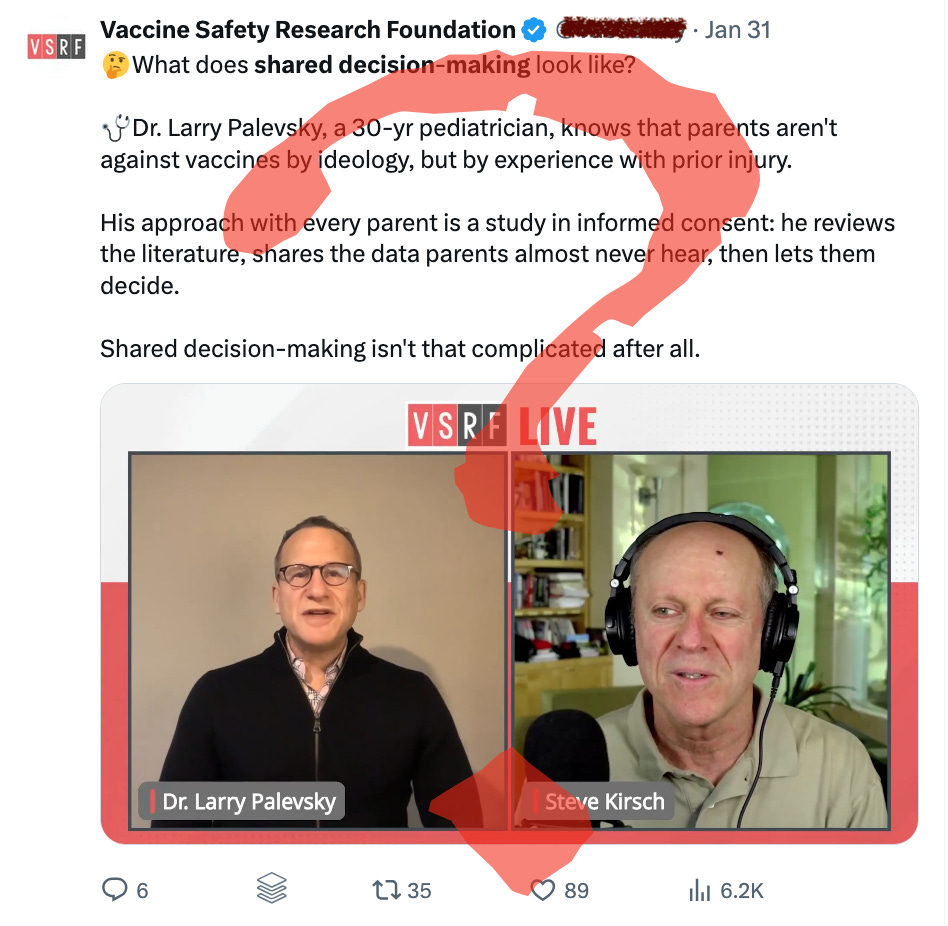
Just consider Larry Palevesky…
“His approach with every parent is a study in informed consent: he reviews the literature, shares the data parents almost never hear, then lets them decide.”
Steve Kirsch
What kind of data does Larry Palevesky share with his parents to help them make an informed decision about vaccines?
It is mostly anti-vaccine talking points that have been refuted a thousand times already…
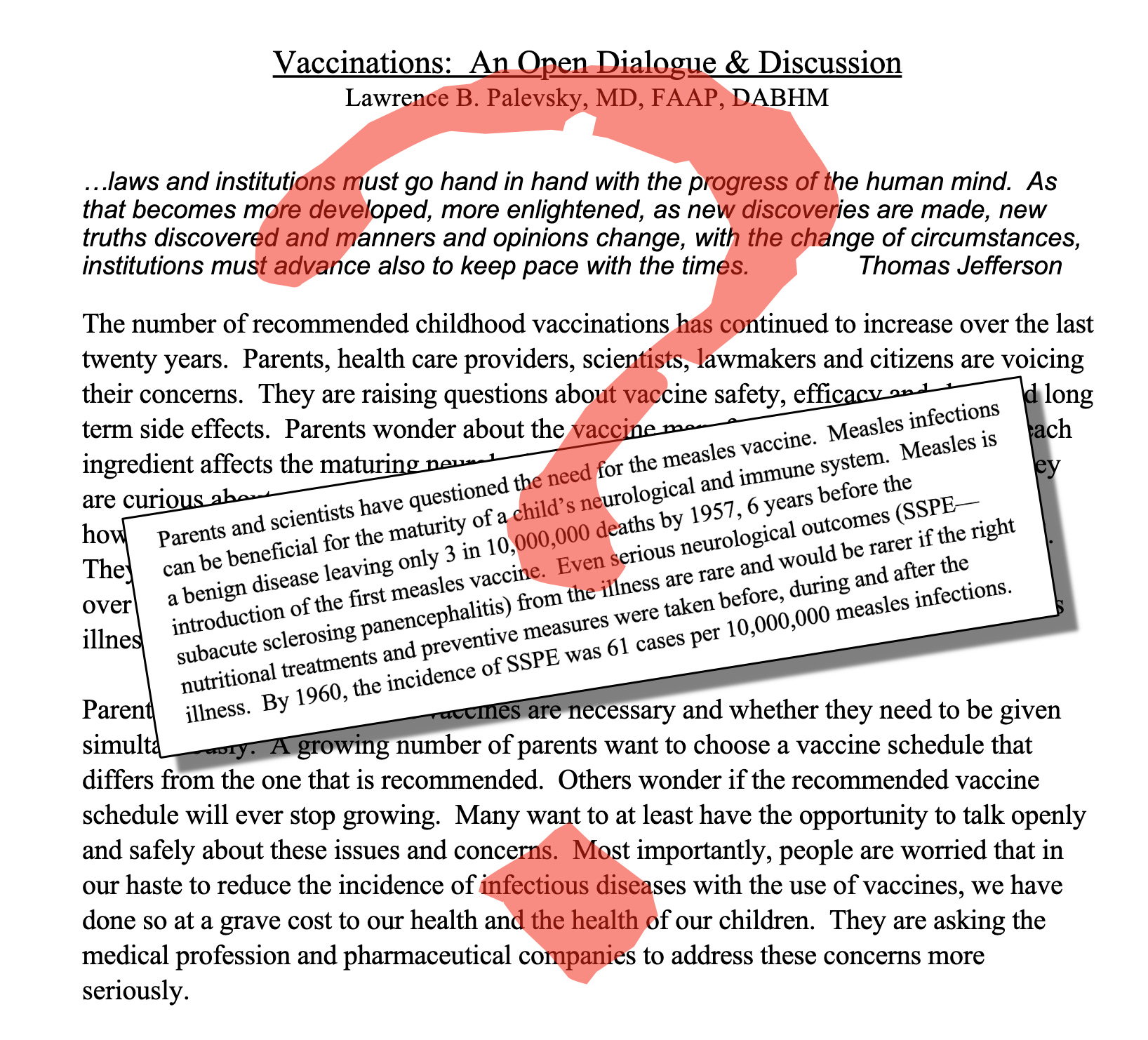
After all, this is the ‘pediatrician,’ who:
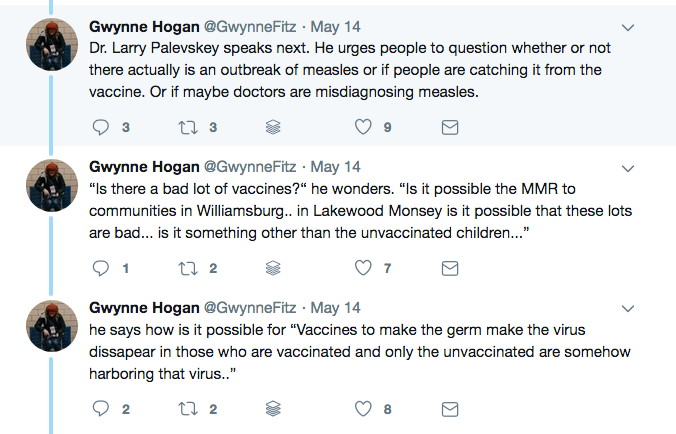
says that measles infections are benign and that they can actually “be beneficial for the maturity of a child’s neurological and immune system” - neither of which is true, well natural immunity is a benefit of having measles, but it comes at the cost of having to survive a natural measles infection!
said that the measles outbreak in New York was a hoax
said that the New York measles outbreak was caused by a vaccine strain - it wasn’t
suggested that bad lots of MMR vaccine were causing the New York measles outbreak - they weren’t
said that we can exhale spike proteins after we are vaccinated, shedding covid vaccine particles to others - we can’t
said that COVID vaccines can permanently alter our genetic codes - they can’t
said that he had never seen a patient with severe RSV
said that COVID is a man-made weapon of mass destruction causing genocide and that when you get sick it is because you have spike protein poisoning
said that everyone who received a COVID vaccine should be quarantined and where a badge on their arms because they could shed
suggests that polysorbate-80 in vaccines was intentionally added as part of a medical experiment on the human race, “like we heard about during World War II.” - it wasn’t
said that aluminum in COVID vaccines will hurt the brain - COVID vaccines do not contain aluminum
Can you see how a parent is not giving informed consent if this is the type of misinformation they are being given about vaccines?
Tragically, parents are getting the same kind of misinformation from RFK Jr, the person in charge of our public health systems!
So where can you turn to help you make a good decision about vaccines?
Find a trusted pediatric provider, get any questions you might have answered, and vaccinate your family.