


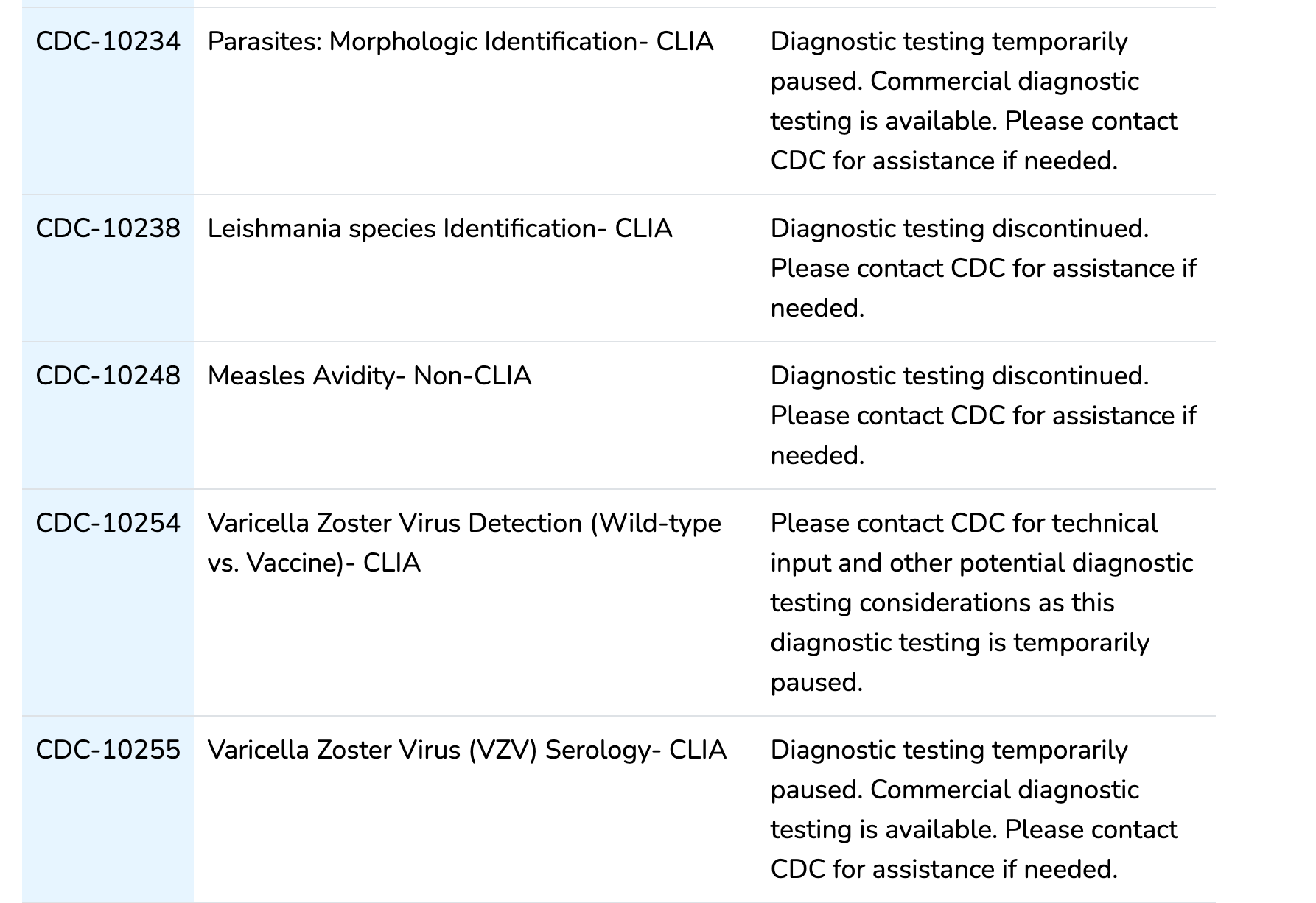
Have you heard that the CDC has stopped doing some testing, including testing for adenovirus, chickenpox, mpox, measles, and many other infections?
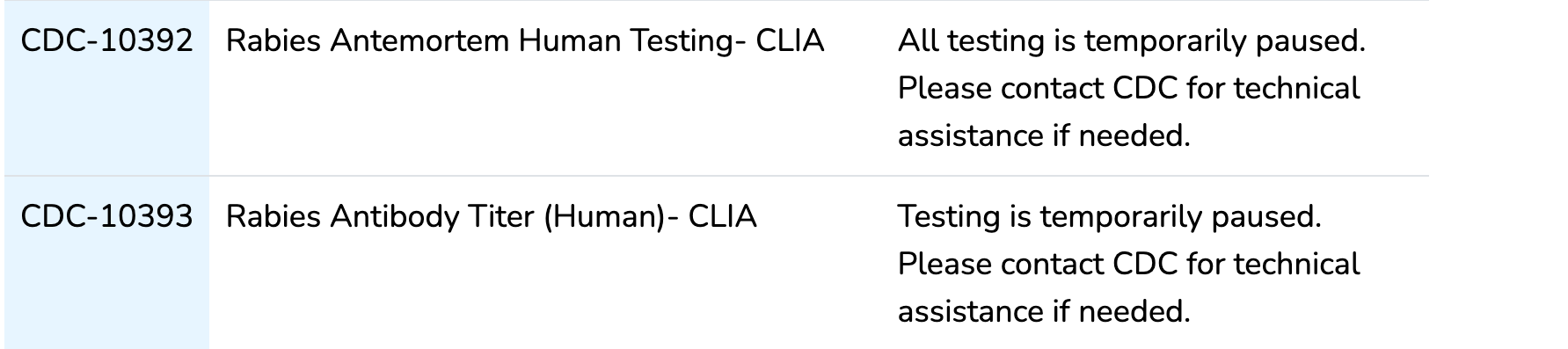
And rabies testing too!
So what does that mean?
What Is the Impact of the CDC Pausing Infectious Disease Testing?
Fortunately, it doesn’t seem to mean that essential testing won’t get done, as most (but not all) of these tests can still be done, either at state or commercial labs.
“CDC maintains regular communication with state and local health departments and can assist in coordinating testing through alternative laboratories if needed.”
CDC temporarily halts testing for several infectious diseases amid staffing shortages
So rabies testing will still get done if you or your pets are first exposed to rabies (but not after you are bitten and develop symptoms of rabies)!
And that’s because most rabies testing is done at state labs.
Whew!
One less thing to think about.
Well, at least for now.
That the CDC has to stop this kind of testing is just another sign of our public health systems starting to fail because of the poor management by RFK Jr! All the budget cuts and staff firings haven’t helped either!
Let’s Talk About Rabies Testing
Is this kind of testing, especially rabies testing, something that you ever even think about?
After all, how often do you think someone needs to be tested to see if they have been exposed to rabies?
Well, believe it or not, about 90,000 samples are tested each year to see if they are contaminated with the rabies virus!
And most of these are because an animal that might have been rabid bit someone, potentially exposing them to rabies.
So what happens without this testing?
Well, if you can’t do testing to confirm that the animal (bats, raccoons, skunks, foxes, coyotes, dogs, cats, and ferrets, etc.) didn’t have rabies, then the person would likely end up getting rabies post-exposure prophylaxis.
But couldn’t you just quarantine the animal? Sometimes (especially for healthy appearing dogs, cats, and ferrets), but it isn’t a great option with human bites and wild animals, as the incubation period for animals with rabies can be a very long time. And few people would want to take that risk!
What else?
You should know that about 50,000 people in the United States receive rabies post-exposure prophylaxis each year.
And of course, that’s why cases of rabies in people is so rare!
Nearly all people get rabies immunoglobulin and a series of rabies shots if they get exposed to a rabid animal.
Also, most people vaccinate their pets to keep them safe from rabies too.
It's one thing after another with that group of ... people.