


Are you thinking about getting your infant a zero dose of the MMR vaccine?
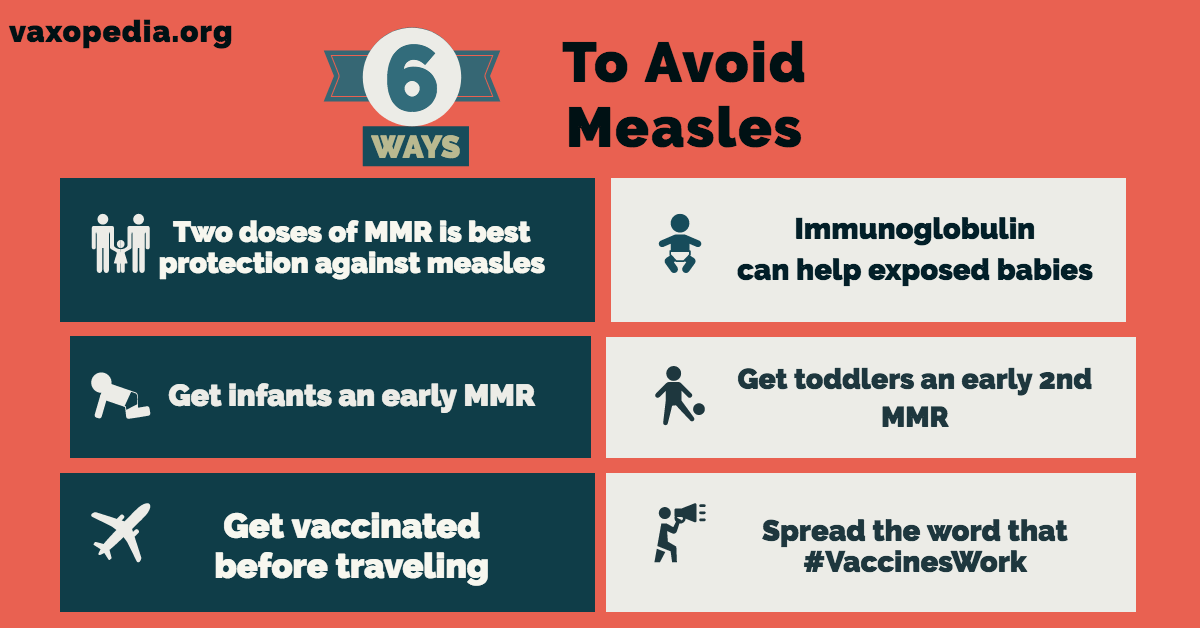
This is an early dose that can be given once your infant is at least six months old, before they would typically get it at age 12 months.
A dose that has to be repeated, which is why it is called a zero dose.
How Well Does the Zero Dose of MMR Work?
But know that just because it has to be repeated doesn’t mean that it doesn’t work.
The zero dose of MMR typically works very well at protecting younger infants from measles.
How well?
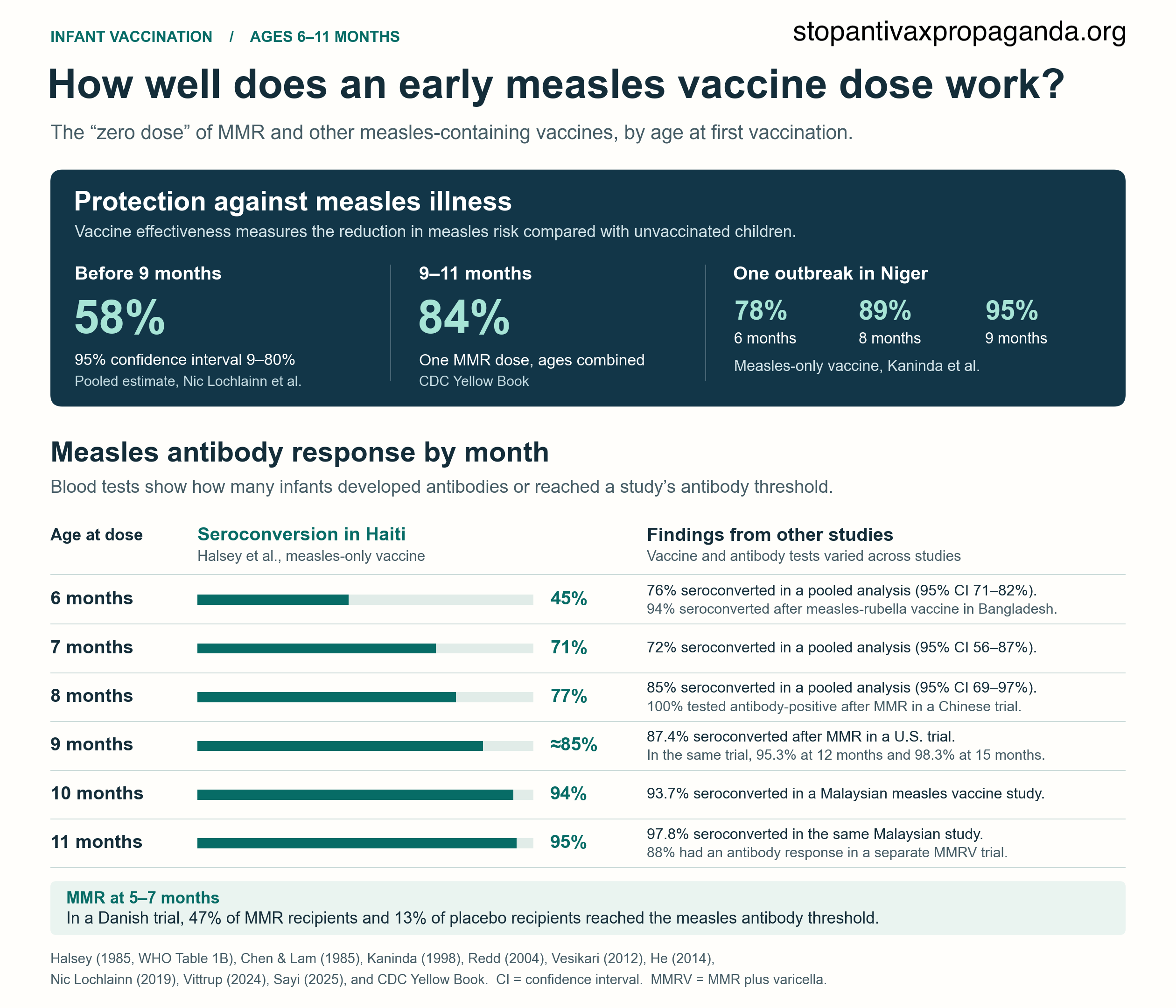
Studies have found an early dose of a measles-containing vaccine to be 45 to 95% effective, with infants being more likely to develop antibodies as they got older.
Why?
Younger infants are less likely to develop antibodies because they will likely still have some maternal antibodies that can interfere with their measles vaccine working. Of course, this only happens if their mother was immune to measles herself. If she wasn’t immune, then an early dose of MMR is almost certainly going to work, even at six months.
What else?
In addition to studies that check antibody levels, other studies have found that an early dose of MMR is very effective at protecting infants from measles.
Even younger infants.
“Vaccine effectiveness estimates increased with age at vaccination from 78% with a single dose administered at 6 months of age to 95% at 9 months. Vaccine effectiveness with the early two dose strategy was 93%.”
Measles vaccine effectiveness in standard and early immunization strategies, Niger, 1995
These studies also found that “immunization with a single dose of standard titer Schwarz vaccine before 9 months of age provided higher clinical protection than expected from seropositivity studies.”
That means that antibody titers don’t tell the whole story when it comes to measles.
“Unimmunized children had a higher risk of developing measles compared to the immunized(P < 0.05). There was no significant difference in risk of measles among those vaccinated prior to and after nine months of age. Unvaccinated children were at significantly higher risk of death than vaccinated children (P < 0.001). There was no difference in risk of death between infants vaccinated between 6 and 8 months and those vaccinated between 9 and 11 months.”
Measles vaccination before nine months
And it means that you shouldn’t wait to get your infant an early dose of MMR if they are in a high-risk situation.
High-risk situations which might include:
traveling out of the country
traveling to an area where there are a lot of measles cases
living in an area where there are a lot of measles cases (check your state or county health departments for alerts)
being exposed to someone with measles, as long as the dose can be given within 72 hours of that exposure, as this type of post-exposure prophylaxis can help decrease the chance that they will develop measles or at least complications of measles
The zero dose of MMR is safe and is very effective!
Lastly, remember that you can also get your toddler or younger preschooler and early second dose of MMR too. This second dose, before the routine age of four years, doesn’t have to be repeated though.