


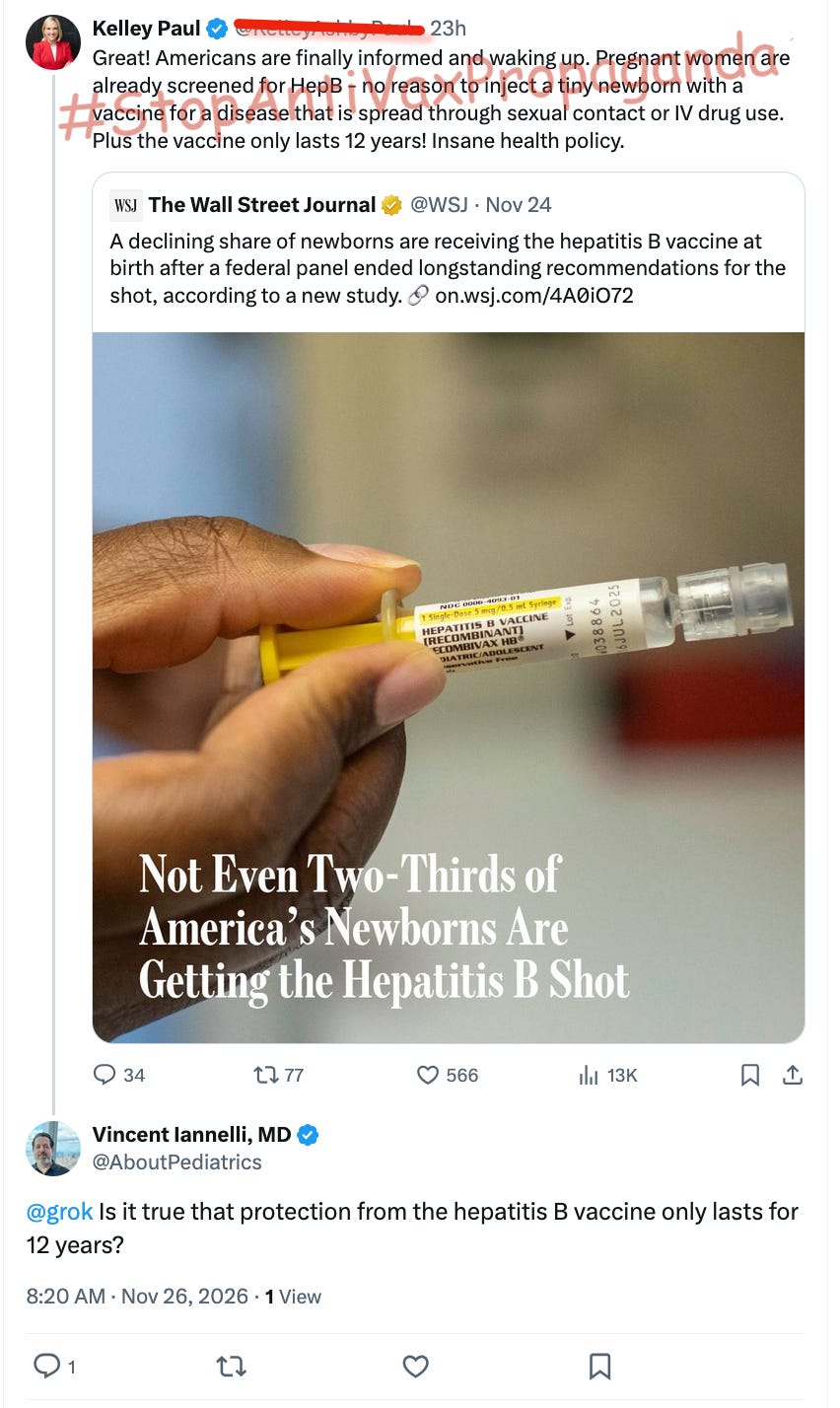
Why do some people think that protection from the hepatitis B vaccine only lasts 12 years?
The usual suspects…
How Long Does Protection From the Hepatitis B Vaccine Last?
In this case, it is because that is what Kelley Paul, the wife of Rand Paul, is telling them.
But that’s not surprising.
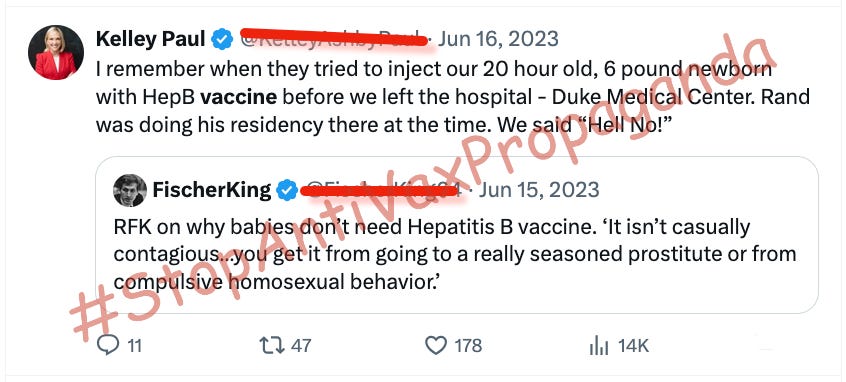
After all, she and Rand Paul refused to give their own babies the hepatitis B vaccine.
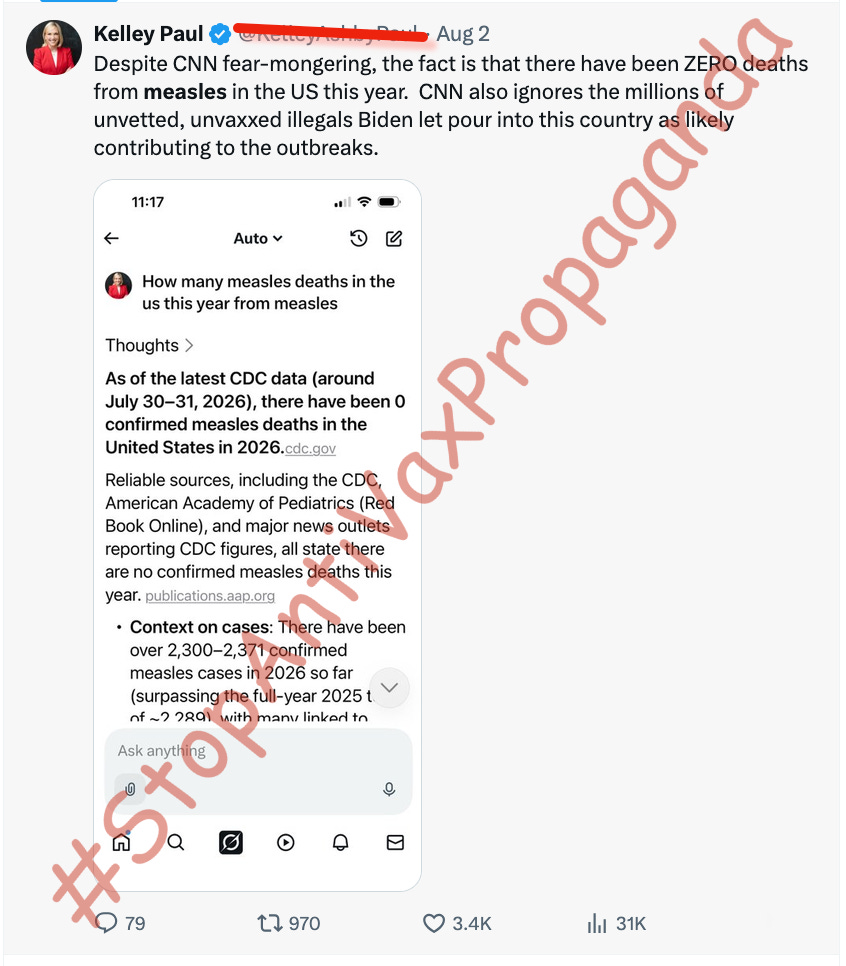
And she frequently posts anti-vaccine content and helps launder propaganda from other anti-vaccine influencers.
What Decades of Follow-Up Tell Us About the 12-Year Claim
But let’s get back to her claim that the hepatitis B vaccine only lasts 12 years.
A claim that is not true.
“We found serologic evidence of protection among Alaska Native persons 41 years after primary hepatitis B vaccination. Our findings support the recommendation that booster doses are not needed in endemic areas.”
Long-term protection following a primary series of hepatitis B vaccine in Alaska Native children and adults
In fact, the hepatitis B vaccine likely provides most people with lifelong protection.
Lifelong protection that has been confirmed in many studies:
Efficacy and effectiveness of infant vaccination against chronic hepatitis B in the Gambia Hepatitis Intervention Study (1986–90) and in the nationwide immunisation program - at least 22 years
Duration of protection after infant hepatitis B vaccination series - at least 19 years
Persistence of HBsAg‐specific antibodies and immune memory two to three decades after hepatitis B vaccination in adults - at least 30 years
Studies that reinforce the idea that a birth dose of the hepatitis B vaccine can provide lifelong protection.
But what about those folks who have negative hepatitis B titers after a few years?
While some of them may not have responded to the vaccine series, in the great majority of cases, even with a low antibody titer, they are likely still immune because of the anamnestic response.
The what?
The anamnestic response is the rapid production of new antibodies when your immune system recognizes something it already seen. So after a successful hepatitis B vaccine series, the antibodies already in your blood might go down, but since you still have memory B cells, they can quickly make more antibodies if you encounter the virus later, helping protect you against illness and chronic infection. That’s why you might still be immune even if you have a low antibody titer years after vaccination.
But where did Kelley Paul get the idea that the hepatitis B vaccine only provides protection for 12 years?
She likely looked at very early studies that were done about 12 years after people were vaccinated.
What’s missing?
Twelve-year follow-up of a prospective randomized trial of hepatitis B recombinant DNA yeast vaccine versus plasma-derived vaccine without booster doses in children
Twenty-two years follow-up of a prospective randomized trial of hepatitis B vaccines without booster dose in children: final report
And she is leaving out all the follow-up reports that would have found that these folks were still immune years later.
Bottom line - the hepatitis B vaccine likely provides lifelong protection.