


We all know that you can get rabies after being bitten by a rabid animal, like a dog or bat.
But you can also get rabies after an organ transplant?!?
How Can You Get Rabies After an Organ Transplant?
News of a person in Ohio recently dying after an organ transplant likely have people asking this question.
Since we have very limited information on this case, let’s take a look at other cases in which people have gotten rabies after an organ transplant.
Tragically, yes, there have been other cases!
“The organ donor was an Arkansas man who visited two hospitals in Texas with severe mental status changes and a low-grade fever. Neurologic imaging indicated findings consistent with a subarachnoid hemorrhage, which expanded rapidly in the 48 hours after admission, leading to cerebral herniation and death. Donor eligibility screening and testing did not reveal any contraindications to transplantation, and the patient's family agreed to organ donation. Lungs, kidneys, and liver were recovered. No other organs or tissues were recovered from the donor, and the donor did not receive any blood products before death. The liver and kidneys were transplanted into three recipients on May 4 at a transplant center in Texas.”
Investigation of Rabies Infections in Organ Donor and Transplant Recipients --- Alabama, Arkansas, Oklahoma, and Texas, 2004
And they typically involve people who unknowingly died with rabies and then had their organs transplanted to other people.
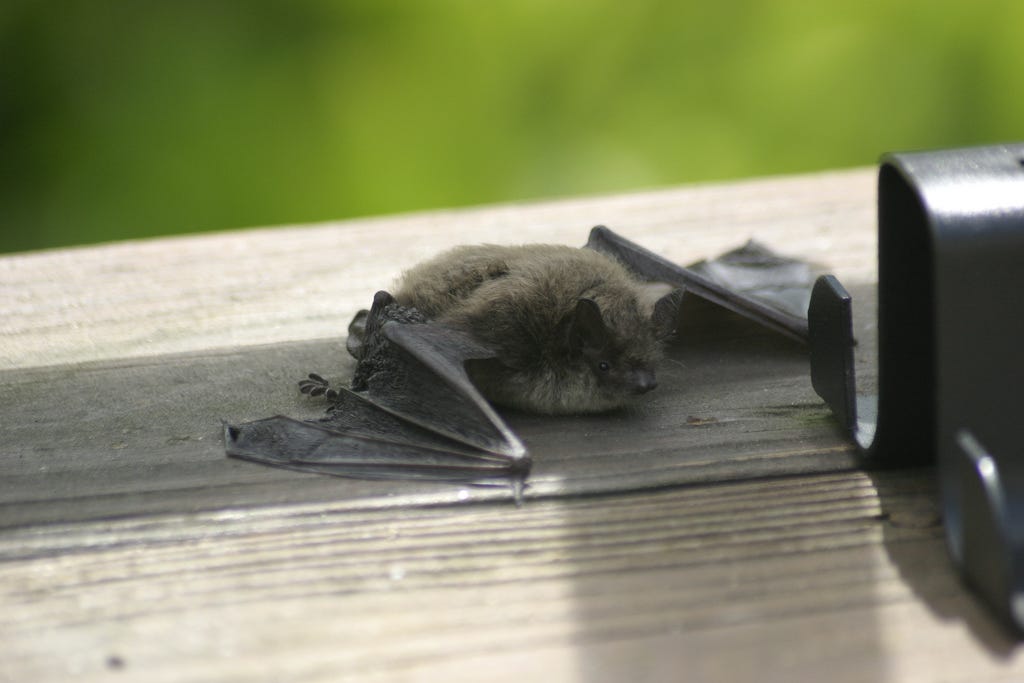
“As a result of its public health investigation, the Arkansas Department of Health determined that the donor had reported being bitten by a bat (Frank Wilson, M.D., Arkansas Department of Health, personal communication, 2004).”
Update: Investigation of Rabies Infections in Organ Donor and Transplant Recipients --- Alabama, Arkansas, Oklahoma, and Texas, 2004
Fortunately, these types of cases are extremely rare.
“Although transmission of rabies has occurred previously among eight recipients of transplanted corneas in five countries, this report describes the first documented cases of rabies virus transmission among solid organ transplant recipients.”
Investigation of Rabies Infections in Organ Donor and Transplant Recipients --- Alabama, Arkansas, Oklahoma, and Texas, 2004
But tragically, they are still occurring.
“…more than 100,000 patients are currently on organ transplant waiting lists in the U.S., but only approximately 28,000 solid organ transplantations are performed annually. As a result of long waiting periods, on average, 22 people die each day while waiting for a transplant. One organ donor can save as many as eight lives.”
Rabies in Transplant Recipients
But wouldn’t you know if someone had rabies?
Sure, it’s an easy diagnosis if they were recently bitten by a dog or raccoon. But what about the folks who get rabies and die after minimal contact with a bat? Especially if they had a lot of pre-existing conditions, you might not suspect rabies as the cause of death.
Still, even as this case raises awareness so that it hopefully never happens again, the real solution is for more folks to become organ donors! That way, they would never have to consider transplanting an organ from someone who poses a risk to their recipient.
References
Investigation of Rabies Infections in Organ Donor and Transplant Recipients --- Alabama, Arkansas, Oklahoma, and Texas, 2004. https://www.cdc.gov/mmwr/preview/mmwrhtml/mm5326a6.htm
Update: Investigation of Rabies Infections in Organ Donor and Transplant Recipients --- Alabama, Arkansas, Oklahoma, and Texas, 2004. https://www.cdc.gov/mmwr/preview/mmwrhtml/mm53d709.htm
Rabies in Transplant Recipients. https://www2c.cdc.gov/podcasts/media/pdf/Rabies%20in%20Transplant%20Recipients.pdf