


Before you answer this one, know that this is a bit of a trick question… So here you go - can hamsters get rabies?
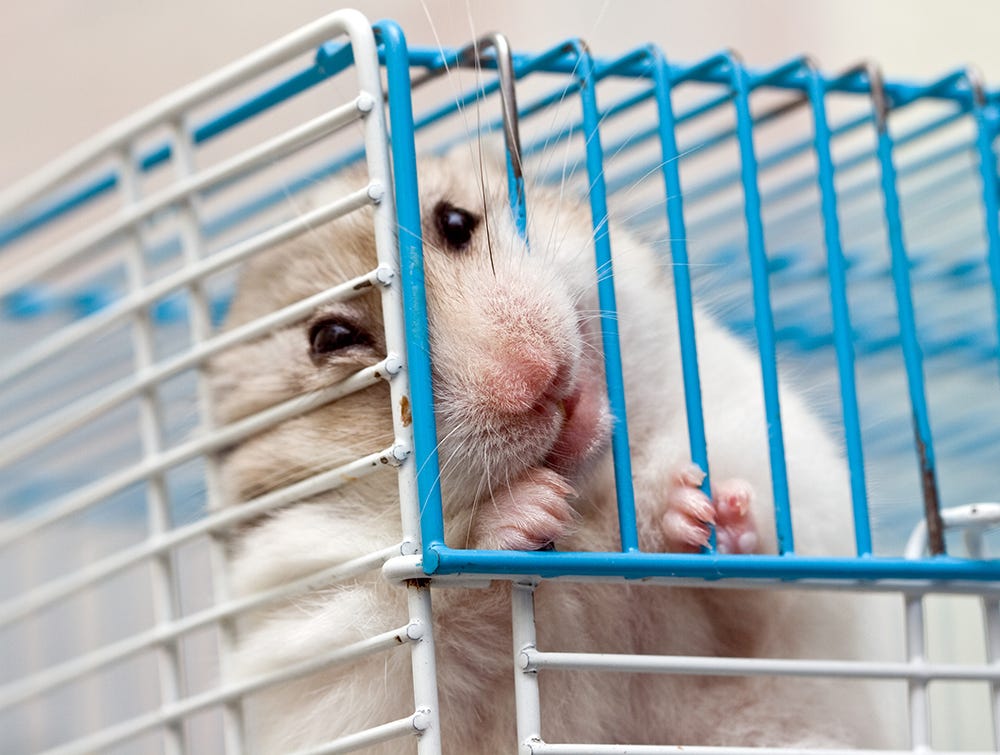
Hamsters aren’t one of the animals that you typically consider when you think about rabies, is it? Instead, warm-blooded mammals like bats, raccoons, skunks, foxes, coyotes, dogs, and cats should come to mind.
Can Hamsters Get Rabies?
And the answer?
Believe it or not, hamsters can get rabies.
Still, it is extremely rare for hamsters to get rabies.
Why?
For one thing, as indoor pets, they are not often exposed to any rabid animals.
And then, if they were, it would be highly unlikely that they would survive the encounter!
Just think about what would happen if a rabid raccoon, skunk, fox, coyote, dog, or cat, attacked your little pet hamster…
There is really no chance that your hamster would survive the attack so that they could later develop rabies themselves.
The same goes with other small rodents, like mice, rats, squirrels, chipmunks, guinea pigs, and gerbils. All could theoretically get rabies, but they almost never do.
Neither do rabbits, hares, nor opossums.
On the other hand though, if you find a dead bat next to your hamster cage or one of your other pets, you might think twice about the risk of rabies!
After all, these animals can get rabies, they just typically don’t.
Which Animals Are at High Risk to Get Rabies?
Why worry about a dead bat?
Bats are now the leading cause of human rabies deaths in the US.
It is also important to know that other animals at high risk to have rabies include raccoons, skunks, foxes, coyotes, dogs, and cats.
Other animals that can have rabies include ferrets, jackals, kangaroos, wolves, cattle, horses, wild cats (bobcats, tigers, lions, pumas), and primates.
Fortunately, it is rare for non-human primates and large, wild cats to develop rabies…
But you should seek medical attention for any scratch, bite or other exposure to one of these animals that might have rabies.
Most importantly, this includes if you find a bat in your room when you are sleeping, and you aren’t sure if it touched you.
“Persons who cannot be reasonably certain that a bite, scratch, or mucous membrane exposure did not occur, due to being a deep sleeper; drug, alcohol, or medication use; or other cognitive impairment should receive PEP.”
Bats in Bedrooms: Assessing Risk
There are too many stories of people who ignored an exposure to a bat in their home and then later died with rabies because they didn’t get rabies post-exposure prophylaxis.
Which Countries Have the Most Rabies?
You should also be aware of your risk of rabies when you travel.
This is especially true if you live in a country that has rabies under very good control, and you travel to a high risk country.
These highest risk countries which still have high rates of rabies include, but are not limited to:
India
Ethiopia
Nigeria
Democratic Republic of Congo
Pakistan
Bangladesh
Afghanistan
Myanmar
Indonesia
Philippines
Be sure to avoid wild animals, including dogs, if you travel to these highest risk countries, or really, any country that is not rabies free.
And get quick medical attention if you do get exposed to any animal that might have rabies when you are traveling.
Which Animals Can’t Get Rabies?
And then there are the animals that CAN’T get rabies…
This includes birds, reptiles, amphibians, fish, and insects.
Why?
Only warm-blooded mammals can get rabies.
Also, know that rabies is not the only thing you worry about after a bite.
Besides rabies, bites can cause tetanus, cat scratch disease, rat bite fever, and other diseases that require treatment.
More on Rabies Risk
Why Do You Need a Booster if You Had Pre-Exposure Rabies Shots?
When Was the Last Time Someone Died from Being Bitten by a Rabid Dog in the United States?
Countries recognized as Rabies free for domestic cats and dogs
How to avoid rabies and what to do if you’re exposed while travelling
British woman dies from rabies after puppy scratch in Morocco